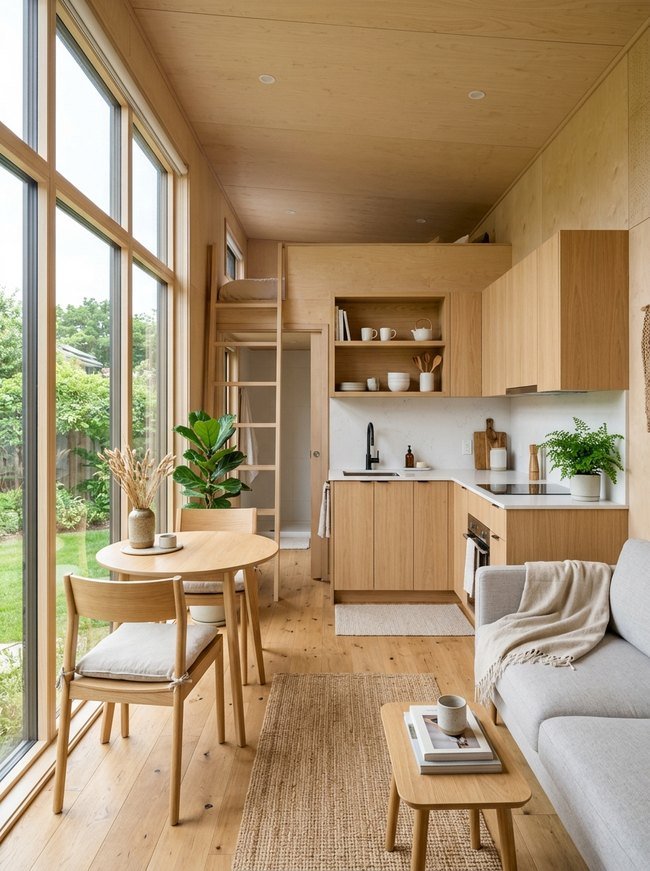
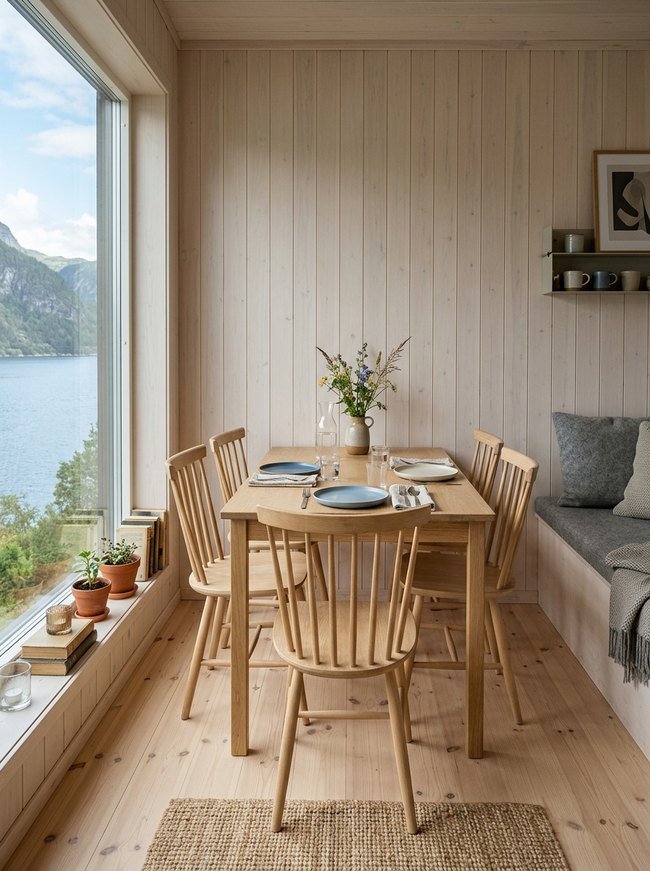
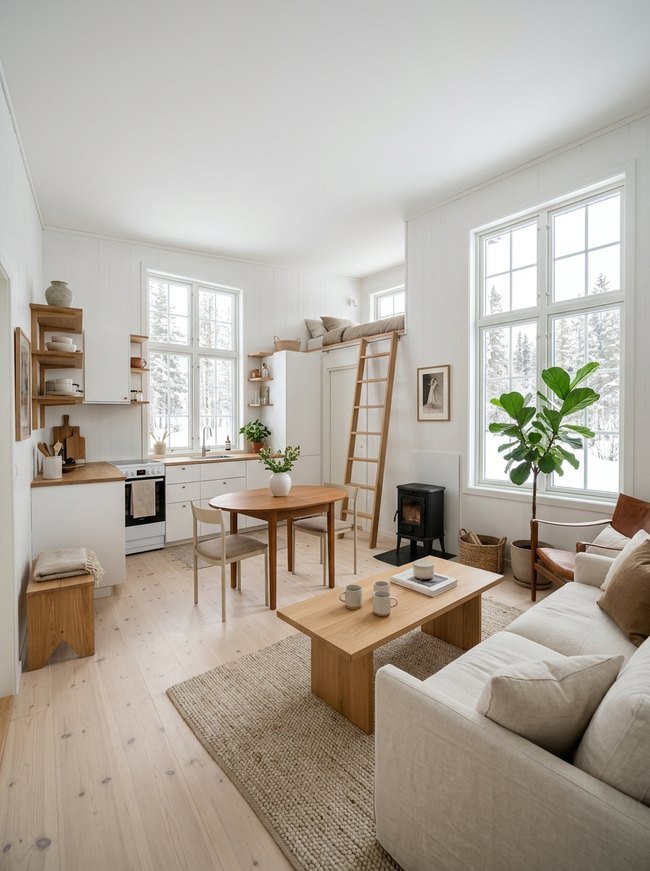
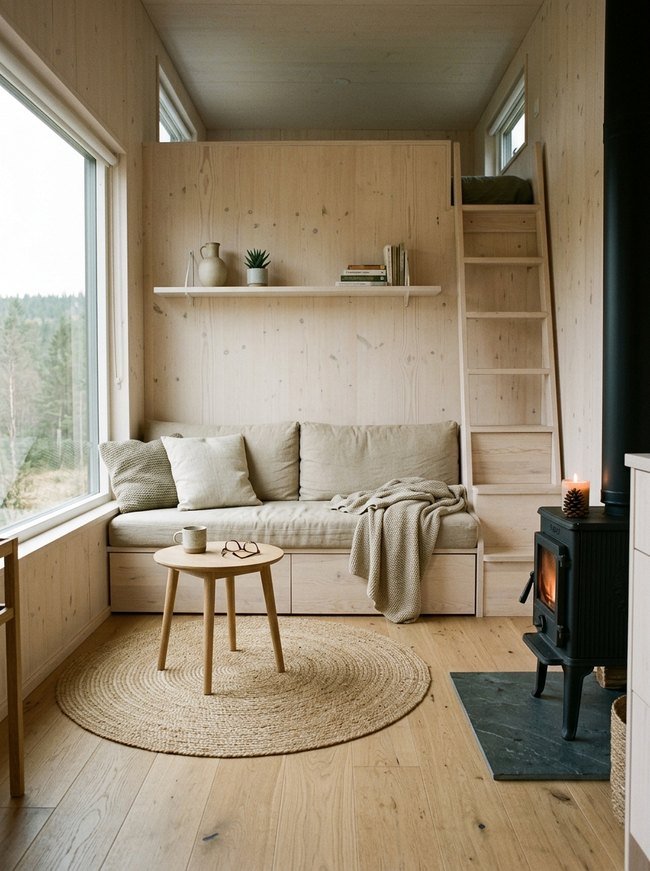
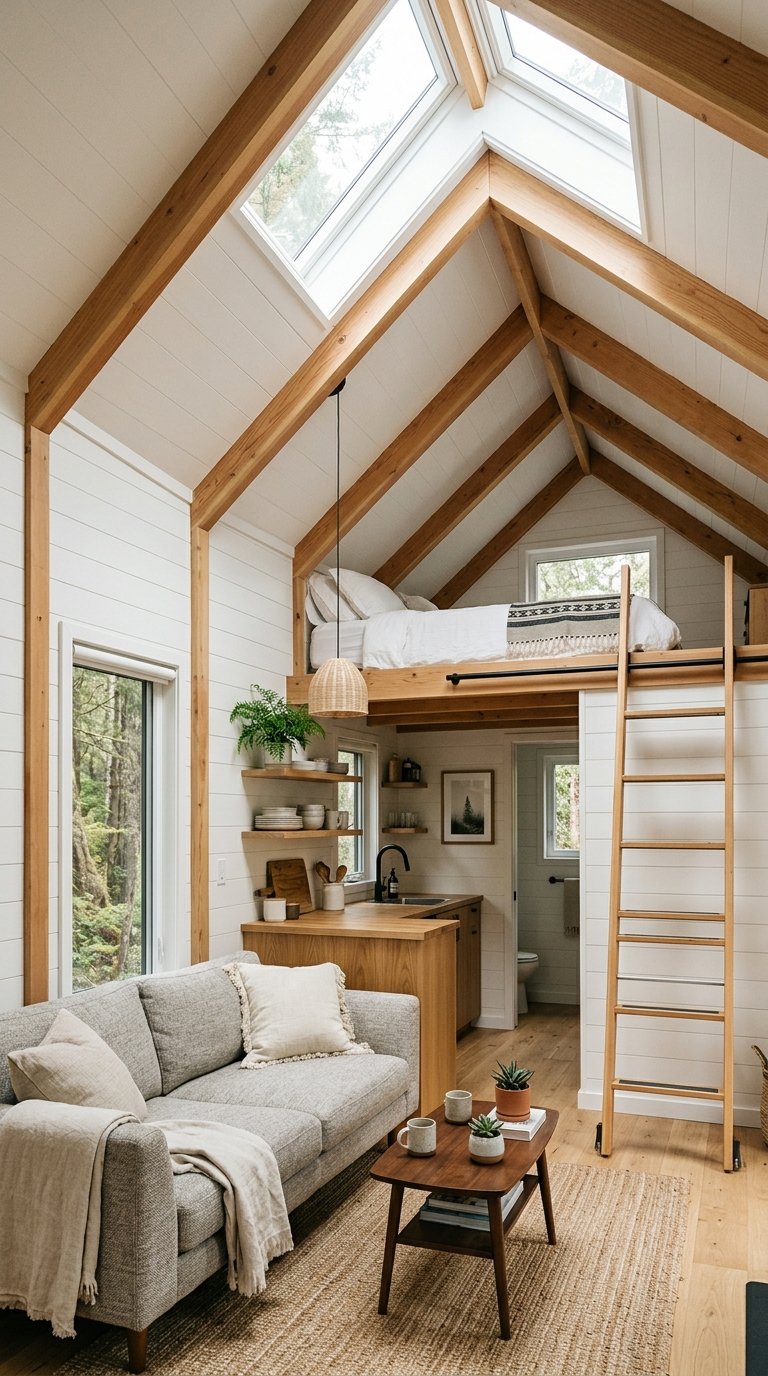
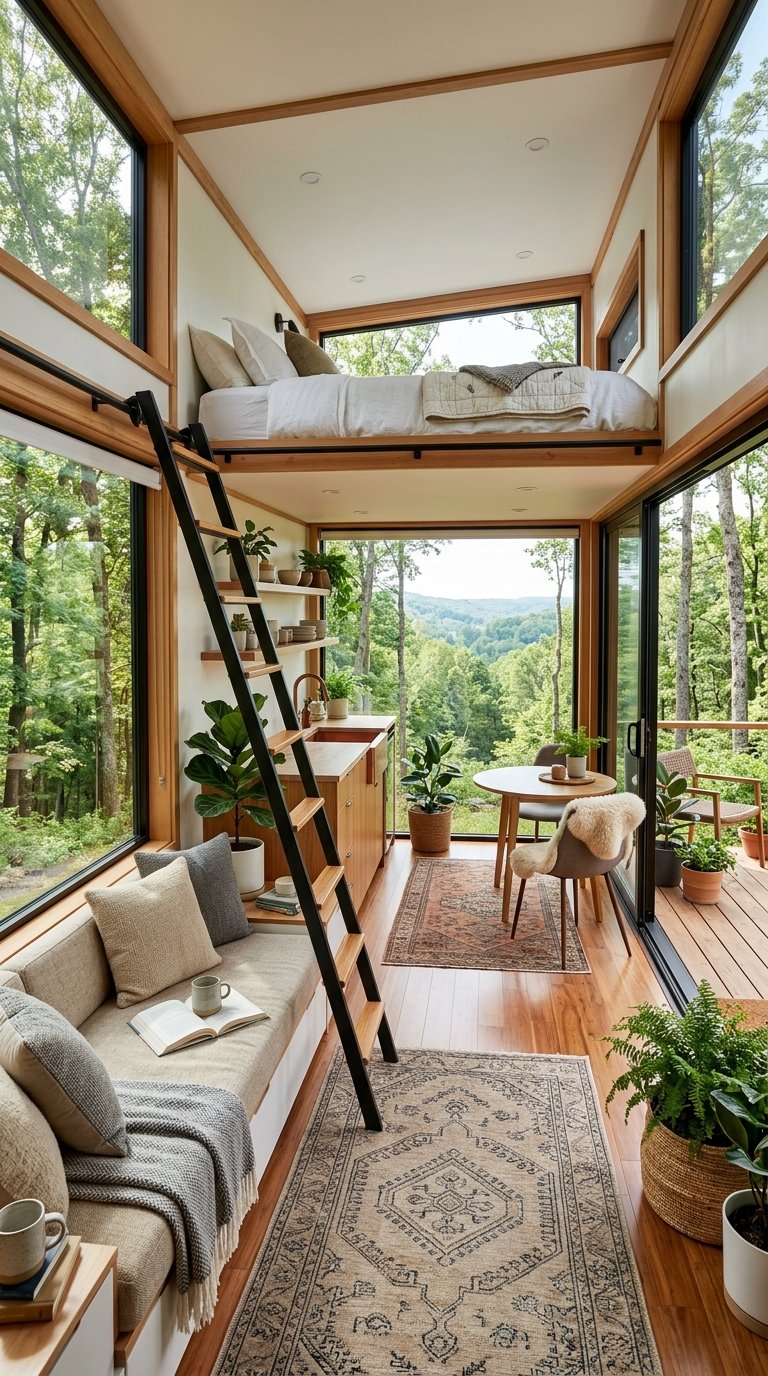
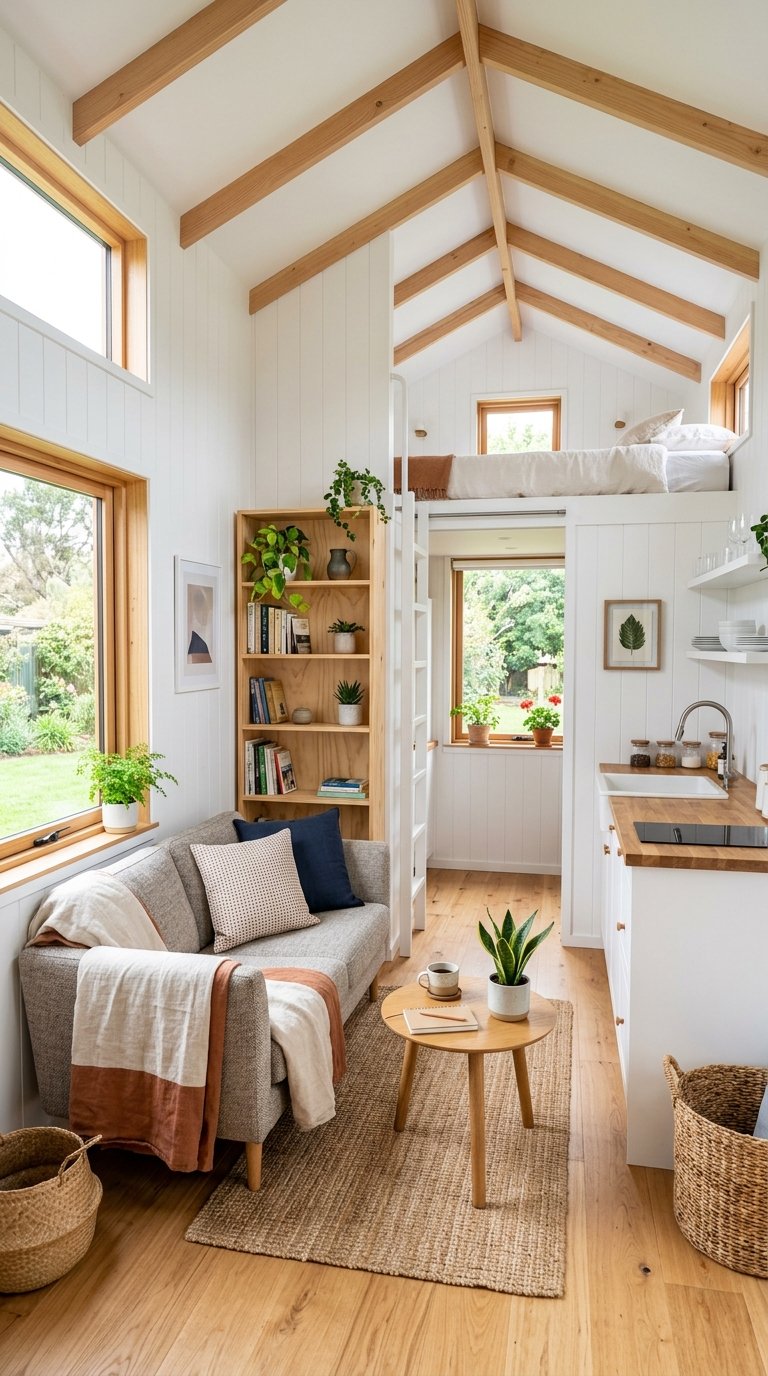
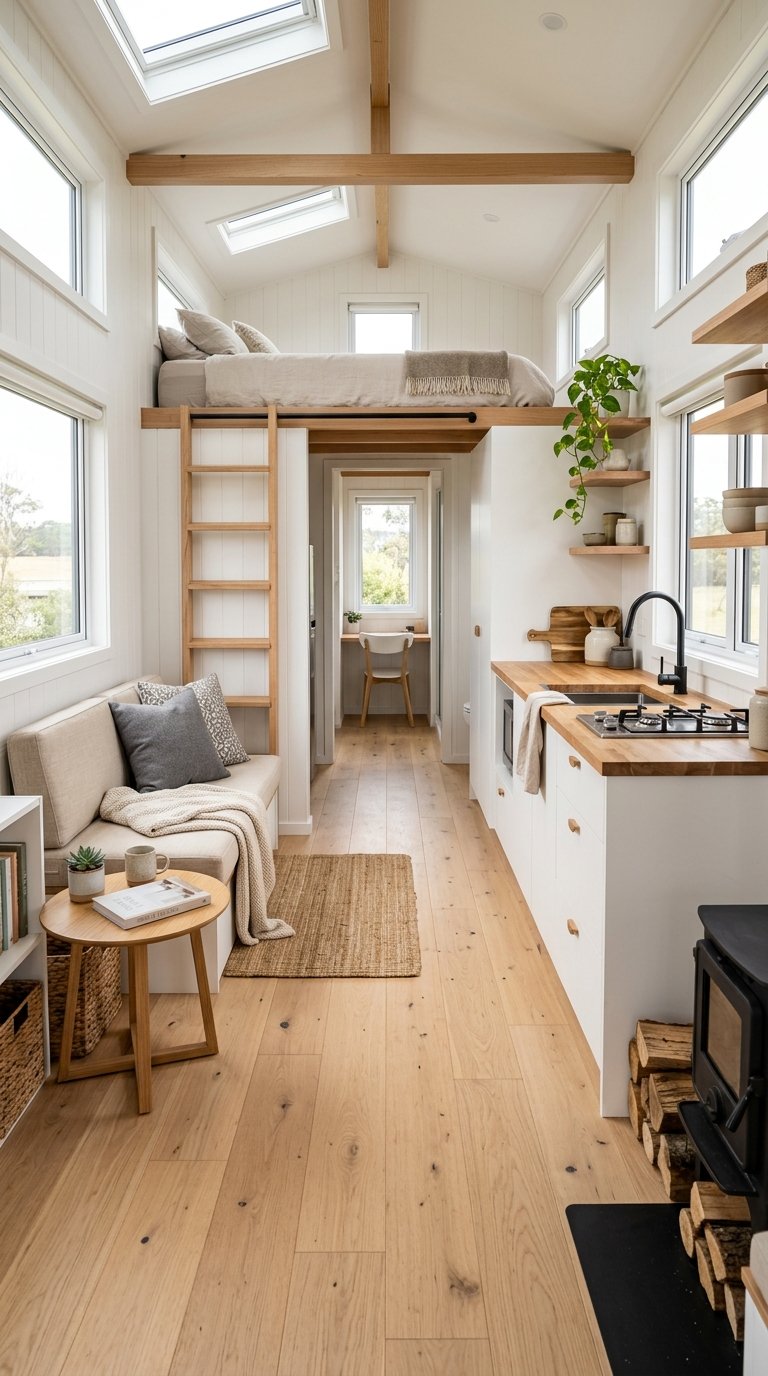
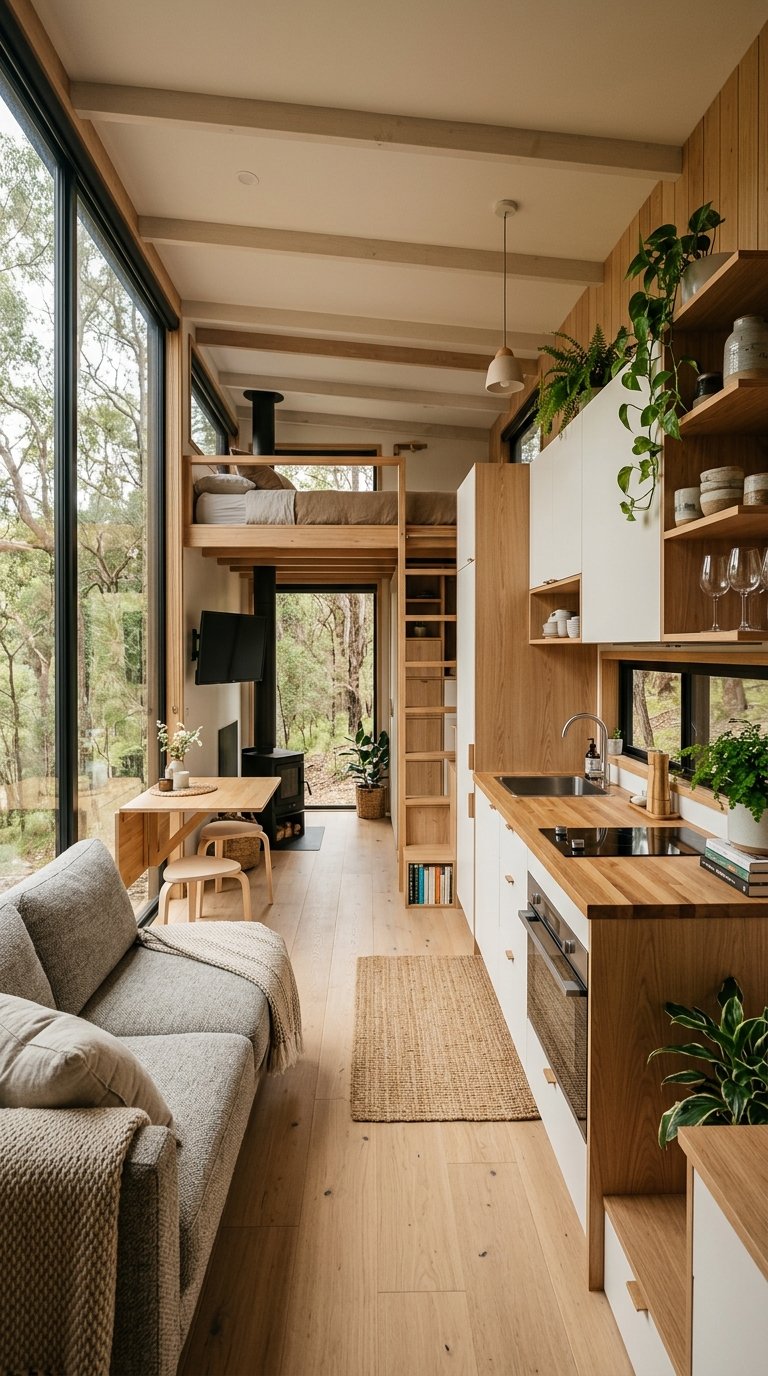
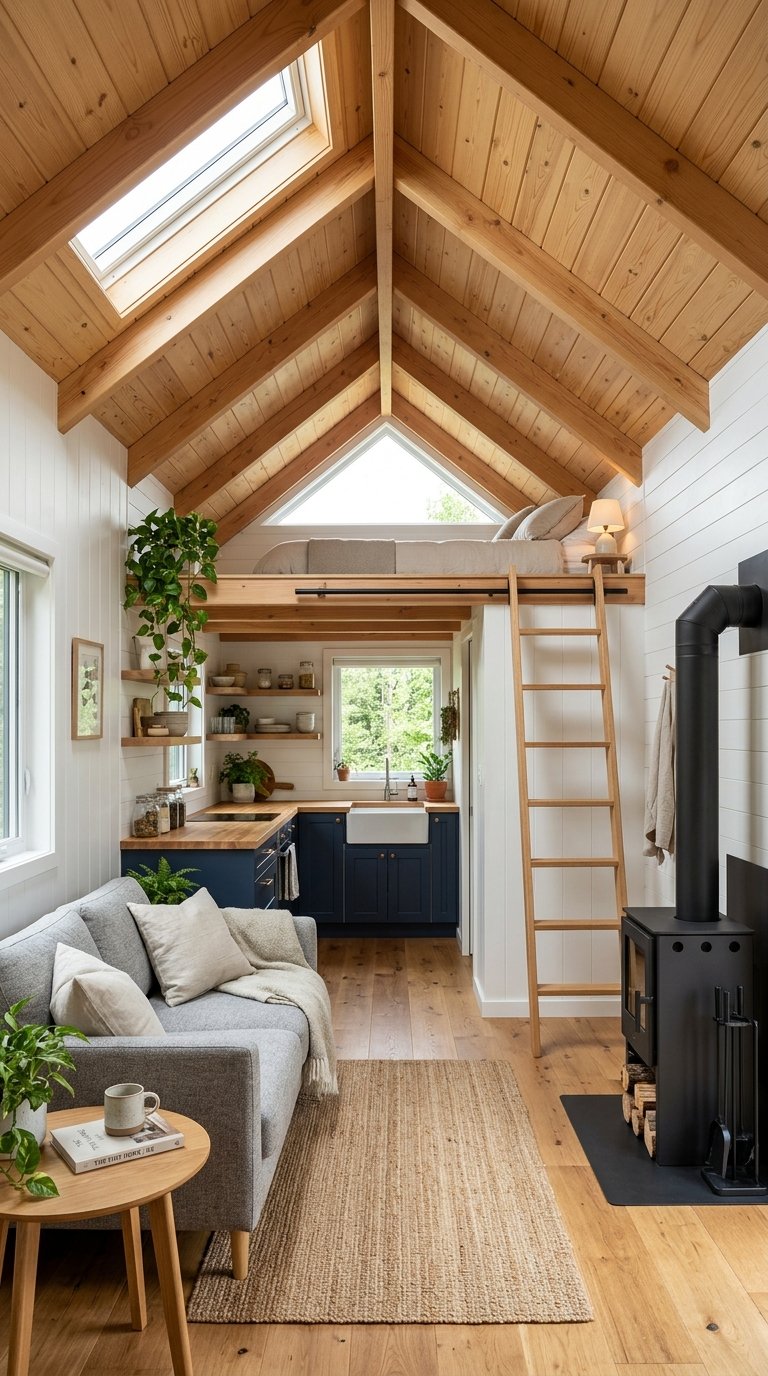
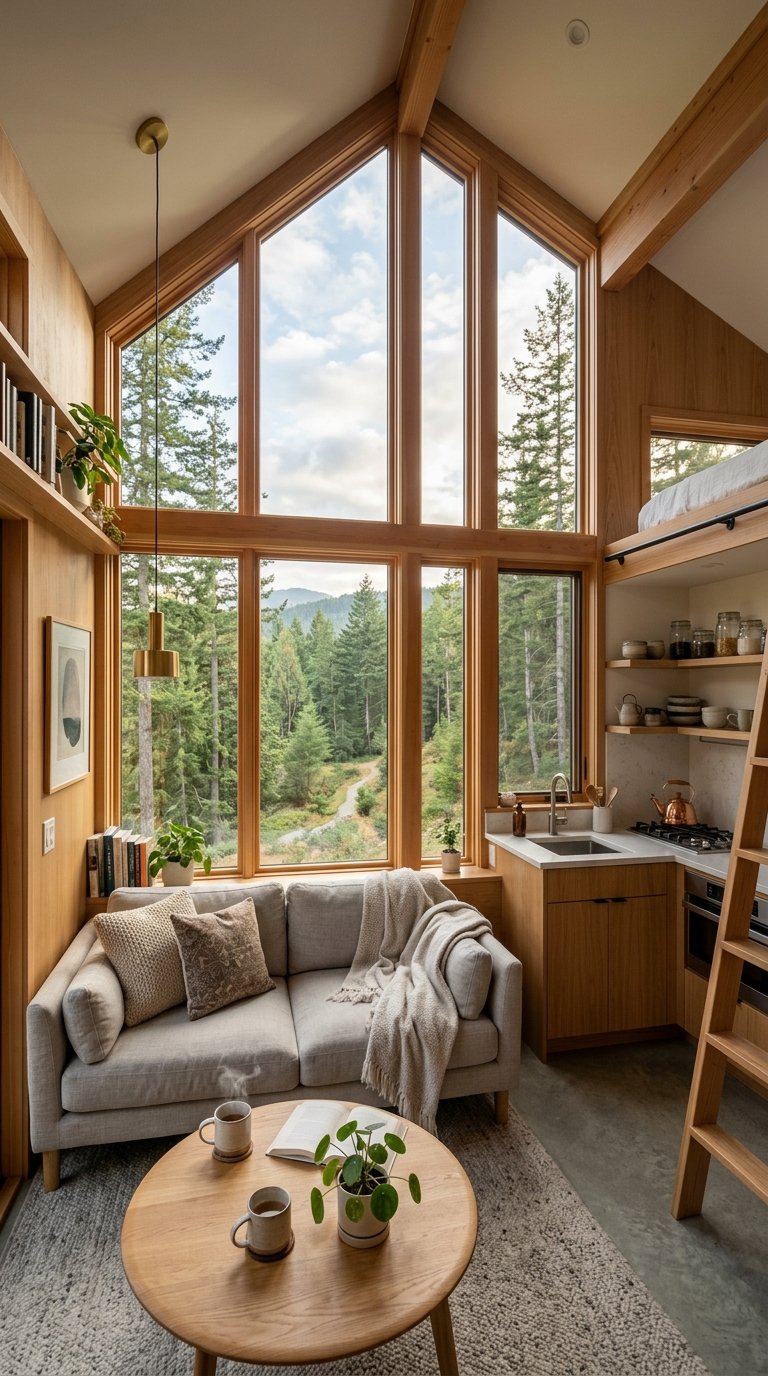
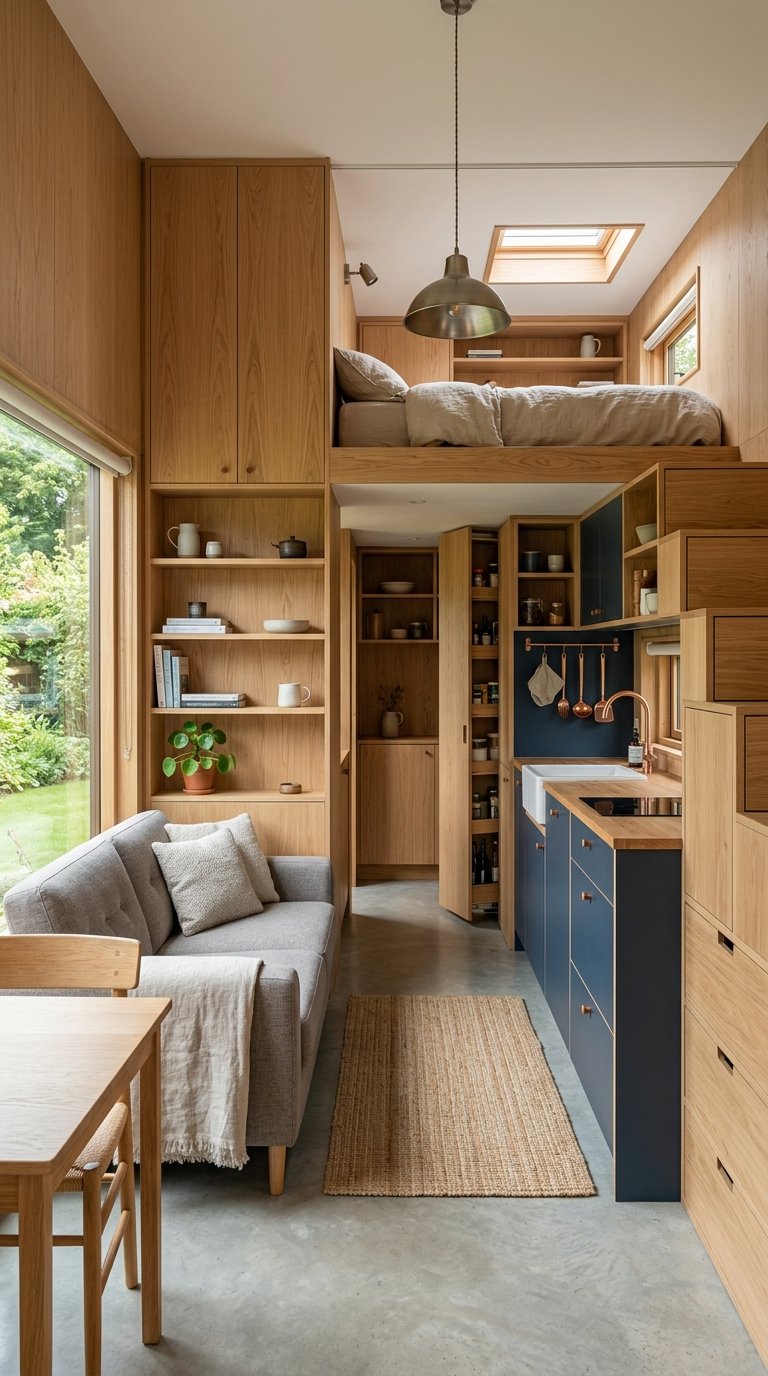
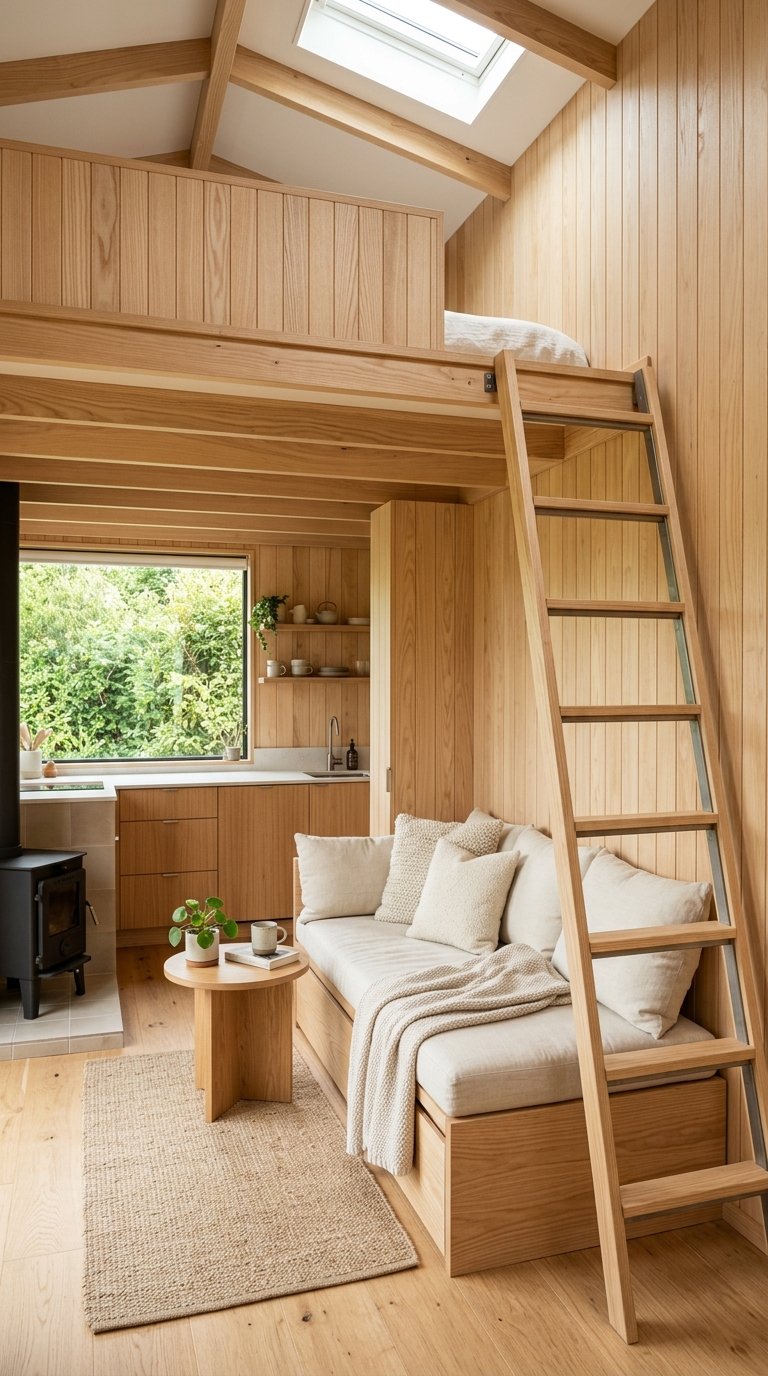
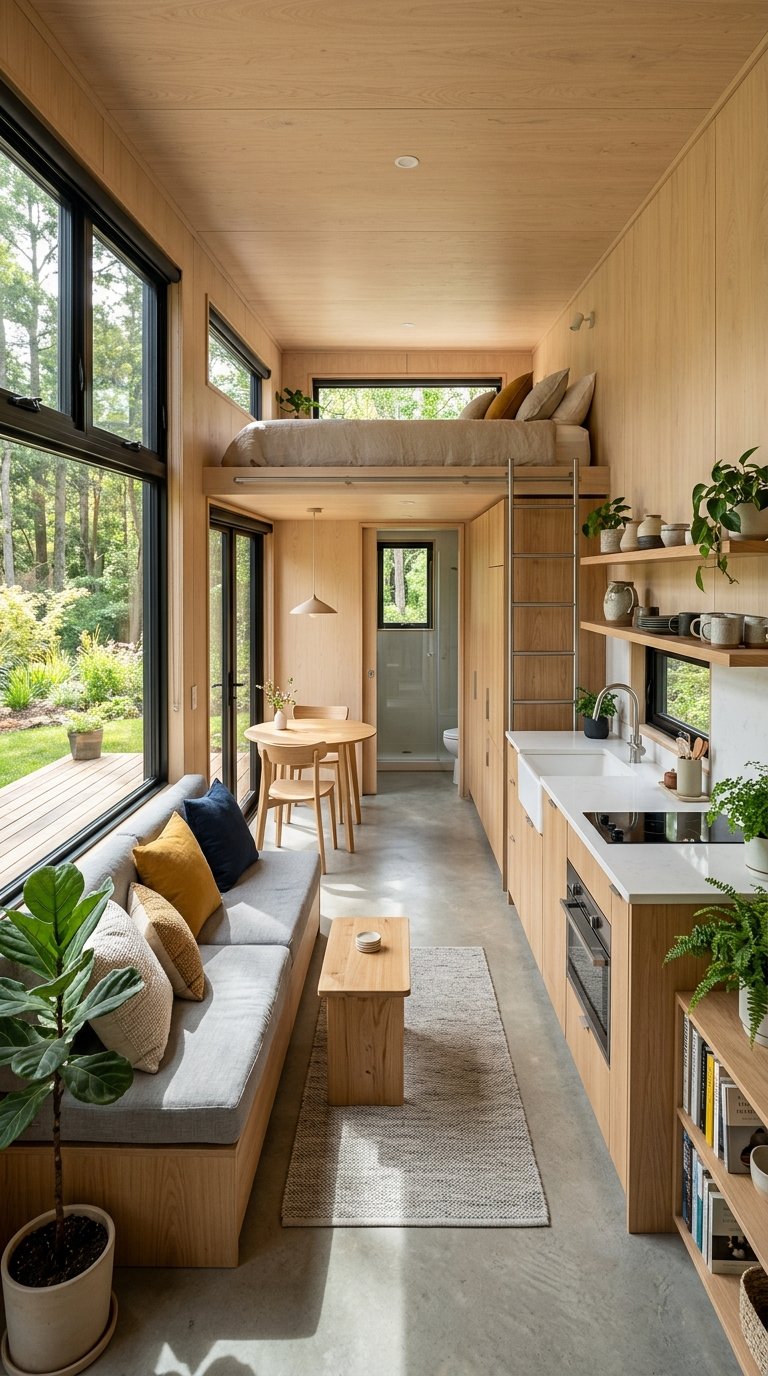
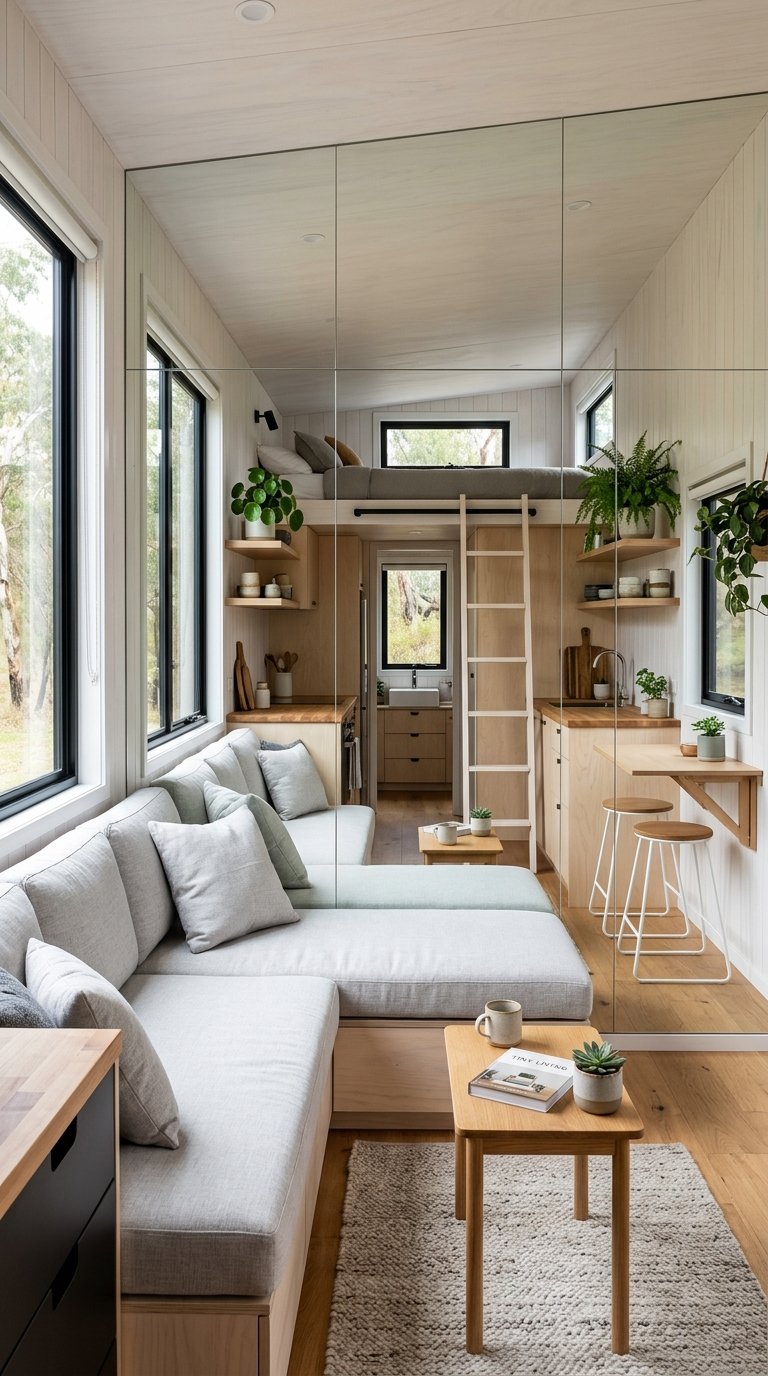
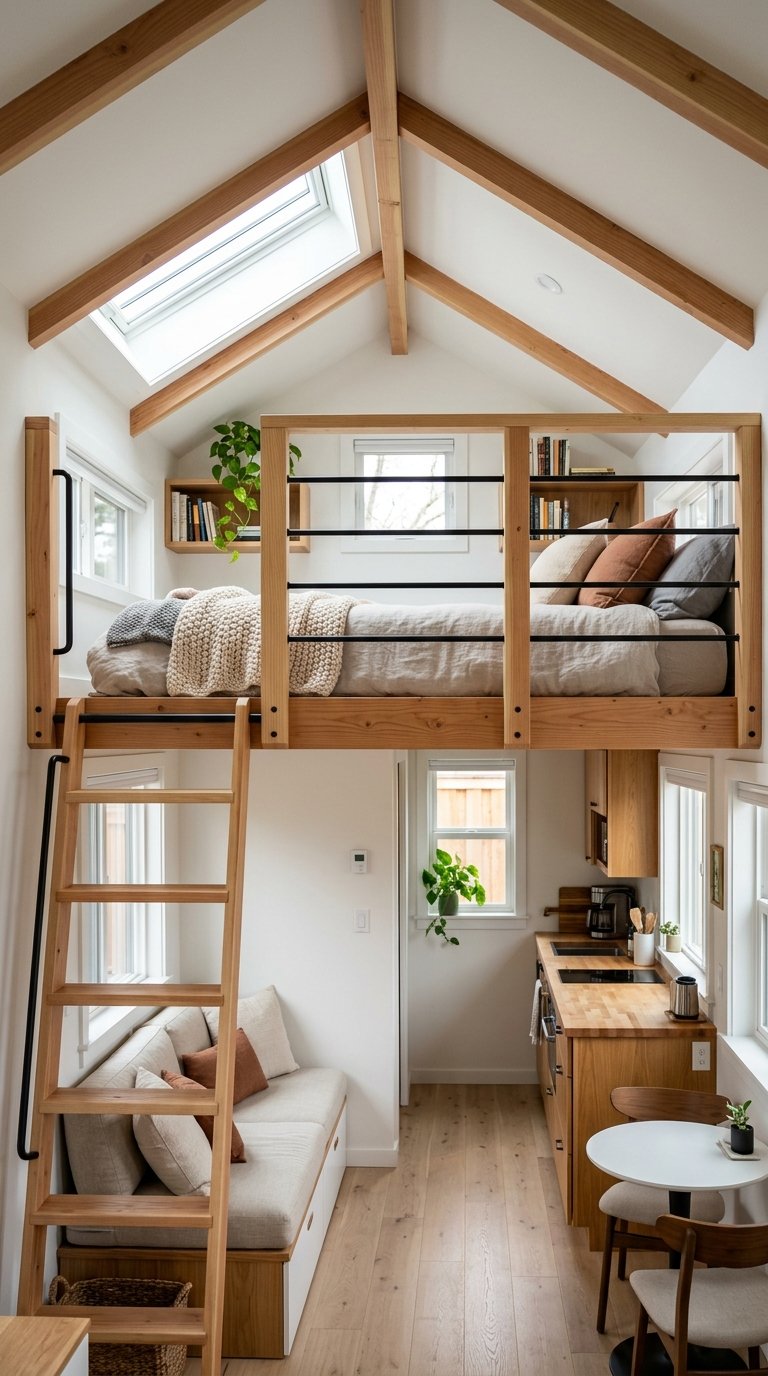
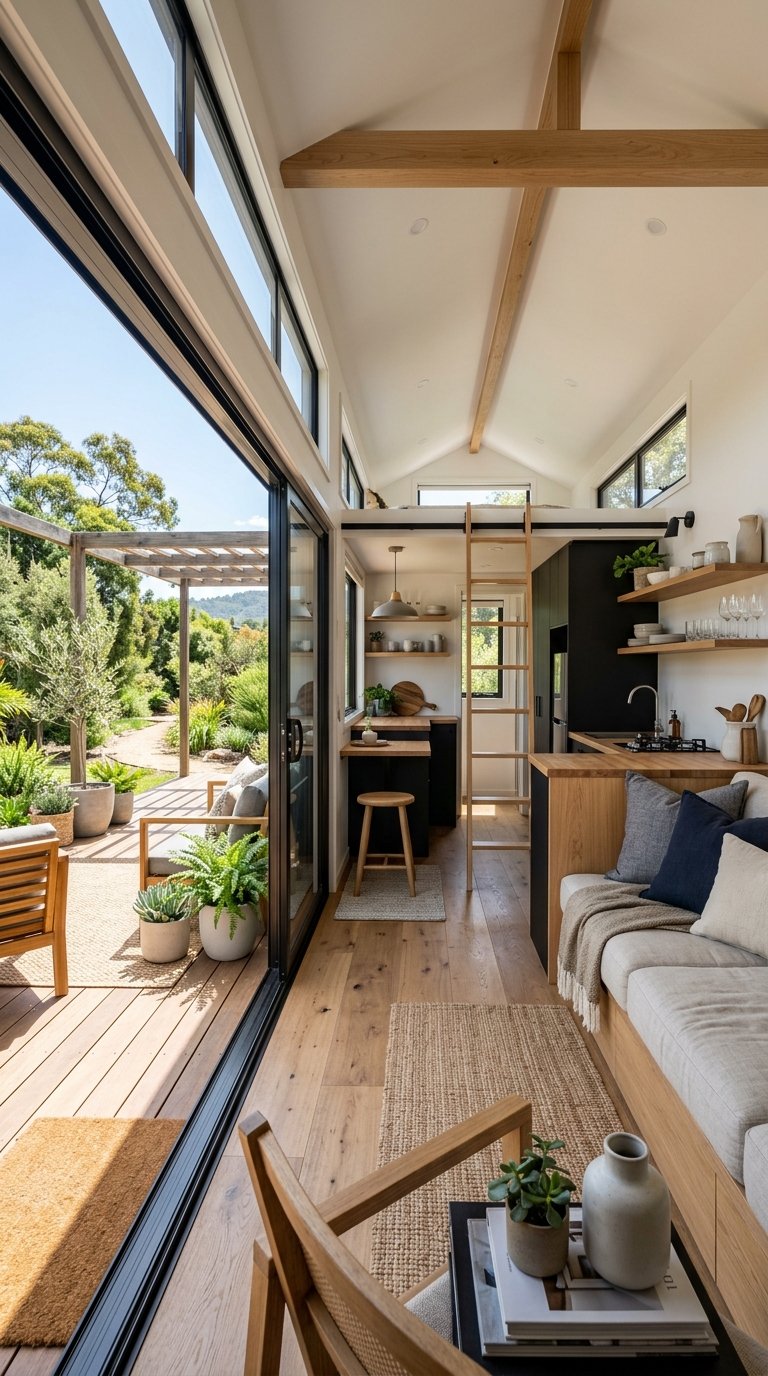
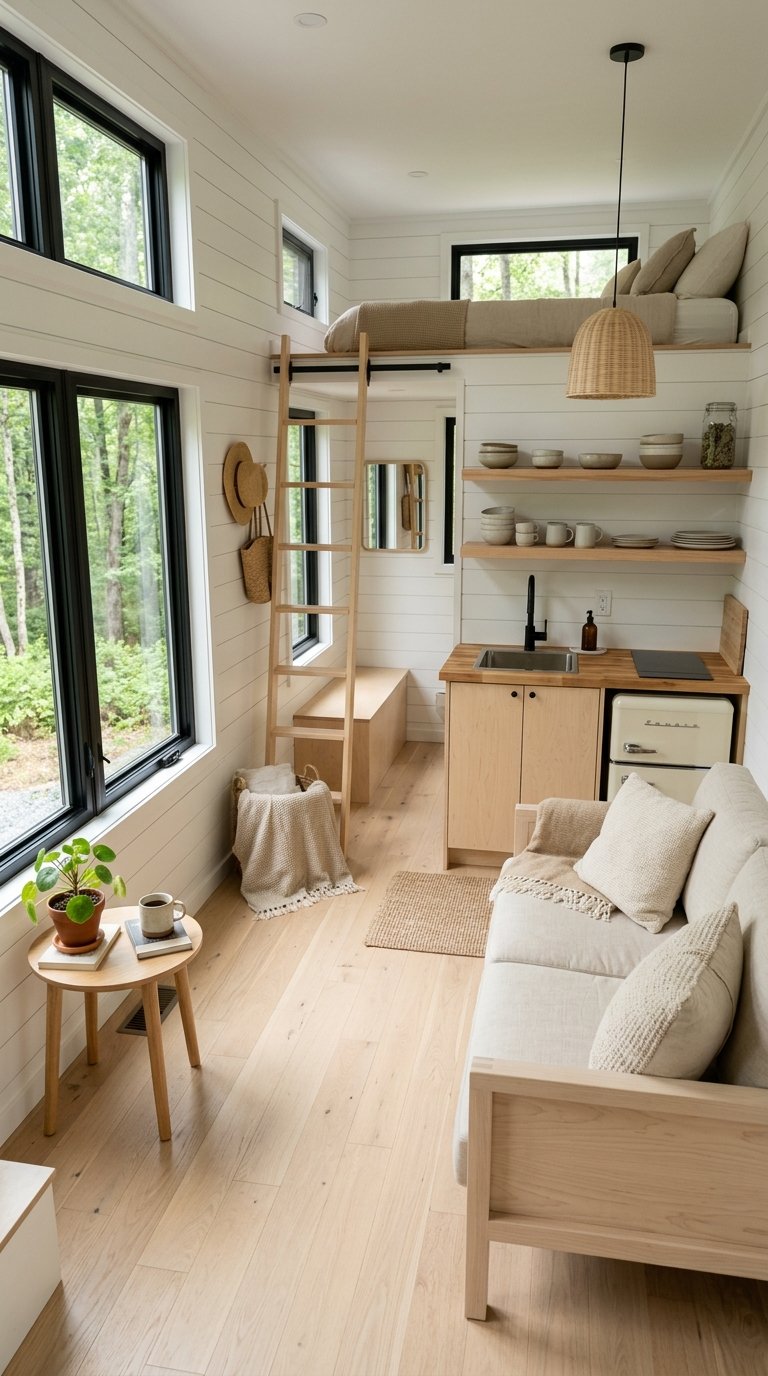
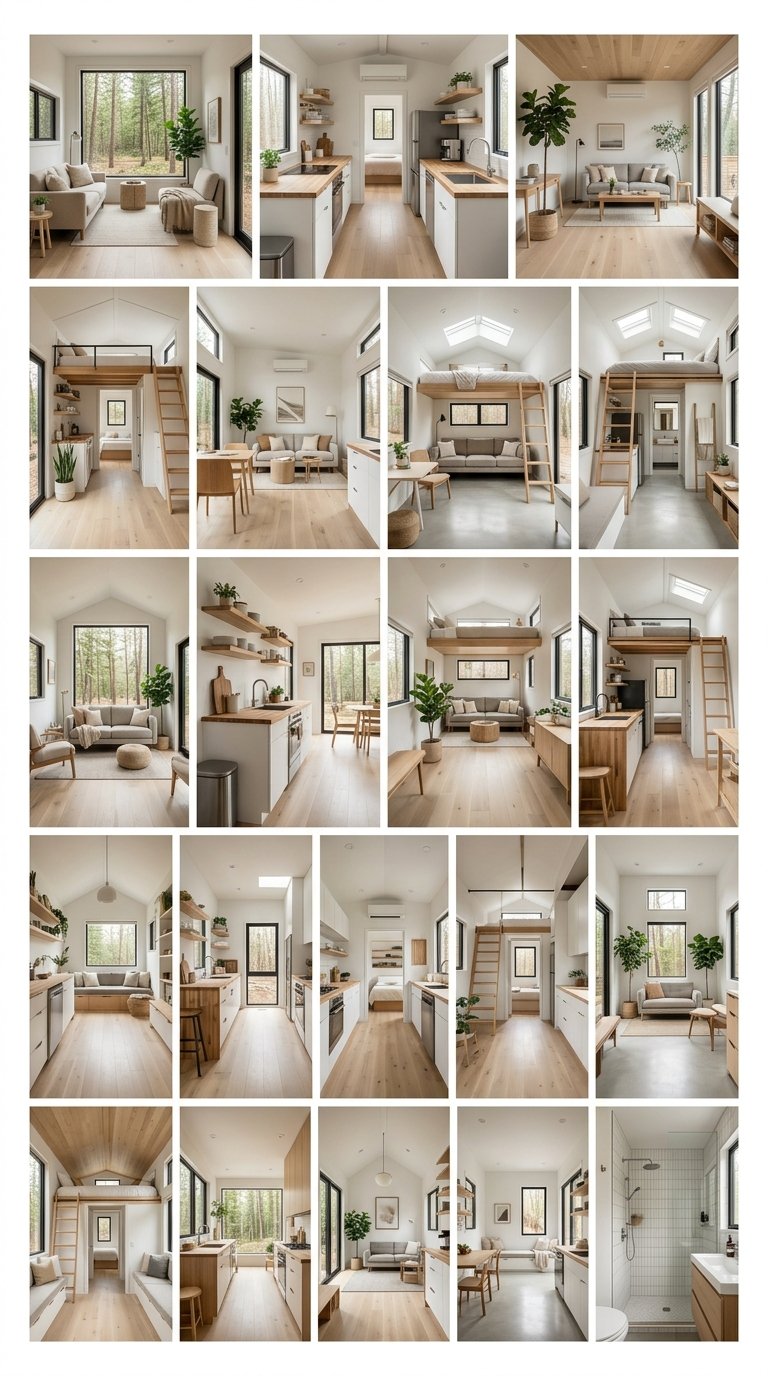
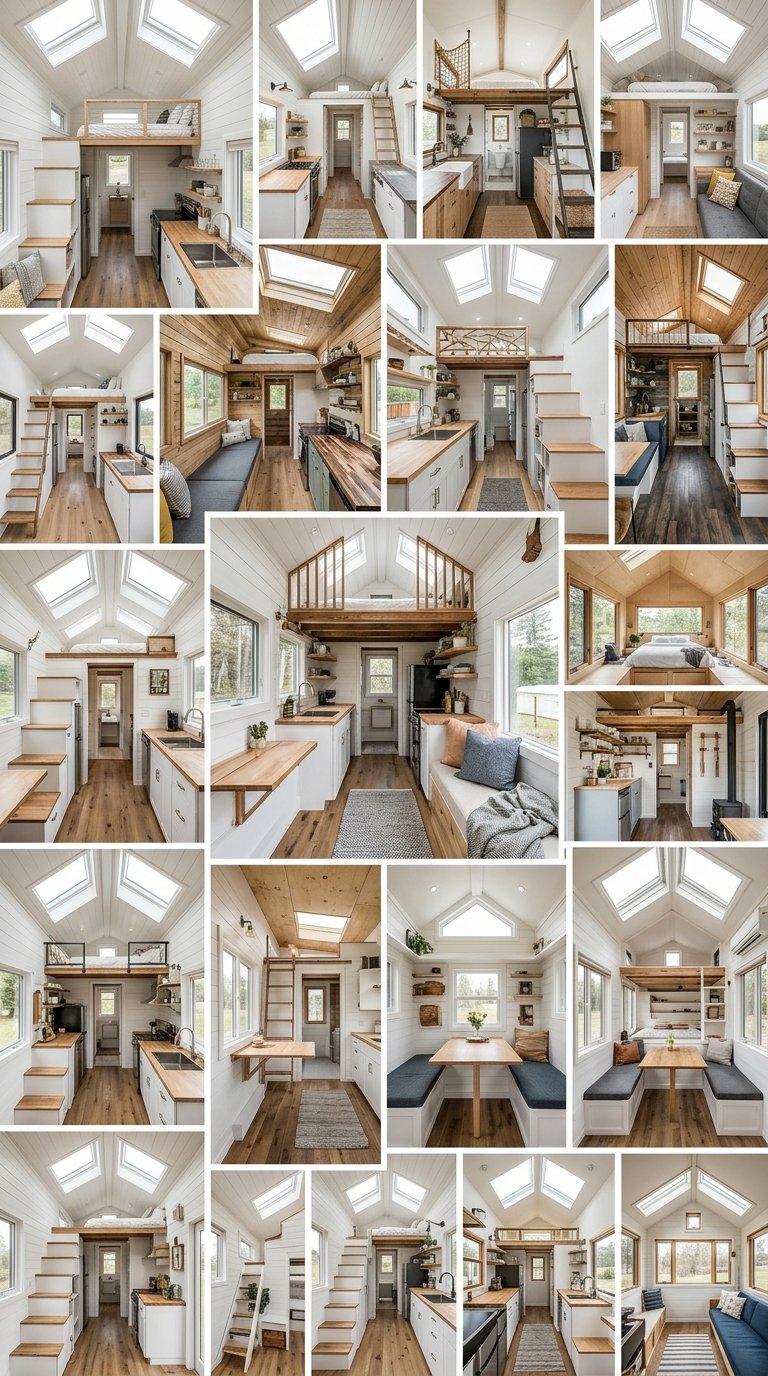
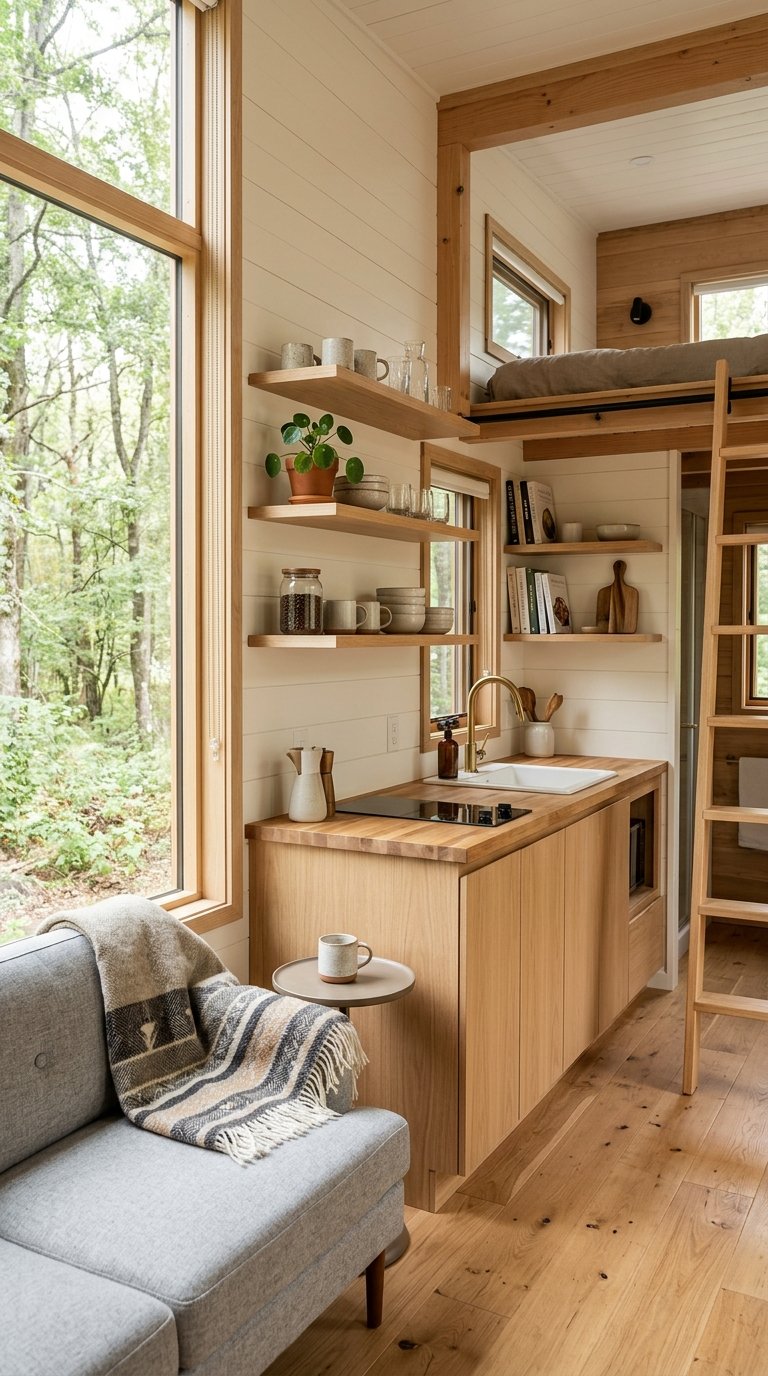
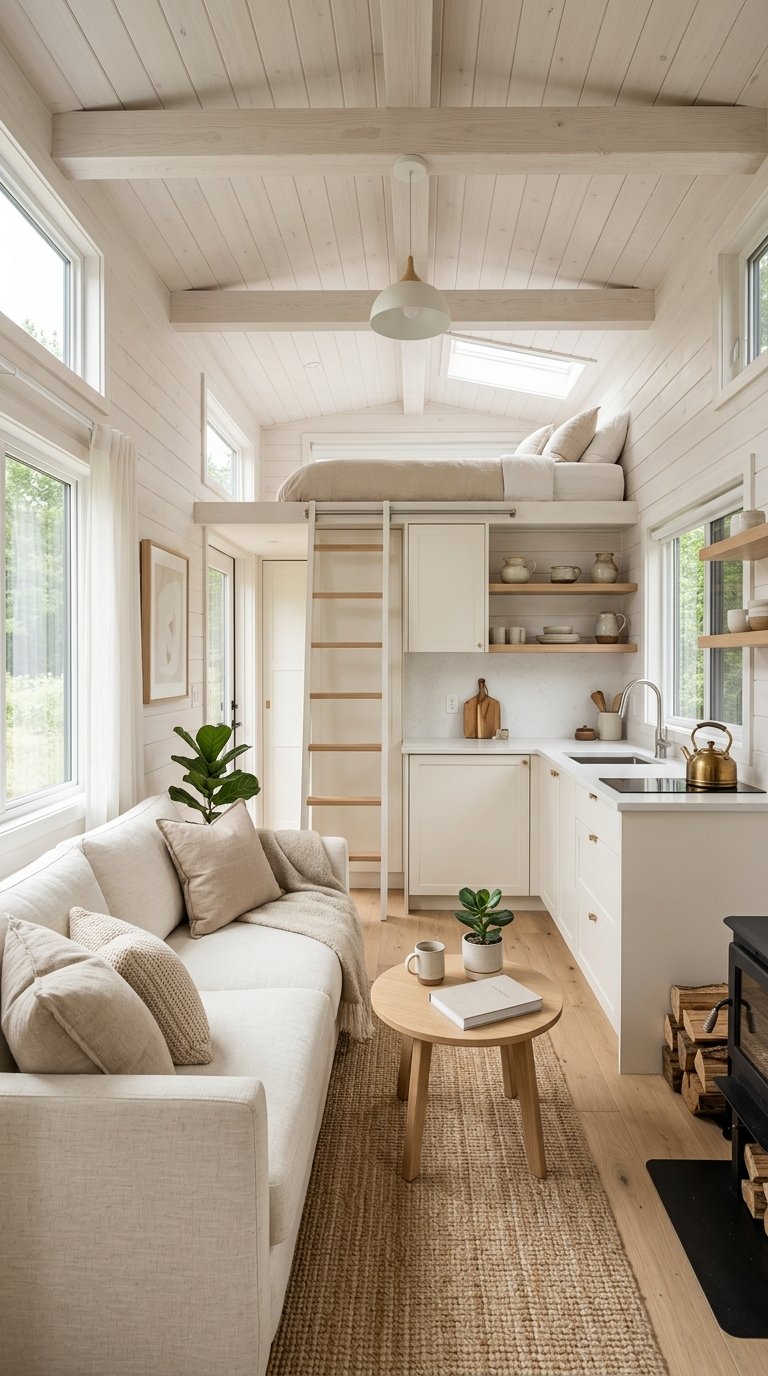
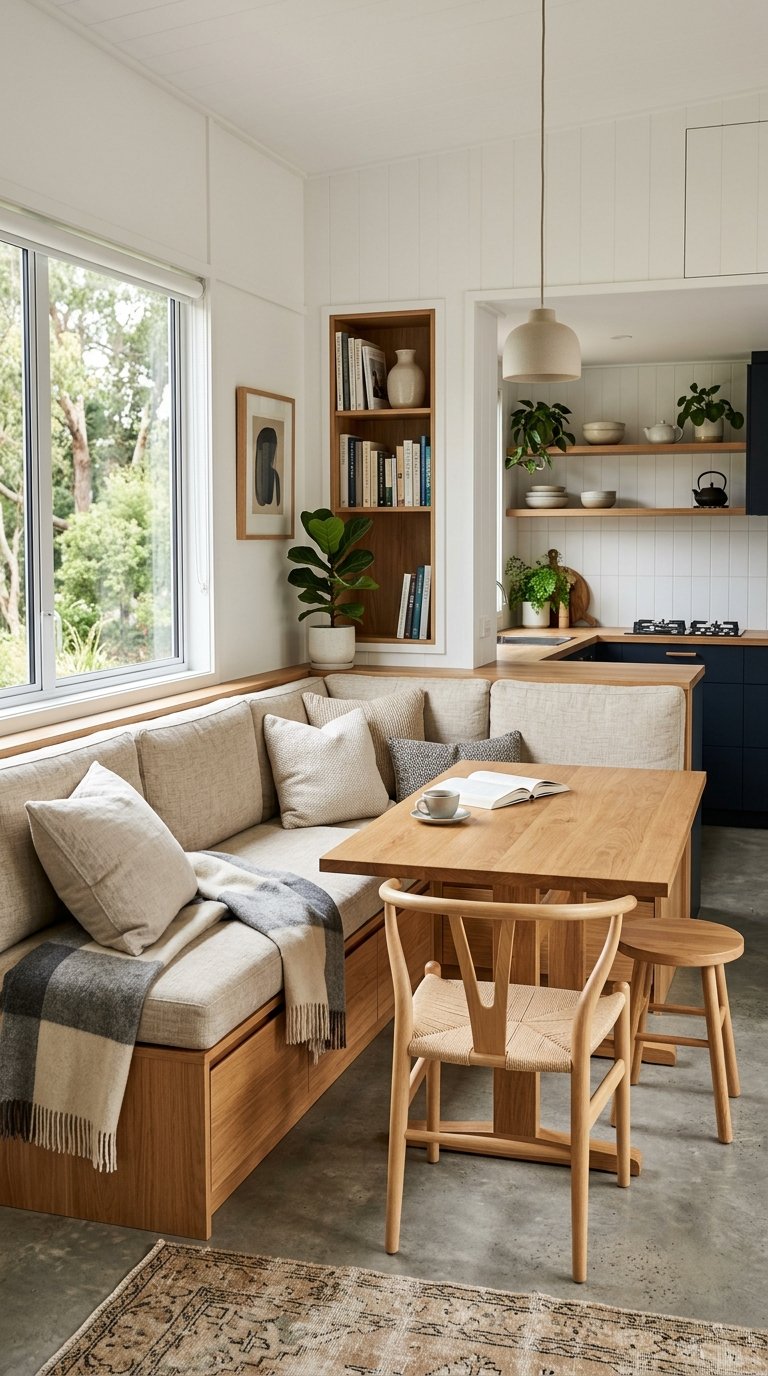
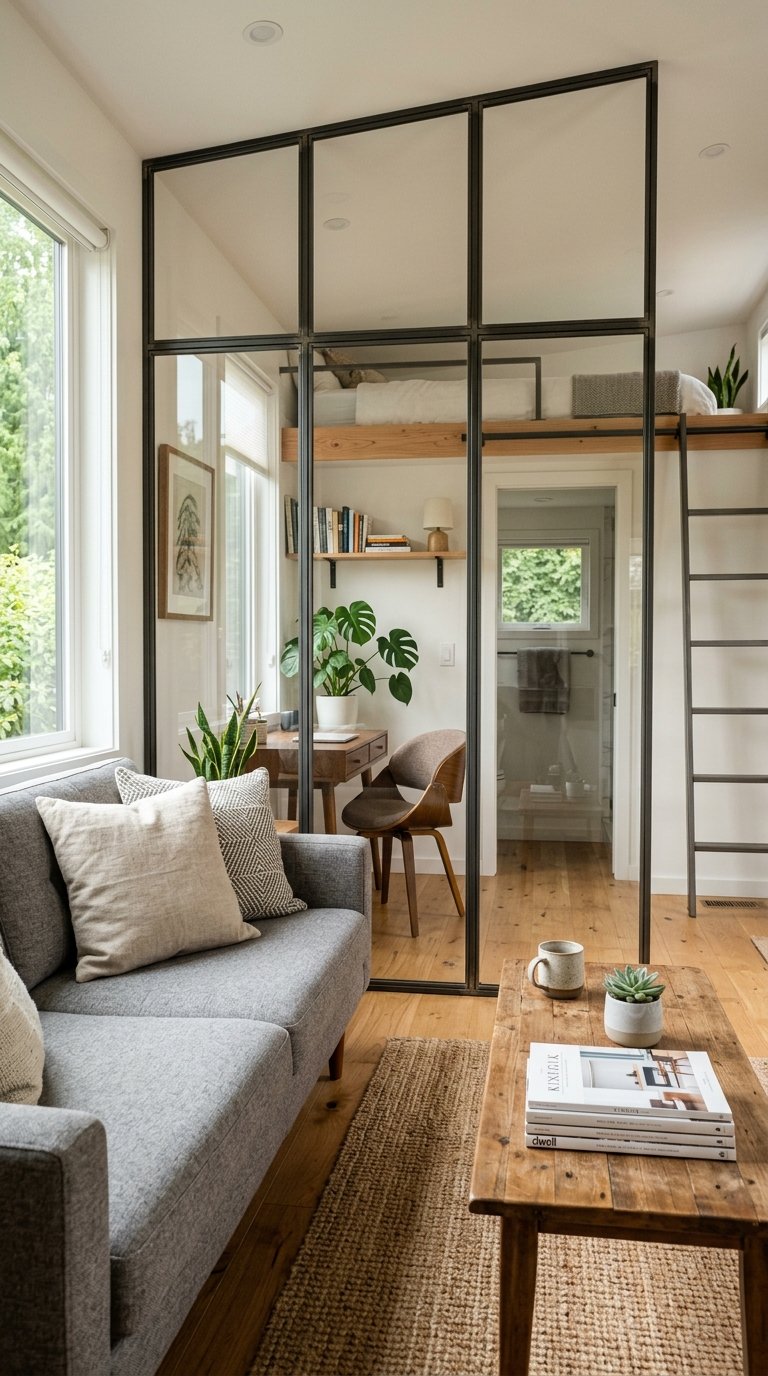
Dust motes often dance in sunlight, but sometimes a home feels like a long, dim hallway. Opening all the blinds might not brighten a room. Gray walls seem to absorb every ray, leaving residents longing for an airy space. Warm pine floors and crisp white walls can transform a cramped corner into an open area. Homes benefit from clever design choices that invite the outdoors inside. Twelve Scandinavian tiny house interiors show off smart ways to capture every available photon. Each small dwelling uses light wood tones and simplified layouts to expand visual space. Readers will discover practical ideas for bringing that same bright, calm feeling into their own compact living area.
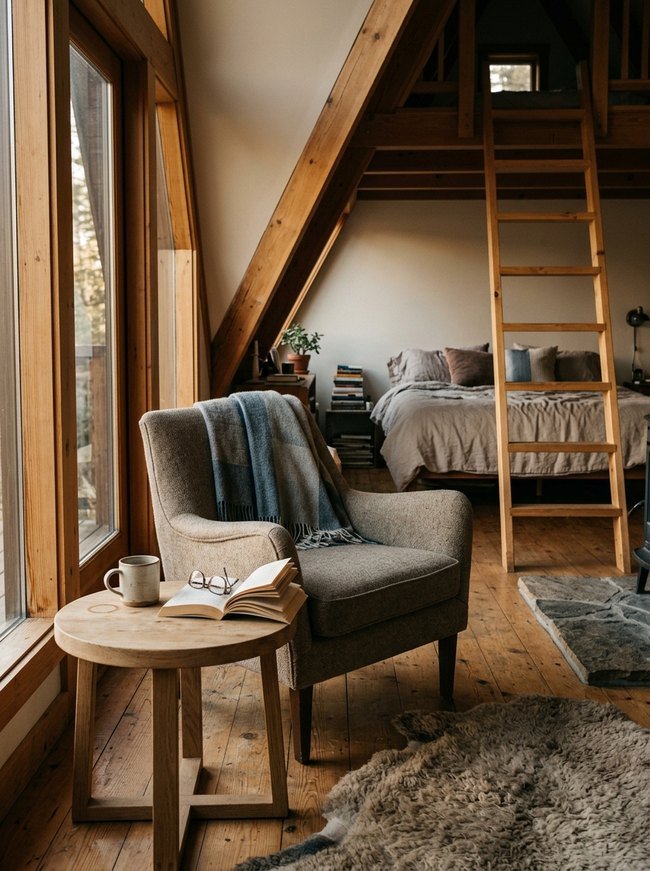
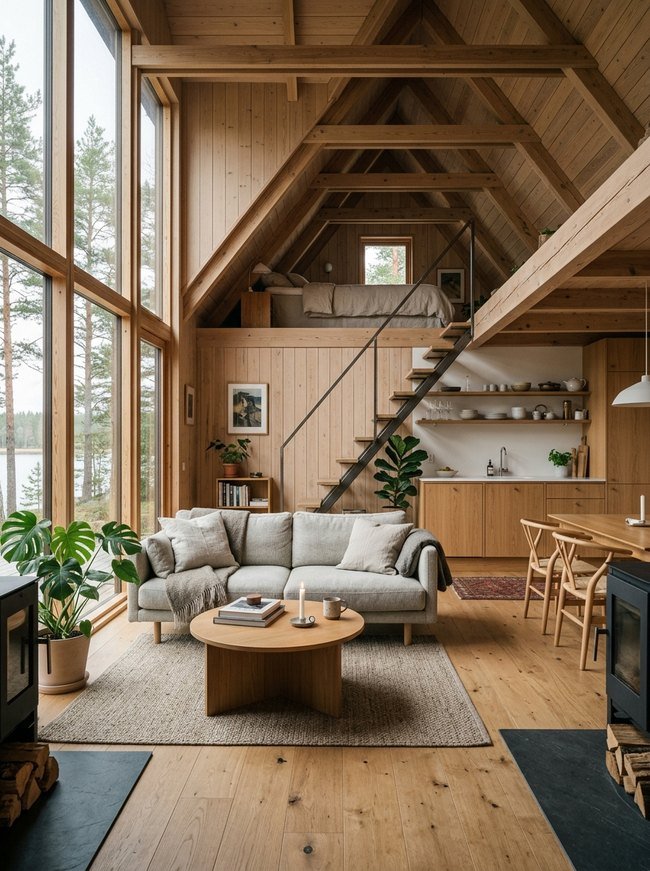
1. Nordic A-Frame Loft
Warm wooden beams frame large windows, pulling ample natural light into the living space. A beige armchair with a plaid blue blanket invites relaxation beside a small round side table holding a ceramic mug and open book. A simple, functional layout makes the interior a welcoming home.
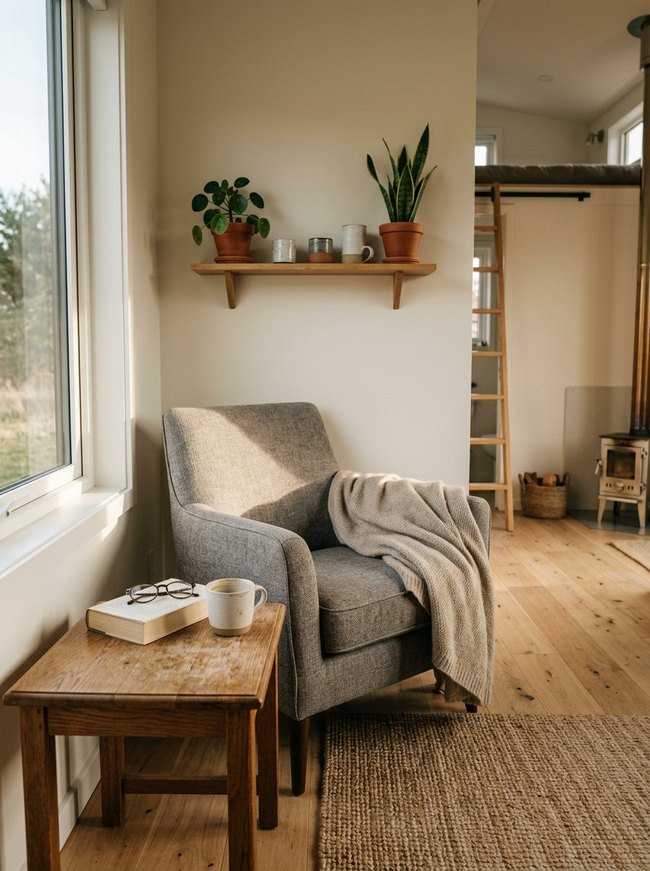
2. Minimalist Hygge Nook
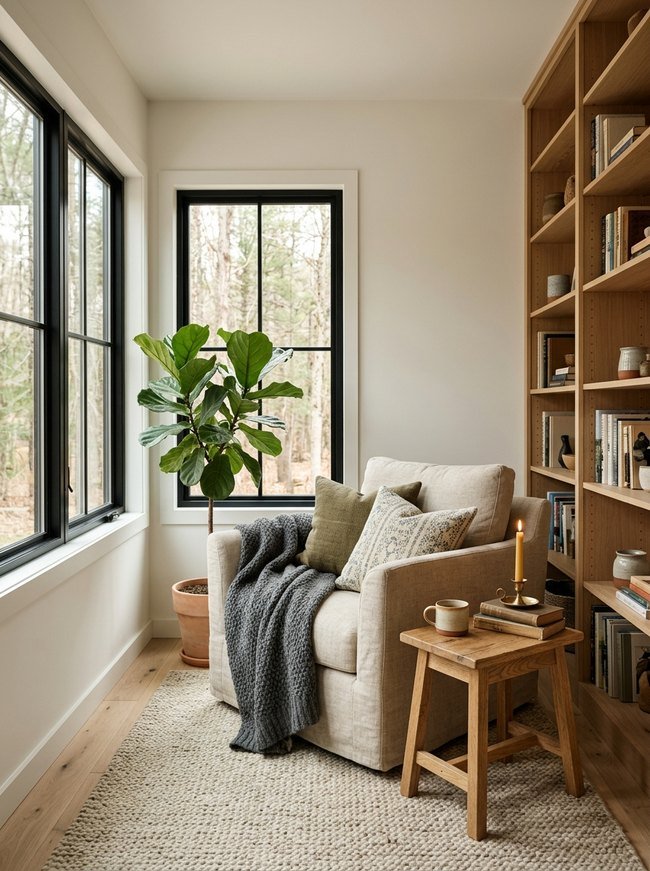
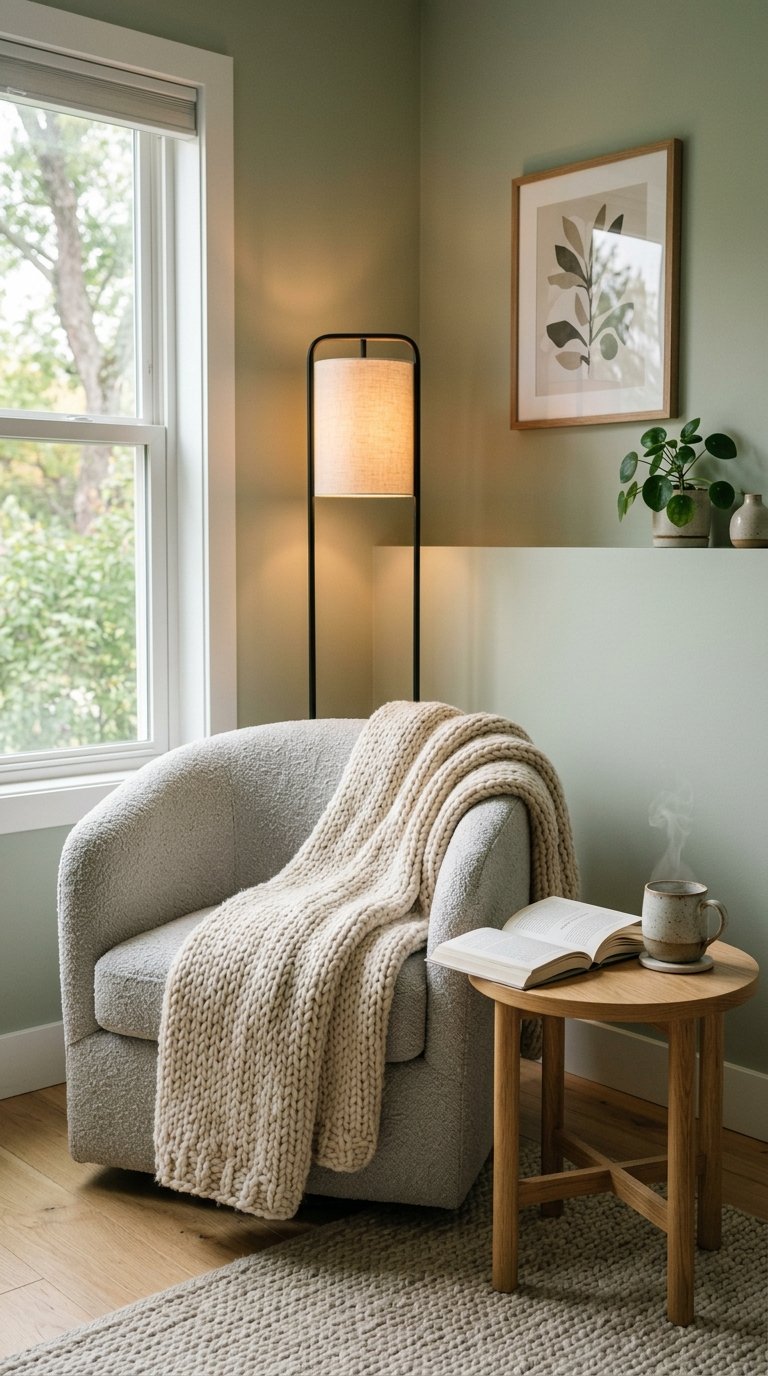
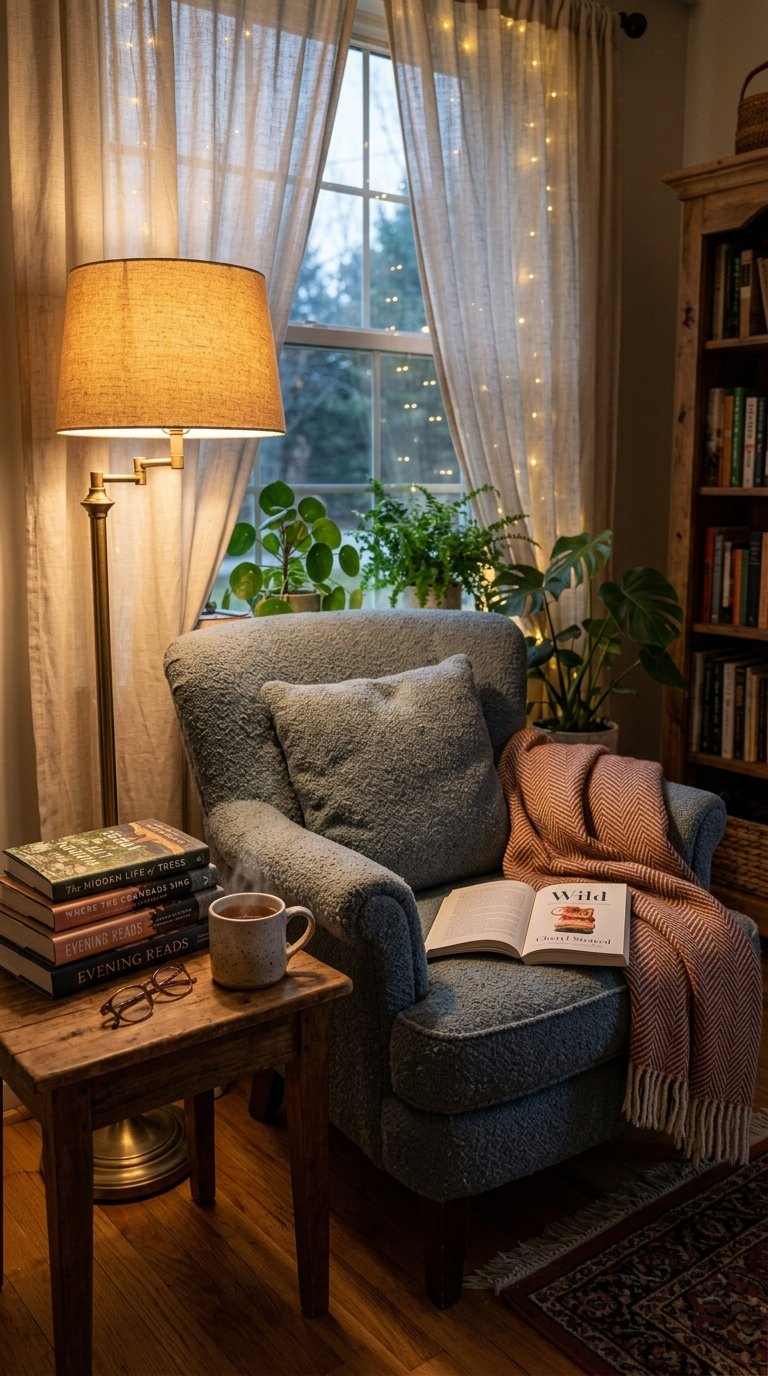
A plush gray armchair invites you to relax by the bright window, its soft knitted blanket draped casually for warmth. The light wooden side table holds a book, reading glasses, and a stoneware mug, creating a comfortable spot for quiet moments. The corner excels at crafting a personal retreat within a smaller living area.
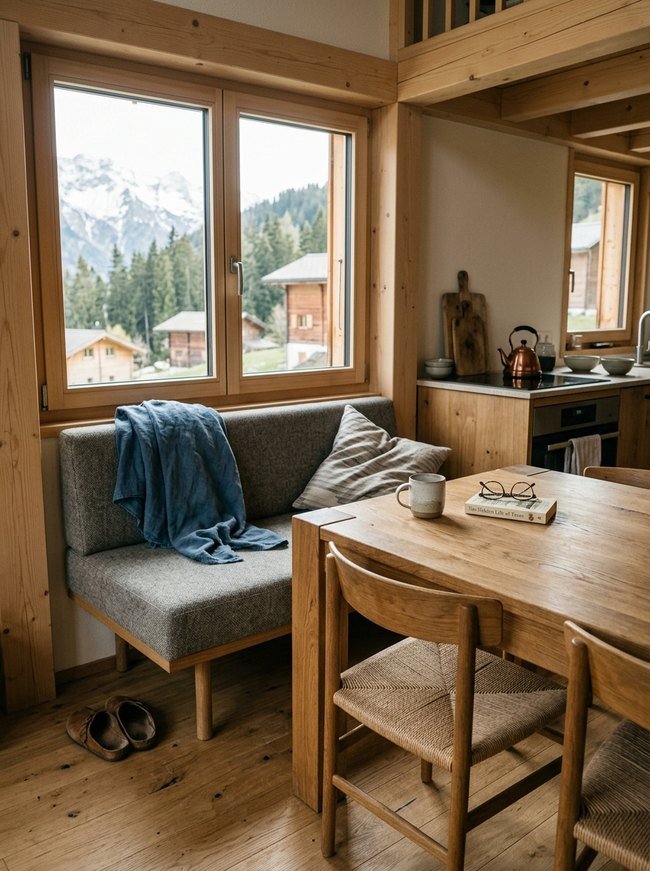
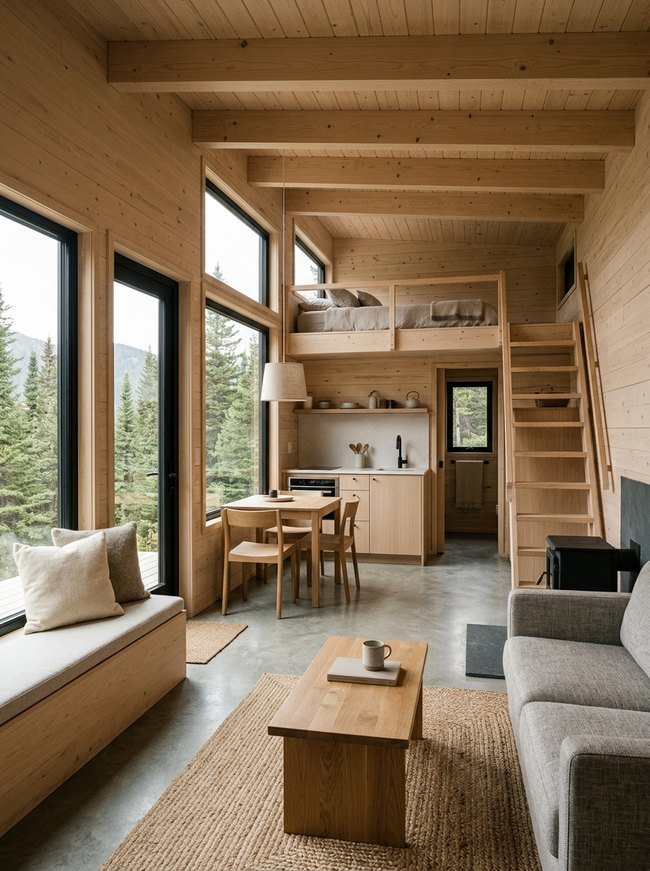
3. Bright Alpine Sanctuary
Light wooden window frames welcome the expansive mountain view into the living space, making the home feel much larger than its actual footprint. A cozy grey bench seat with a striped pillow and blue linen throw offers a comfortable spot for enjoying the scenery or reading a book. The sturdy oak dining table and woven rush chairs provide a warm, inviting area for meals and conversation, maximizing both function and beauty in the compact dwelling.
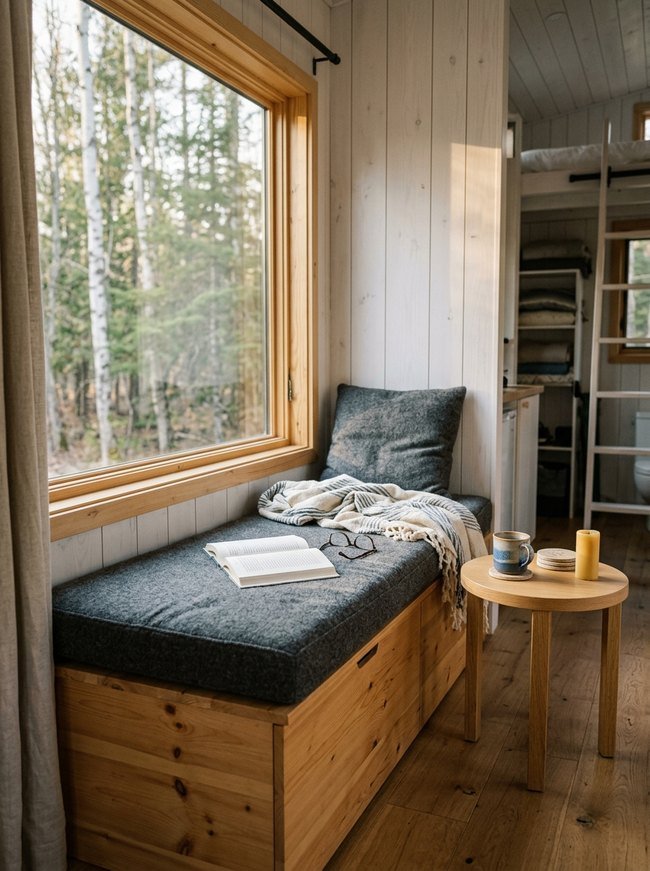
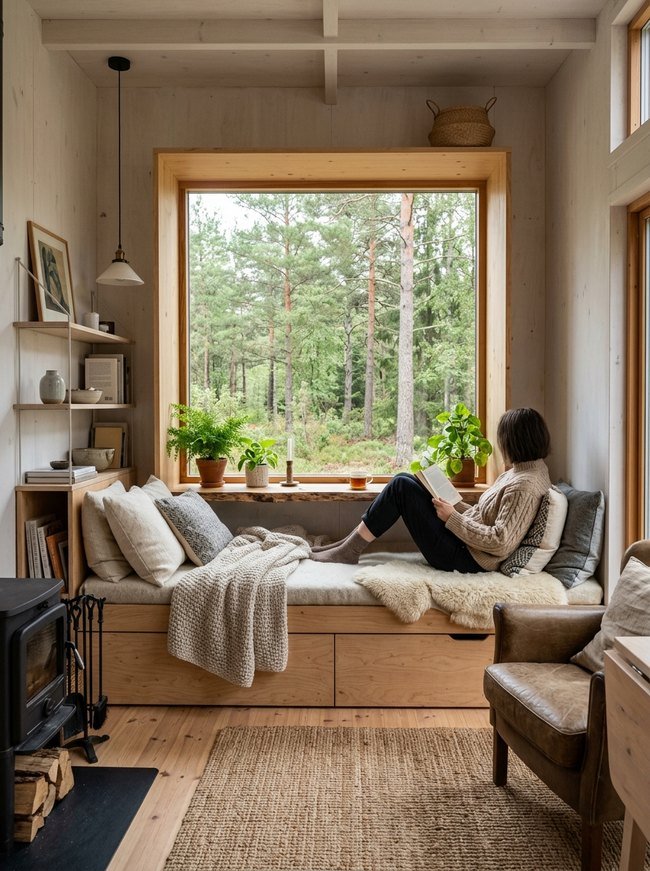
4. Forestview Window Bench
A large window frames a peaceful forest view, inviting natural light deep into the room. A wood-framed bench with a thick gray cushion provides comfortable seating and hidden storage below. The clever window bench makes a perfect reading nook, offering both relaxation and practical space-saving solutions for your small home.
5. Coastal Scandi Retreat
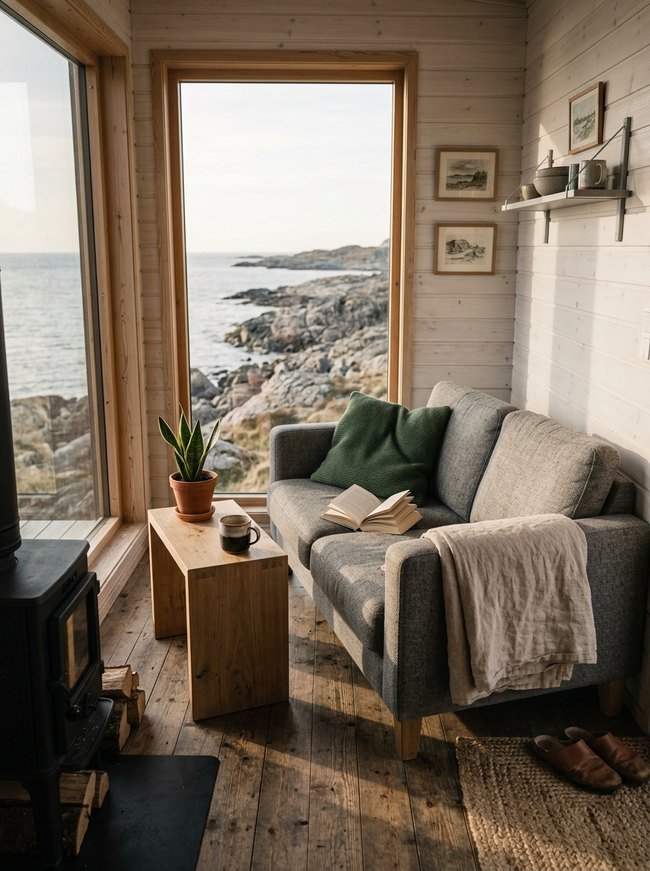
A wide window frames the rocky coastline, bringing the expansive ocean view directly into the home. Blonde wooden floors and light plank walls create a bright, airy feeling, making the small space feel larger and more open. The cozy setup combines a small wood stove and a compact gray sofa to offer a perfect spot for quiet relaxation.
6. Gable Wall Sunroom
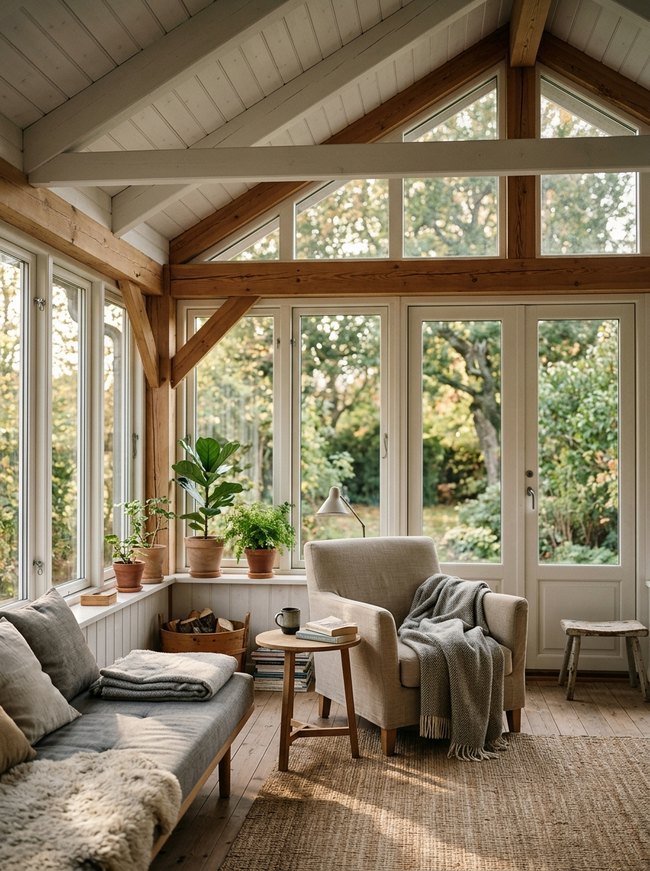
Natural pine beams define the sunroom’s structure, creating a warm contrast with the bright white ceiling planks and window frames. Tall glass panels fill the entire gable wall, flooding the space with abundant sunlight and offering clear views of the green outdoor landscape. The scandinavian tiny house provides a tranquil spot for reading or relaxing, perfectly blending indoor comfort with nature’s beauty.
7. White Oak Haven
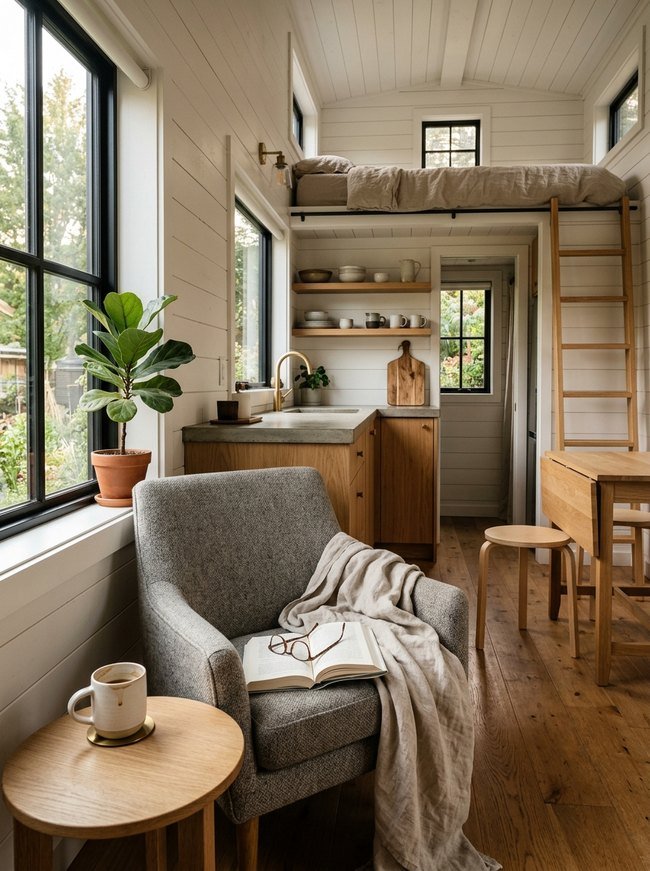
Large black-framed windows pull focus to the vibrant green garden outside, bringing nature indoors. Light oak cabinets and a matching drop-leaf table create flexible storage and dining solutions for the compact living area. The house maximizes natural light, making every corner feel open and airy.
8. Sheepskin Reading Corner
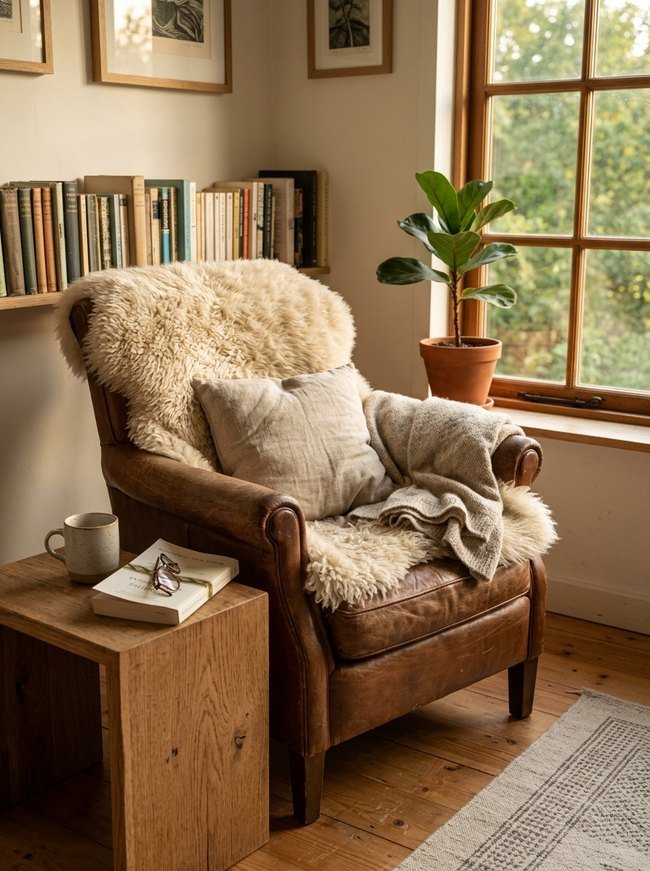
A rich brown leather armchair holds a fluffy cream sheepskin throw, creating a soft place to relax. The oak window frame brings warm tones into the room, complementing the fiddle leaf fig plant on the sill. The reading nook offers a quiet spot for reading or contemplation, especially with close access to books on the floating wooden shelves.
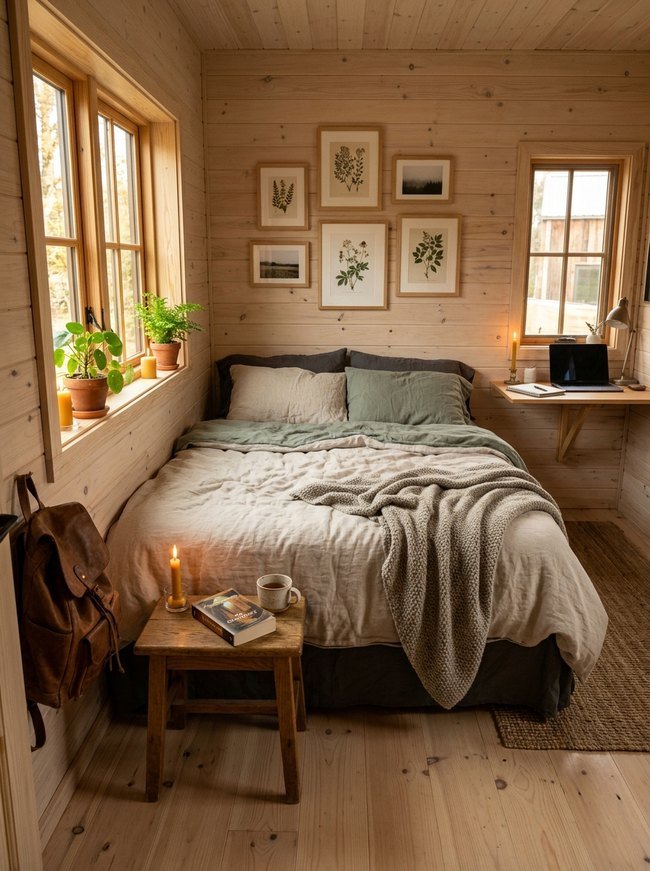
9. Candlelit Cozy Bedroom
Pale pine planks line the walls and ceiling, providing a warm, natural backdrop for the cozy bedroom space. A small wooden stool holds a lit beeswax candle and an open book, inviting you to relax. The small dwelling perfectly balances functionality with rustic charm.
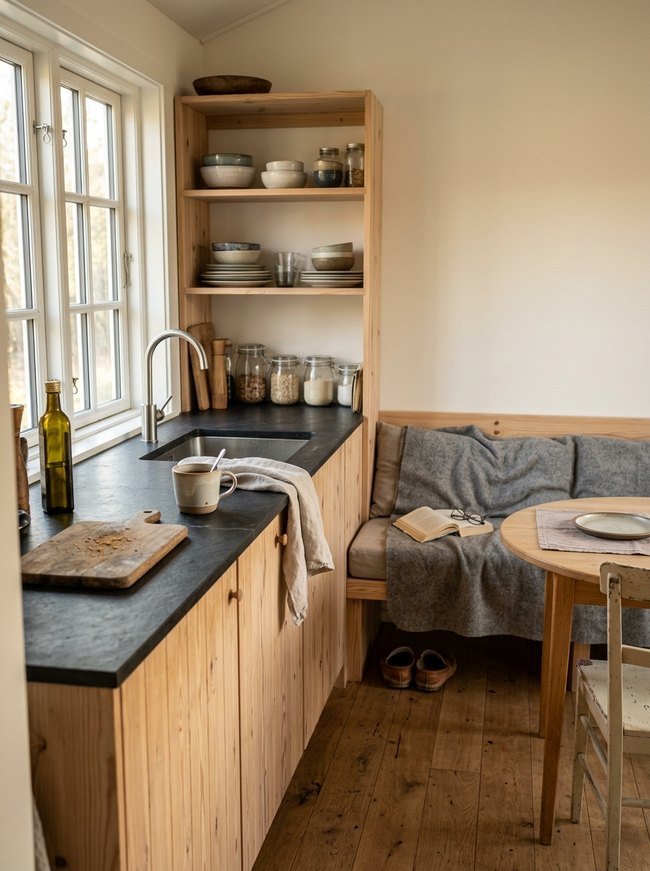
10. Simple Plank Kitchen
Raw pine plank cabinetry lines the entire kitchen wall, offering warm storage under dark charcoal countertops. Open shelves above the sink keep dishes and dry goods handy. A built-in dining nook with a soft gray blanket creates a comfortable place to relax.
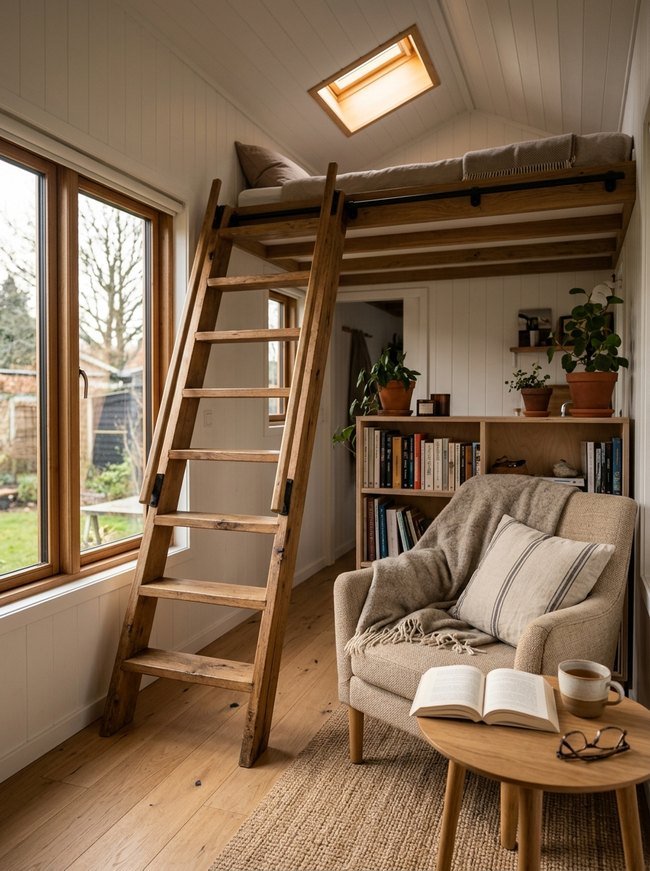
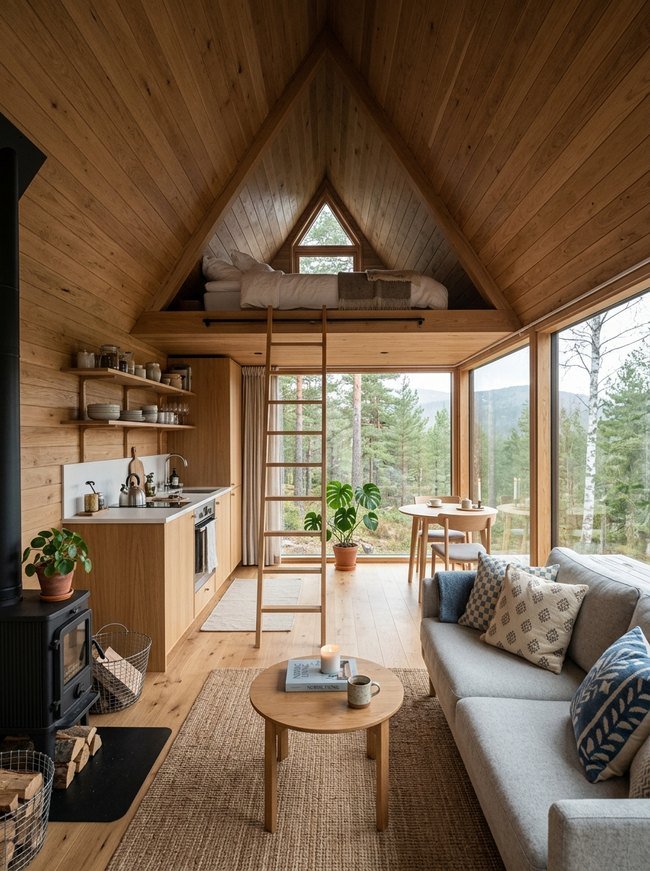
11. Loft Ladder Skylight
A robust wooden ladder leans against the elevated sleeping loft, granting access to your cozy bed. The bright skylight above the bed floods the ceiling with natural light, making the small space feel larger. The clever design maximizes vertical space, providing both a private bedroom and an open living area below.
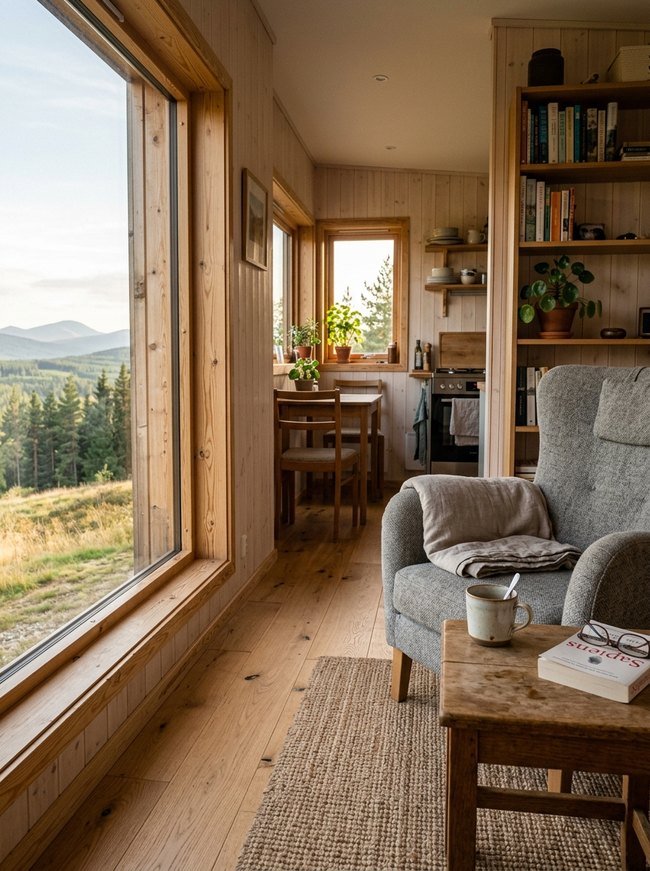
12. Pine Framed Vista
A wide window frames a sweeping mountain view, bringing the vast outdoors right into the living space. Light honey-toned pine planks cover the walls and floor, creating a warm, airy feeling throughout the small home. A gray armchair with a soft linen throw invites relaxation and enjoyment of the scenic vista, making the tiny house feel much larger.
Beyond White Walls: Mastering the Nuance of Pale Wood Tones
…warmth from pine planks. Birch plywood offers a softer, almost creamy surface for your tiny house walls. Its fine, even grain creates a quiet backdrop, allowing colorful textiles or a ceramic mug to stand out. Ash wood shows a bolder, open grain pattern. This light wood brings more visual texture to a small kitchen island or a compact dining table.
Many homeowners think all light woods work. Not so. Yellow-toned maple, for example, often fights with the cool daylight found in northern climates. True Scandinavian spaces use specific treatments like lye or white oil on woods such as spruce or light oak. Lye treatment neutralizes yellow tones, leaving a silvery, pale finish on floorboards. White oil pushes a subtle, milky hue into the wood, brightening every fiber. This careful attention to finish keeps the overall palette fresh and expansive.
Your choice impacts how daylight bounces around. A pale, wide plank floor makes a room feel larger. Darker wood absorbs light, making a small room shrink. Consider the natural light source you have. South-facing windows welcome warmer sunlight; cooler lye-treated ash balances that golden glow. North-facing windows bring in a cooler, blue light. Here, a slightly warmer white-oiled birch floor adds a touch of subtle warmth. Every surface holds purpose.
Strategic Reflection: Harnessing Hygge Through Clever Surface Choices
Reflective surfaces truly multiply daylight inside a compact area, making rooms feel larger without adding square footage. Polished concrete floors send sunbeams bouncing deep into corners, brightening dark spots in a clever way. White subway tiles with a subtle gloss scatter light across kitchen walls. Many people think only mirrors bring more light. However, other materials work harder. A large, matte black steel countertop will absorb light, making the room seem smaller. Instead, choose a light ash wood surface. This natural grain catches and spreads ambient glow. Pale birch plywood walls also push light around. You want every surface to work for you. Even a single brass accent lamp can pick up and throw light. Consider your ceiling. A crisp white ceiling paint makes the room taller, reflecting sunshine down onto your furnishings. Dark painted ceilings, conversely, absorb light and shrink the perceived height. That is a common mistake. Each pale surface helps your **Scandinavian tiny house** feel airy and wide.
Which Idea Will You Try First?
That’s 12 different takes on scandinavian tiny house. The best ideas above are usually the smallest moves — one material, one layout shift, one piece of furniture in the right place. Pick whichever room feels closest to your space and start there before tackling the rest.
Found an idea worth keeping? Save this post to your Pinterest board so it’s waiting for you when you’re ready to start your own project.
A small space shows its true colors under bright sun. Many articles discuss tiny living, but they skip the part where bad light makes a good design feel like a dark cave. Smart designers know natural light changes everything inside four walls. A small wooden kitchen should glow, not just sit in shadow. Nobody wants a cramped feeling when stepping through the front door. Three Scandinavian tiny house interiors grab every available sunbeam. White painted walls reflect light deep into each room. Polished concrete floors send light bouncing around. Every clever nook or built-in shelf feels open and airy. A bright interior feels better.
1. Nordic A-Frame Loft
Soaring walls of honey-toned pine planks draw the eye straight up to the vaulted ceiling. An open, airy feeling is achieved by using natural wood from floor to ceiling in a consistent, light tone. Dark stains that make small spaces feel cramped are avoided.
2. Hygge Window Nook
The wide window nook creates a cozy reading space with plush cushions and a sheepskin throw. Homeowners can build a similar light wood bench with deep storage drawers underneath to keep the living area tidy. Consider adding a natural jute rug to define the relaxation zone.
3. Minimalist Cabin Retreat
Wide black window frames bring the green forest right into the living space, making the small room feel much larger. Light wood walls and ceilings create a bright, airy feel, allowing the dark window frames to pop. For your own home, choose a single strong accent color to highlight natural wood tones.
Beyond White Walls: Scandinavian Colors That Amplify Light (Without Feeling Cold)
Many people assume bright white paint is the only path to a light-filled Scandinavian tiny house. Actually, a sterile white box often feels empty and cold, not warm and welcoming. Instead, consider soft, muted hues that reflect daylight without overwhelming the small footprint. For instance, a pale sage green on an accent wall brings the outdoors inside, making the room feel larger.
Warm grays with a beige undertone bounce light around your living space more effectively than stark, cool grays. Darker colors like a rich charcoal or a deep navy can surprisingly make a small room seem more expansive when used strategically. Paint the bottom half of a wall in a deep color, leaving the top half and ceiling a lighter shade. This trick draws your eye upward, creating an illusion of height.
Your choice of fabric also plays a big role. A chunky knit throw in dusty rose or a set of linen curtains in light sky blue adds texture and diffuses sunlight beautifully. Think about the raw wood tones present in your furniture; a light oak floor pairs well with almost any soft color palette. Even small decorative pieces, like a honey-toned ceramic vase or a deep forest green wool cushion, contribute to the overall feeling of spaciousness and warmth.
The Invisible Divide: Clever Layouts for Open-Plan Tiny Homes (That Don’t Feel Like a Dorm Room)
Many people think you need actual walls to separate rooms in a tiny house. Most designers tell you to add a half-wall or a bookshelf to create a visual barrier. However, a physical divider chops up precious floor space and blocks natural light. Savvy homeowners instead use the floor itself to define distinct zones.
Consider a raised wooden platform for your sleeping area, elevating the mattress by one foot. This subtle change lifts the bed above the main living space without blocking views of the outside world. Your brain registers a separate room without any actual wall construction. Another effective trick involves area rugs; two different textured wool rugs, one a soft cream and the other a deep charcoal, instantly section off a sitting area from a workstation.
Often, you see people push all furniture against the walls, hoping to make the central space appear larger. This common mistake leaves an empty, undefined void. Instead, float a small, two-seat sofa with a low back in the middle of your living area. Place a round, oak coffee table four inches in front of it. This arrangement creates a cozy conversation nook and suggests a living room without any rigid boundaries.
Clever lighting also helps delineate different functions within a small footprint. Install a single brass pendant lamp over your dining table, hanging down twenty inches. A bright, focused beam of light identifies the eating zone. Recessed LED strips along the bottom of your kitchen cabinets illuminate the countertop workspace, making it feel distinct from the adjacent relaxation spot. These simple, physical markers prevent your open-plan home from feeling like one big, undifferentiated box.
Which Idea Will You Try First?
That’s 3 different takes on scandinavian tiny house. The best ideas above are usually the smallest moves — one material, one layout shift, one piece of furniture in the right place. Pick whichever room feels closest to your space and start there before tackling the rest.
Found an idea worth keeping? Save this post to your Pinterest board so it’s waiting for you when you’re ready to start your own project.
A small footprint home provides efficient living, yet a narrow interior often sacrifices bright, open spaces. A Scandinavian tiny house, however, prioritizes both compact design and abundant natural light. Homeowners want a streamlined living area; homeowners also crave wide, sunlit rooms. Every Scandinavian tiny house below navigates this delicate balance, presenting unique solutions for maximizing daylight within limited square footage. One tiny home features tall, double-pane windows that reach almost to the vaulted ceiling. Another tiny house uses light birch wood and white painted walls to reflect every ray of sunshine. Each option showcases a distinct approach to integrating generous light with a minimal footprint. Pick the right blend for your small dwelling.
1. Nordic A-Frame Loft
This scandinavian tiny house prioritizes a grounded, natural feel over bright, stark minimalism. Honey-toned oak planks cover every wall and the vaulted ceiling, creating a continuous, warm enclosure. The oak planks trade away visual openness for a deep connection to natural wood, making this an excellent choice for someone seeking a rustic, cozy retreat rather than an expansive modern aesthetic.
2. Bright Hygge Corner
The Scandinavian tiny house room prioritizes rich textures over open space, creating a cozy reading corner. A thick gray knitted throw blanket rests on a cream linen armchair, giving up visual lightness for a sense of deep comfort. The room design serves the reader who seeks a private, enclosed retreat, not someone desiring expansive, airy interiors.
3. Minimalist Cabin Retreat
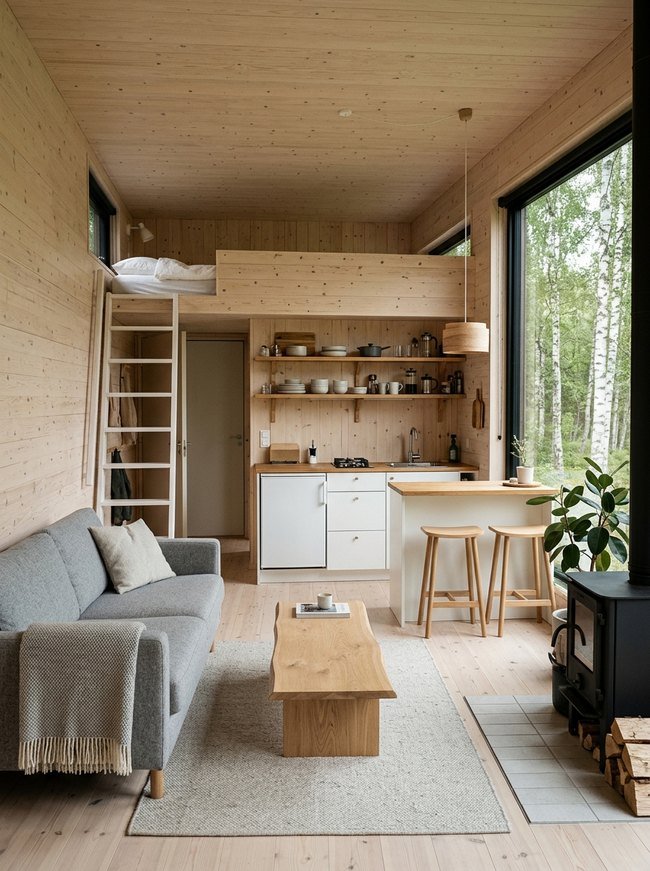
The Scandinavian tiny house opts for rustic warmth rather than sleek modern lines. Pale wooden planks cover every wall, the floor, and the low ceiling, creating a cozy box that trades expansive height for intimate closeness. A cast iron wood-burning stove and a live-edge wooden coffee table confirm a preference for natural textures over polished surfaces, making this a fitting choice for someone seeking a cabin feel, not an urban loft.
Should You Prioritize Full Wall Windows or Strategic Smaller Openings?
Choosing between a massive glass wall or several smaller windows changes your tiny home’s daily feel. Big panes of glass offer sweeping views of a forest or a wide open field. However, those huge window surfaces mean less wall space for kitchen cabinets or tall bookshelves. Privacy becomes a serious concern when your entire living area is visible from outside your tiny house. Consider the extra cost for thick, insulated glass panels, which prevent heat loss during cold months.
Small, rectangular windows give you more layout freedom inside your tiny home. You gain valuable wall sections for hanging framed artwork or mounting a flat-screen television. Smaller openings still let in plenty of natural light without sacrificing your sense of enclosure. Building with multiple smaller windows costs less than fabricating one giant, custom glass unit. Pick smaller windows if your tiny home parks in a busy area or if you value abundant storage. Choose the wall of glass for a truly remote location and a wide, private vista.
Matte White Walls vs. Light Wood Paneling: Which Maximizes Light AND Warmth?
Choosing between matte white walls and light wood paneling for your tiny home presents a distinct design decision. Fresh white paint offers the strongest light reflection, bouncing sunshine across every corner of the room. Your small space appears notably larger with a single coat of bright white pigment on every vertical surface. However, white paint alone risks a sterile, cold sensation, especially during long winter months.
Natural timber paneling, like pale birch or honey-toned pine, introduces inherent warmth. A wide plank of light wood absorbs some direct light, creating softer shadows and a more intimate atmosphere. Wood paneling requires more upkeep; moisture can warp planks, demanding careful sealing and regular cleaning. Darker wood tones absorb too much light, shrinking the perceived volume of your tiny house.
Select matte white walls if maximizing perceived area and raw brightness remains your main goal. This choice suits people who bring color through textiles like indigo throw blankets and mustard yellow cushions. Choose light wood paneling when a deeply ingrained sense of coziness matters most in your small dwelling. Wood accents work well for individuals prioritizing natural textures and a lived-in feel, perhaps adding a braided wool rug to complete the hygge aesthetic.
Which Idea Will You Try First?
That’s 3 different takes on scandinavian tiny house. The best ideas above are usually the smallest moves — one material, one layout shift, one piece of furniture in the right place. Pick whichever room feels closest to your space and start there before tackling the rest.
Found an idea worth keeping? Save this post to your Pinterest board so it’s waiting for you when you’re ready to start your own project.
Most folks think small houses mean dark spaces. That’s just not true with smart design. Honestly, squeezing into a tiny footprint can feel like a punishment if you don’t get light right. You need sunshine, not a cave, especially when you’re talking about a Scandinavian tiny house. Scandinavian design masters this exact problem, bringing bright, open feelings into even the smallest corners. They use light woods, white walls, and big windows to open things up. We’re talking about clever tricks that make a 200-square-foot box feel like a breath of fresh air. This isn’t about just putting a lamp in a corner; it’s about making every square inch work for you, bouncing light everywhere. These homes show how to use natural light to expand your space visually. You’ll see fifteen Scandinavian tiny house interiors that prove small living doesn’t mean dark living.
1. Nordic Alcove Window Seating
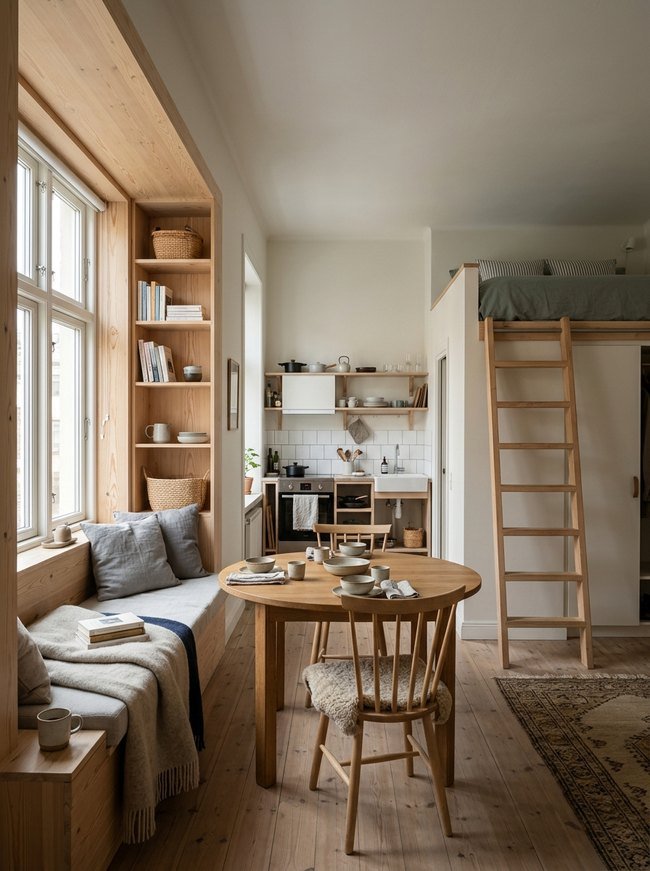
This scandinavian tiny house features a clever window seat with built-in shelves, offering both comfort and storage. You can create a similar cozy nook by adding soft linen cushions and a light wool blanket to a simple bench. Do not clutter the shelves; instead, display a few favorite books and natural woven baskets for a clean, calm look.
2. Hygge Loft Sleeping Nook
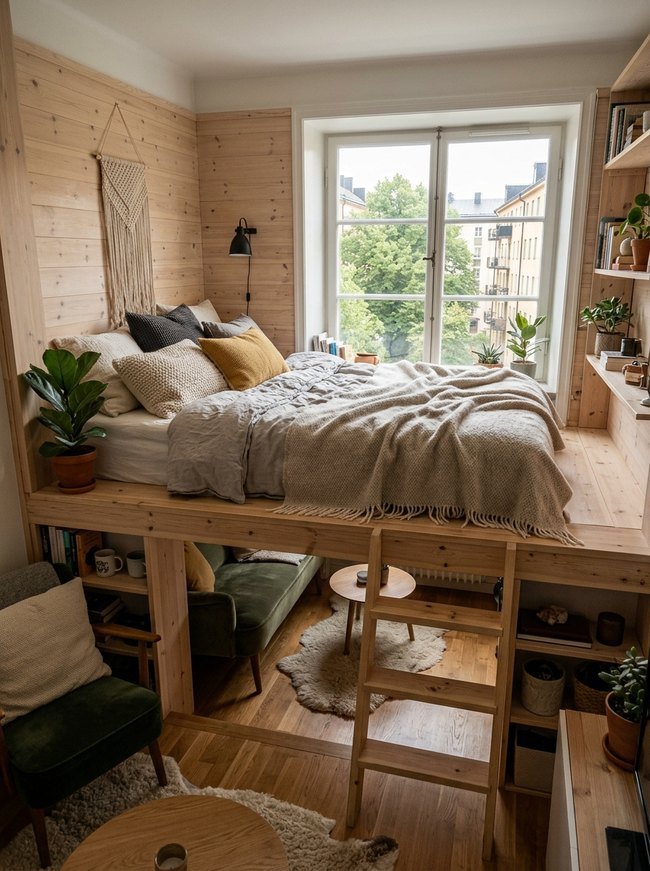
This scandinavian tiny house uses a raised bed platform to create two separate zones in a small area. Consider building up, not out, when you want to maximize space for both sleeping and a living room. Add soft textures like knitted blankets and faux sheepskin rugs to make your home feel extra cozy.
3. Blonde Wood Kitchenette Bright
The expansive wall of windows in this scandinavian tiny house brings so much natural light into the space, making the blonde wood glow. You can brighten your own small home by using light-colored wood for floors, walls, and cabinets. Avoid dark window treatments that block sunlight; instead, use sheer blinds or leave windows bare to let light stream in.
4. Minimalist Fjord Dining Corner
The light-toned vertical wood planks covering every wall and the ceiling make this scandinavian tiny house feel very open and bright. You can bring this simple, calm feeling into your own home by using natural wood textures on walls and floors. Do not clutter your window sills; instead, add just a few small terracotta pots or old books.
5. Arctic White Living Space
Lots of bright windows bring the snowy forest views right into this scandinavian tiny house. You can make your small space feel larger by painting walls white and using light wood floors. Keep your color scheme simple with natural tones and fresh greenery for a calming effect.
6. Pinecone Candle Hearth Glow
This scandinavian tiny house uses light pine wood on all walls and ceilings, creating a calm, airy feel. You can add warmth to a light wood base by bringing in a jute rug, cozy linen sofa cushions, and a soft knitted throw blanket. Avoid dark furniture pieces that could make your small space feel cramped.
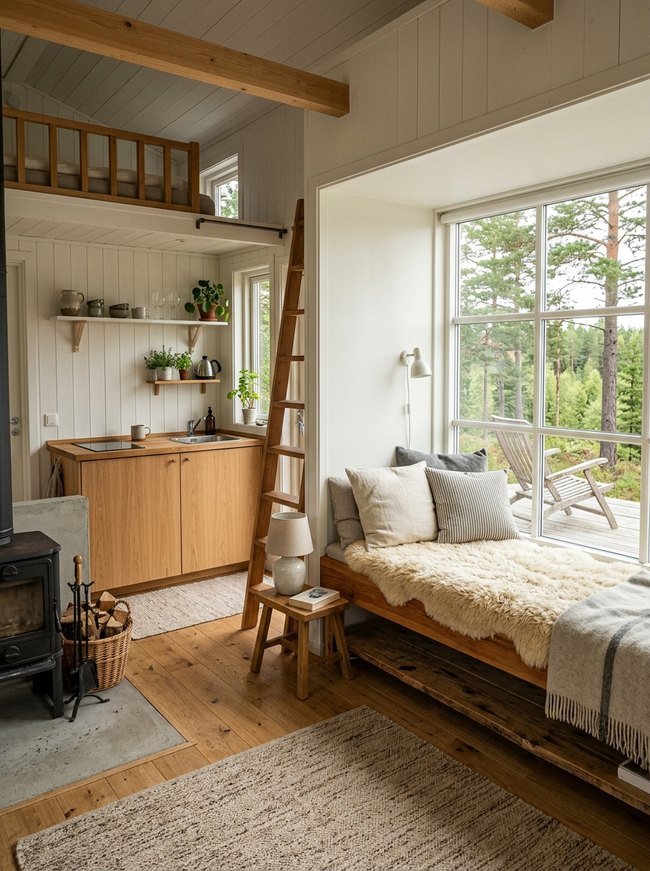
7. Sheepskin Window Daybed
This scandinavian tiny house features a large window daybed covered in a fluffy cream sheepskin rug, creating an inviting spot to relax. You can create a similar cozy feel in your own home by layering soft textures like wool throws and linen pillows. Choose natural materials and a simple color palette to enhance the bright, airy feeling of your space.
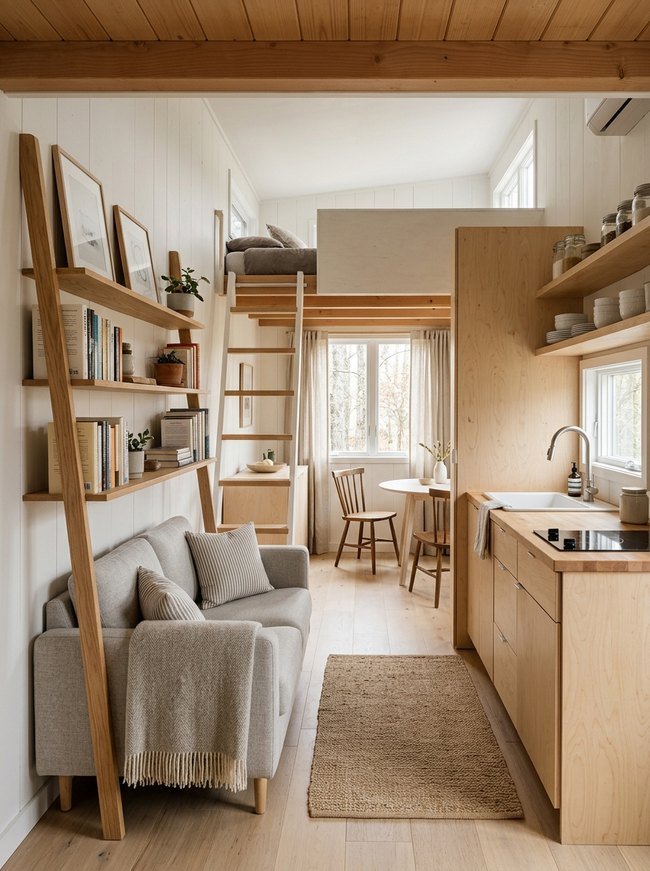
8. Scandi Ladder Bookcase Light
This scandinavian tiny house uses a tall oak ladder bookcase to save floor space and add storage. You can create a similar feeling by selecting light wood furniture and white walls in your own home. Avoid dark colors and heavy fabrics to maintain this bright, open feel.
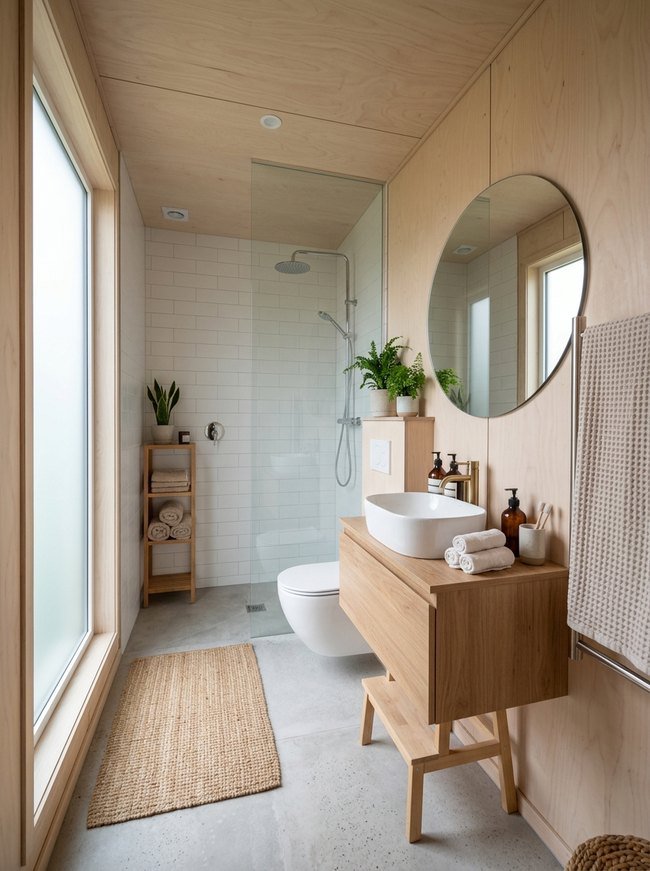
9. Clean Line Bathroom Retreat
The light blonde wood walls and ceiling in this scandinavian tiny house create a warm, inviting glow that makes the small bathroom feel much bigger. You can achieve this bright, open feel in your own home by using pale wood tones on large surfaces. Avoid dark colors in small spaces, as they tend to shrink the room.
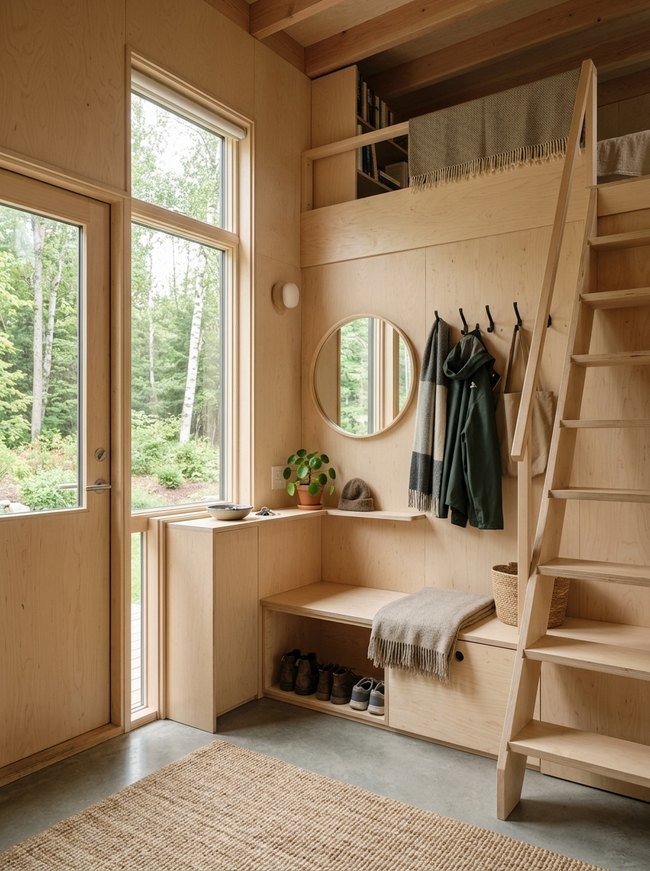
10. Birch Plywood Entryway
This scandinavian tiny house makes smart use of light birch plywood to create a bright, organized entryway. Tall windows and a glass-paneled door welcome natural light, making the small space feel open and airy. Consider adding a natural fiber rug like the one shown to add warmth and define your entry zone.
11. Skylight Reading Chair
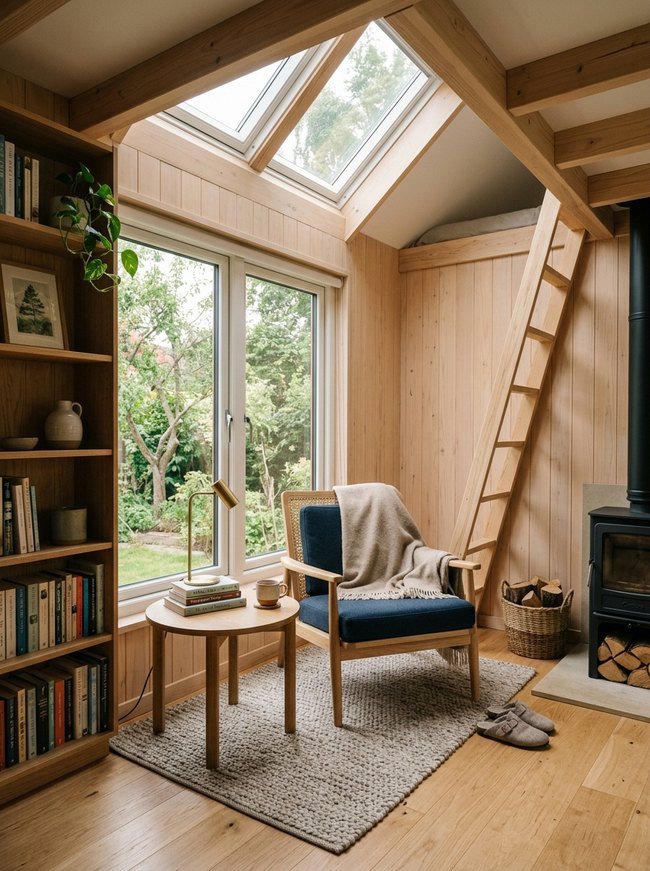
The large skylights and window bathe this scandinavian tiny house reading nook in natural light, making the space feel open. Consider adding a rich, deep blue accent chair like this one to bring a calming color into your wood-filled room. Always place your reading chair near a window for the best light and a relaxing view.
12. Warm Wood Desk Zone
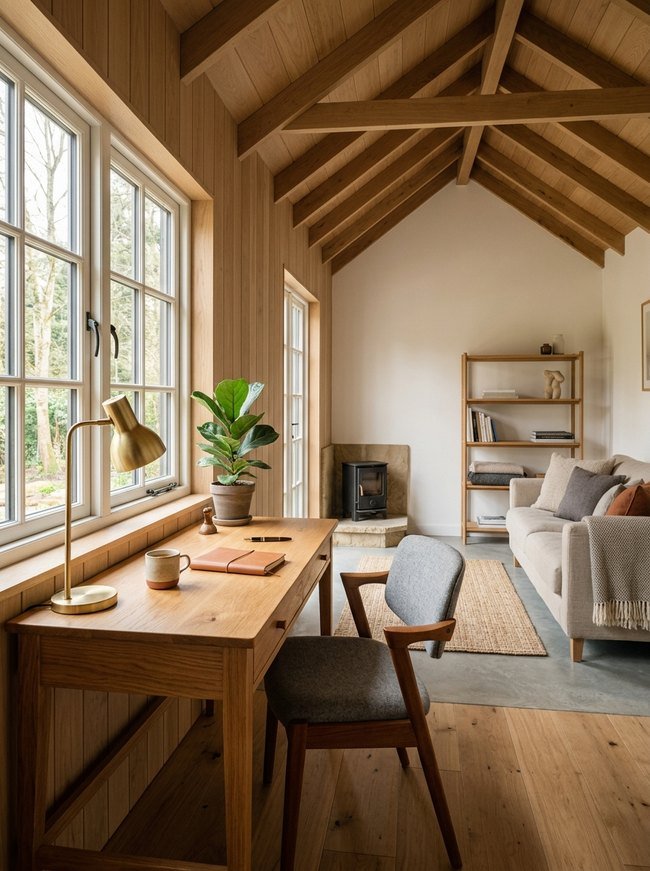
This scandinavian tiny house uses natural wood planks on the walls and ceiling to create a cozy, cabin-like feel. You can bring warmth to your own small space by choosing furniture and finishes in light-toned oak or maple. Avoid dark woods that can make a room feel smaller and less bright.
13. Simple Linen Bedroom
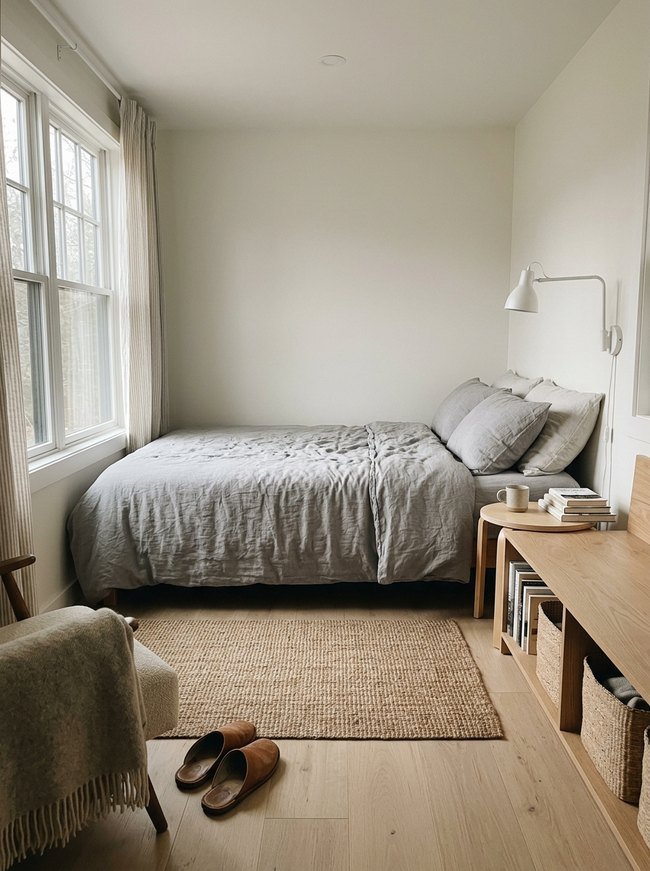
The inviting texture of the light gray linen duvet and pillows creates a soft, calming mood in this scandinavian tiny house bedroom. You can easily achieve a similar cozy feel by choosing natural fabrics like cotton or linen for your bedding. Avoid cluttering your nightstand; instead, keep only a few favorite books and a warm mug within reach.
14. Geometric Pattern Pantry
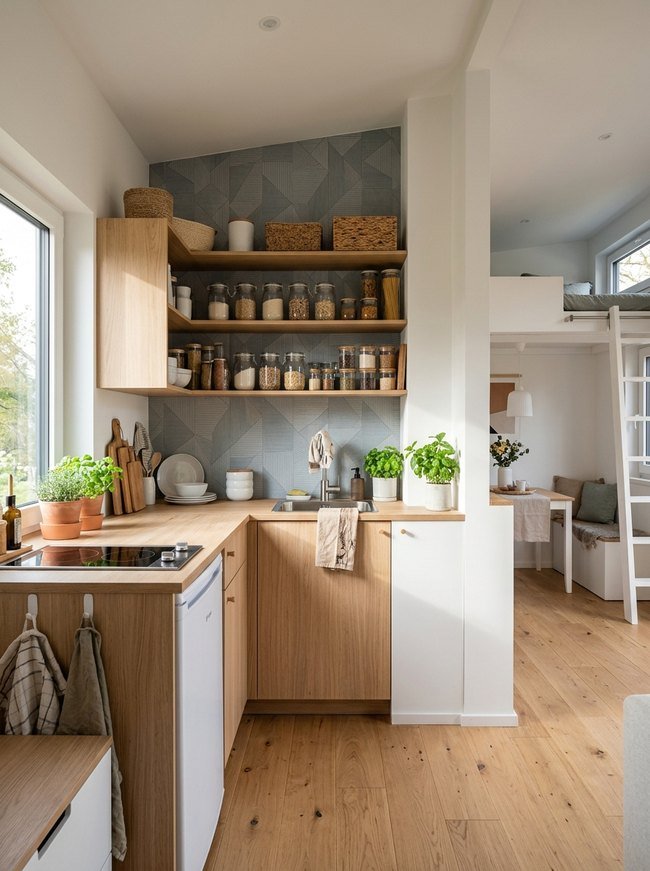
The geometric pattern backsplash adds a surprising modern touch to this scandinavian tiny house kitchen, blending cool blues with warm wood. You can recreate this organized look by storing dry goods in clear glass jars on open shelves, making them both decorative and easy to find. Think about adding a patterned tile behind your own kitchen sink to make a big style impact.
15. Bright Corner Workspace
This scandinavian tiny house makes smart use of natural light, placing a blonde wood desk directly under two large windows. You can create a calm and productive workspace by letting sunlight flood your desk area. Remember to keep your decor simple and airy, like the floating shelves with small green plants seen here, to avoid blocking the light.
Beyond White Walls: Adding Color While Keeping the Scandi Vibe
Most people believe white walls are your only option for a bright tiny home. They think any splash of color will shrink their small space. This common belief makes many Scandi tiny homes feel sterile, like a doctor’s office. Stop letting fear of color stop your creativity.
Instead, select one soft, muted shade for a single accent wall. Choose a light sage green or a pale dusty blue behind your bed. This subtle tint adds depth without making the room feel smaller. You might also introduce color through natural wood tones. A warm birch plywood wall brings a cozy feeling to your living area. You can also pick furniture with soft textures and muted colors. A charcoal gray sofa or a sheepskin throw in off-white adds comfort and visual interest. Display a few ceramic pots in terracotta or mustard yellow on your open shelves. These small pops create warmth and personality in your Scandinavian tiny home.
Maximizing Every Nook: Clever Storage Solutions You Haven’t Thought Of
Most folks believe more shelves fix clutter. However, visible shelves often make your small rooms feel smaller, especially in a Scandinavian tiny home. Think smarter, not just bigger, with storage that disappears.
Many homeowners stack boxes, hoping to hide things away. Instead, build storage into the walls themselves. Consider a shallow pantry behind a sliding barn door painted matte white; it holds spices without sticking out. You can also install under-floor compartments. These give you extra space for camping gear or seasonal clothes, completely out of sight.
People often buy big, bulky furniture for storage. Yet, multi-purpose items save floor space and reduce visual noise. Choose a bed frame with deep drawers underneath for linens. Buy an ottoman with a lid that lifts off, providing a spot for blankets or books. Your 15 Scandi tiny homes can feel open and bright when everything has a designated, hidden spot.
Another common mistake involves ignoring vertical space. Look up! Install slim, floor-to-ceiling cabinets in a narrow hallway. These units keep your cleaning supplies or extra toiletries tucked away. Think about using the backs of doors too. A simple over-the-door organizer for shoes or small tools clears up floor space instantly.
Which Idea Will You Try First?
That’s 15 different takes on scandinavian tiny house. The best ideas above are usually the smallest moves — one material, one layout shift, one piece of furniture in the right place. Pick whichever room feels closest to your space and start there before tackling the rest.
Found an idea worth keeping? Save this post to your Pinterest board so it’s waiting for you when you’re ready to start your own project.
You want your home to feel open and bright, even if it measures under 500 square feet. Finding clever ways to bring light into a compact living space takes smart design choices. Maybe you dream of clean lines, natural wood, and a calm feeling inside your small home. Scandinavian tiny houses show us how to make every corner feel expansive. These Nordic designs often feature large windows, white walls, and simple furniture that doesn’t block the sun. They understand how to maximize the feeling of space with clever tricks. We gathered 15 Scandinavian tiny house interiors that flood their rooms with natural light. Get ready to see some inspiring spaces.
1. Bright white Scandinavian tiny house kitchen with light wood accents and overhead skylight
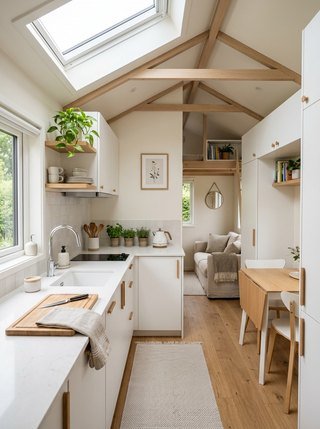
This scandinavian tiny house kitchen shines with bright white cabinets and light wood accents. A large skylight above the counter pours natural light onto the workspace. You can see a white rectangular sink with a chrome faucet. A long, light-colored rug stretches across the oak wood floor.
White square tiles form a backsplash behind the countertop, adding a subtle texture. Two wooden floating shelves hold a green plant and stacked dishes. The kitchen features a compact black stovetop and a white electric kettle with a wood handle. Several potted herbs sit neatly on the counter, ready for cooking.
Wooden beams crisscross overhead, drawing your eye up to the high ceiling. A small framed botanical print hangs on the wall, adding a touch of simple art. You will notice the consistent use of light wood for cabinet pulls and handles throughout the space. This cohesive design helps a small space feel open and airy.
The dining table, made of light wood, folds down to save room when not in use. Beyond the kitchen, a cozy living area includes a beige couch and a round mirror. Consider adding a skylight or large windows to bring more natural light into your own small kitchen.
2. Cozy Scandinavian tiny house living area featuring a sheepskin throw and large south-facing windows
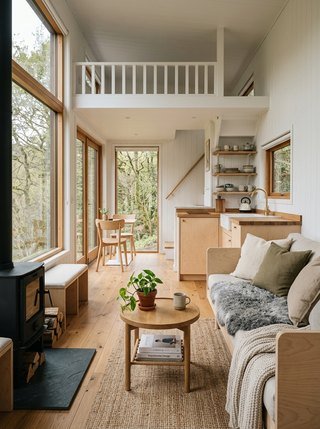
This Scandinavian tiny house living area feels bright and open. Tall, wood-framed windows span the left wall, letting in a lot of natural light and showing off the green trees outside. A dark, matte black wood-burning stove sits near the windows, with stacked logs underneath on a gray slate hearth. Opposite the stove, a light wood sofa offers a cozy spot.
You can see a fluffy gray sheepskin throw draped over the sofa cushions, adding texture and warmth. Several pillows in shades of cream, beige, and olive green rest against the sofa’s back. A round, light wood coffee table holds a potted green plant and a gray mug, with books tucked underneath. Below the table, a textured natural fiber rug in a woven pattern covers part of the light wood floor.
Beyond the living space, a small kitchen features light wood cabinets and open shelves displaying simple white and gray ceramic dishes. A brass faucet shines above a white farmhouse sink. Further back, a small dining area has two light wood chairs and a white table next to another large window, bringing the outside in. A white painted railing for a loft area sits above the kitchen. This Scandinavian tiny house truly maximizes its small footprint.
Consider adding natural textures like sheepskin or woven rugs to make your own small space feel inviting.
3. Minimalist Scandinavian tiny house bedroom bathed in morning light through sheer linen curtains
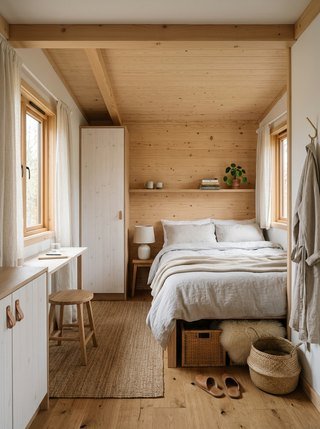
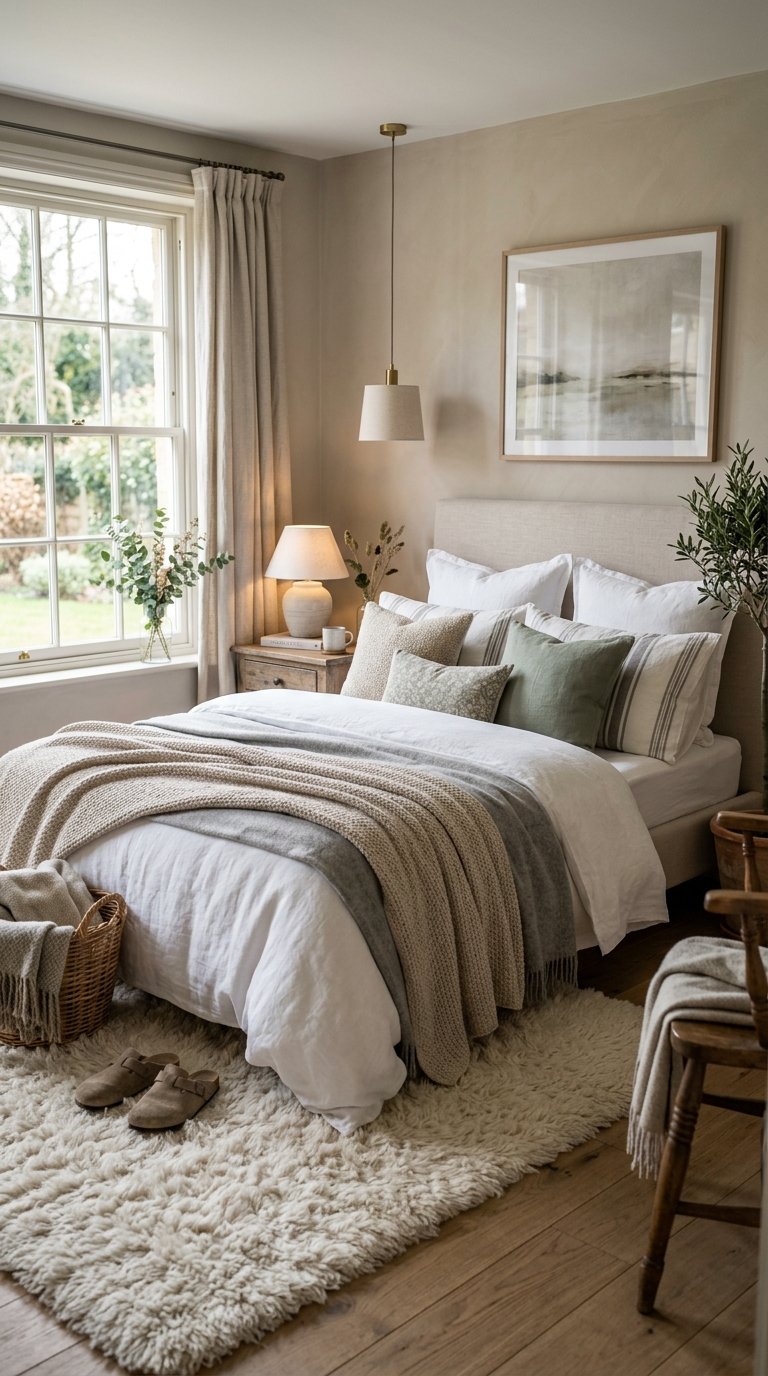
Warm natural wood paneling covers the walls and ceiling in this inviting scandinavian tiny house bedroom. Large windows allow ample daylight to fill the small space, softened by airy, off-white linen curtains. A built-in wooden bed frame features a light gray duvet and matching pillows, with a cream-colored knit blanket draped across the foot. Under the bed, a woven rattan basket and a fluffy white sheepskin pouf add texture and warmth.
On the right, a simple wooden nightstand holds a white ceramic lamp with a fabric shade. Above the bed, a long wooden shelf displays small books, two speckled ceramic mugs, and a green Pilea plant in a terracotta pot. To the left of the bed, a tall, narrow white cabinet with a light brown leather pull offers closed storage. Next to the cabinet, a light wood desk provides a workspace, accompanied by a round wooden stool.
A rectangular natural fiber rug covers part of the light-colored wooden floorboards. Brown leather slippers rest on the floor near the bed, ready for you to step into. A light gray bathrobe hangs on a brass hook near the entrance, suggesting comfort and ease. This scandinavian tiny house design uses light colors and natural materials to create a calm, uncluttered feel. You can bring more light into a small room by choosing sheer window coverings.
4. Open-plan Scandinavian tiny house interior with a strategically placed mirror reflecting natural light
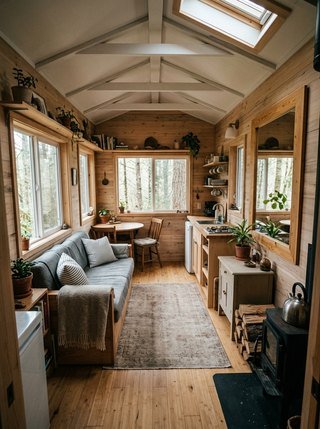
Warm pine planks cover the walls and floor of this inviting scandinavian tiny house. A long gray sofa with a woven throw sits beneath two large windows, letting in plenty of natural light. Across the room, a wooden mirror with a thick frame reflects the outside trees, making the space feel bigger. You can see a small kitchen area with a light wood counter and open shelves holding white mugs and dishes. Next to the kitchen, a black wood-burning stove with stacked logs provides a cozy touch. A small round wooden table and two chairs offer a spot for meals or work. Overhead, white ceiling beams contrast with the wood, and a skylight brings in even more brightness. A pale, patterned rug covers part of the floor, adding softness and texture. This clever layout makes the most of every square foot, proving that small homes can feel expansive. To make your small space feel larger, add a well-placed mirror to reflect light and outdoor views.
5. Hygge-inspired Scandinavian tiny house reading nook with candles and diffused light from a frosted window
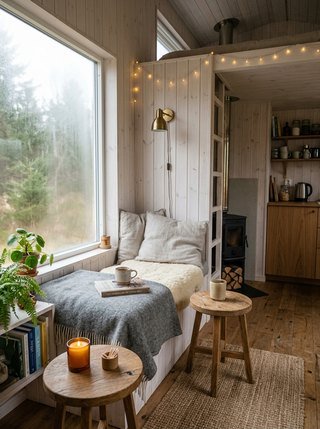
This cozy corner features a built-in window seat, inviting you to relax. White painted wood planks line the walls and ceiling, giving the scandinavian tiny house a bright, airy feel. A large window looks out onto green trees, blurring with a soft fog outside. Two cream linen pillows and a fluffy sheepskin throw create a comfortable spot on the bench. A soft gray wool blanket with fringes drapes over the seat, adding warmth and texture.
Small string lights hang across the upper wall, casting a warm glow. A brass wall lamp with a curved shade sits above the bench, ready for reading. Two round, rustic wooden stools serve as side tables. One holds an amber glass candle, its flame flickering gently. The other stool has a light brown ceramic mug and a small wooden container with matches.
Potted plants, including a fern and a Chinese money plant, bring a touch of green life to the window sill. A small white bookshelf tucked under the window displays a few books, making this a perfect reading nook. A natural fiber rug in a light brown color rests on the wooden floorboards, defining the space. You can create a similar inviting spot by layering different textures and warm lighting.
6. Vertical garden inside a Scandinavian tiny house, illuminated by full-length glass doors
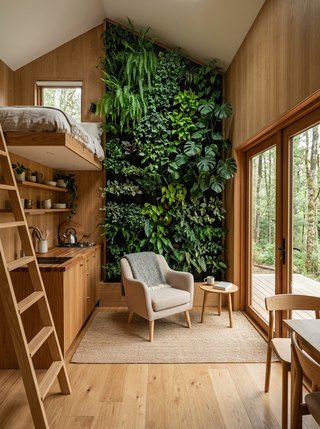
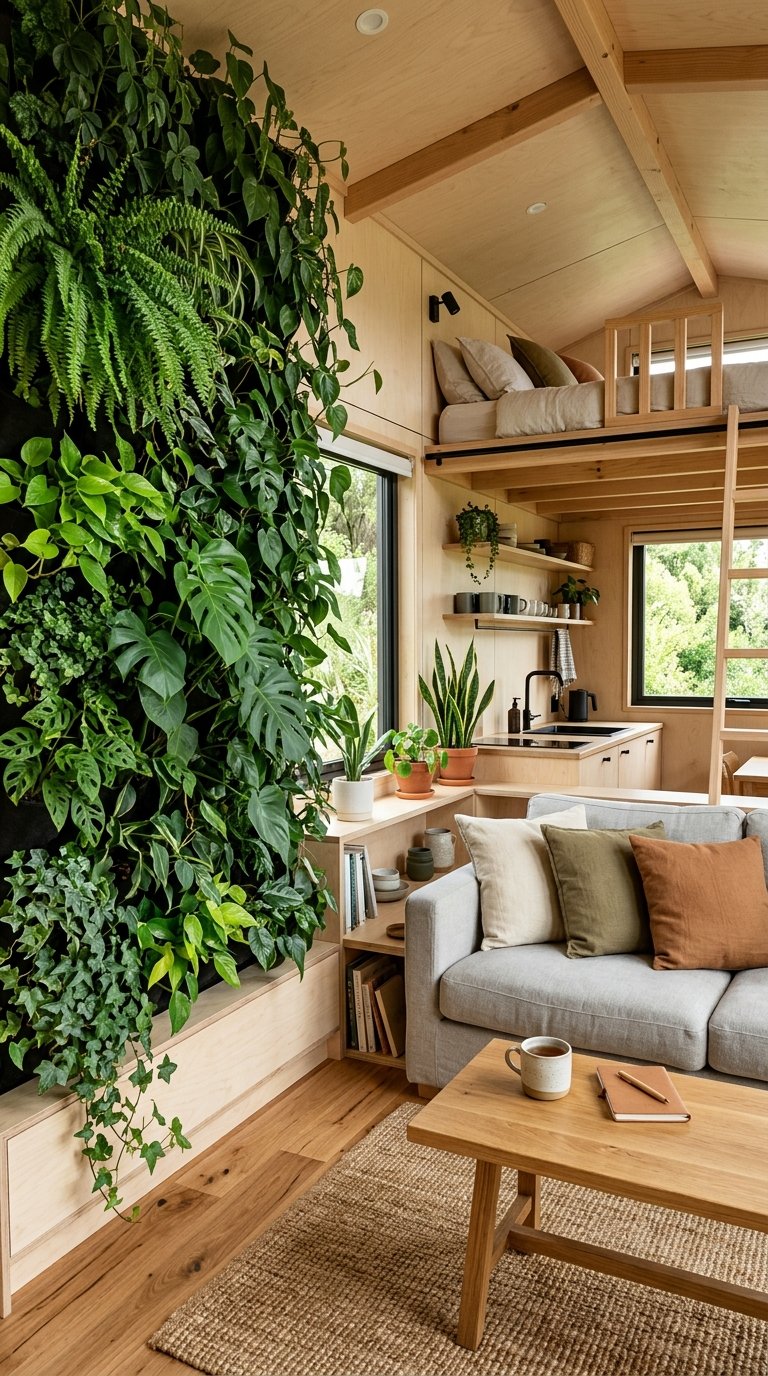
Warm light wood paneling covers the walls and ceiling of this scandinavian tiny house, creating a cozy and inviting atmosphere. A large living wall filled with many types of green plants stands tall on the right, reaching from the floor up to the high angled ceiling. Different plant textures and shades of green add depth and life to the room. Below the living wall, a beige armchair with a light gray knitted throw blanket rests on a natural jute rug. A small round side table, also made of light wood, holds a white mug and a book beside the chair.
Large glass doors on the right open to a wood deck, letting in plenty of natural light and showing a view of tall trees outside. On the left side of the room, a light wood ladder leads up to a loft bed with white bedding. Below the bed, a compact kitchen features light wood cabinets and countertops. Open shelves above the counter hold white and beige dishes, while a small black kettle sits on the stovetop. This clever design maximizes space and brings nature indoors.
Bring natural elements into your small space to make it feel bigger and brighter.
7. Loft sleeping area in a Scandinavian tiny house, catching golden hour light from a gable window
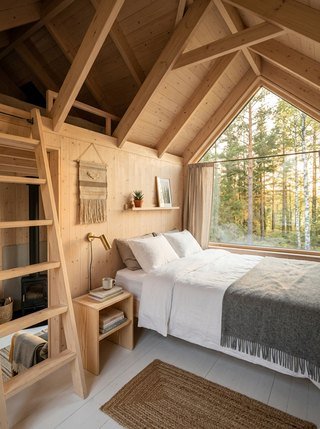
This scandinavian tiny house bedroom feels like a peaceful treehouse escape. Light-toned wood planks cover the walls and ceiling, creating a warm, natural shell. Large, triangular glass panels frame a view of tall green and yellow trees outside. You can see the light wood bed with white bedding placed directly under this gable window, letting in a flood of natural light.
A thick gray throw blanket with fringe lays across the foot of the bed. Next to the bed, a simple wooden nightstand holds a stack of books and a white mug. Above the nightstand, a brass reading lamp attaches to the wall, offering focused light for evening reading. You will also spot a small potted plant on a floating wooden shelf above the bed.
Across from the bed, a sturdy wooden ladder gives access to a loft area above the main sleeping space. Below the ladder, a black wood-burning stove sits on a gray hearth, ready to provide warmth on chilly evenings. A woven wall hanging with tassels adds texture to the wood-paneled wall. A small rectangular jute rug warms the white-painted floorboards near the bed. This room shows how natural materials and simple design bring comfort to a small space.
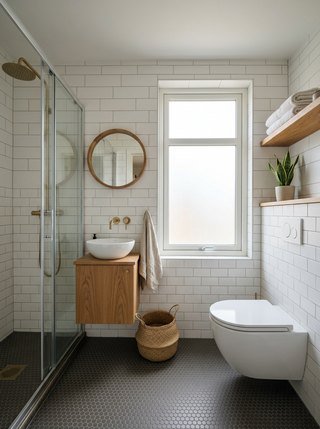
8. Scandinavian tiny house bathroom with white subway tiles and a large frosted window for privacy and light
This Scandinavian tiny house bathroom feels bright and open, even in a small space. White subway tiles cover the walls from floor to ceiling, making the room look bigger. A large frosted window lets in plenty of natural light while keeping things private. Warm wood tones appear in the floating vanity, a round mirror frame, and two wall shelves. You also see a woven basket on the floor, providing a soft texture.
Gold fixtures, like the rainfall showerhead and the wall-mounted faucet, add a touch of simple elegance. The dark gray hexagonal floor tiles create a nice contrast against the white walls and toilet. A clear glass shower door keeps water contained without blocking light or making the room feel cramped. One shelf holds neatly folded white towels, while a small snake plant sits on the lower shelf, adding a bit of green. This design shows how you can mix light and dark elements for a balanced look.
Consider using a mix of light-colored tiles and warm wood details to make your small bathroom feel more spacious and inviting.
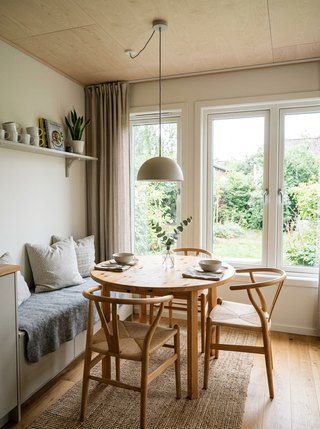
9. Compact Scandinavian tiny house dining area, illuminated by a pendant lamp and surrounding windows
This Scandinavian tiny house dining area feels open and bright. You see a light brown wooden round table with two chairs placed around it, both featuring woven seats. A long, light gray bench cushion with a soft gray throw blanket offers more seating along the wall. Three patterned throw pillows with small white dots add comfort to the bench. Above the table hangs a simple, light gray dome-shaped pendant lamp, giving focused light to the eating space.
Large windows stretch across the back wall, showing a green garden outside with lush plants. The ceiling is covered in light-colored wood panels, which makes the room feel warm and natural. A white floating shelf on the left wall holds several gray ceramic mugs and a small green plant, adding a touch of practical decoration. The floor features wide light wood planks, and a natural woven jute rug sits under the dining table. This scandinavian tiny house design uses light colors and natural textures to create a calm atmosphere.
To get this look, use light wood furniture and add soft textiles in neutral shades.
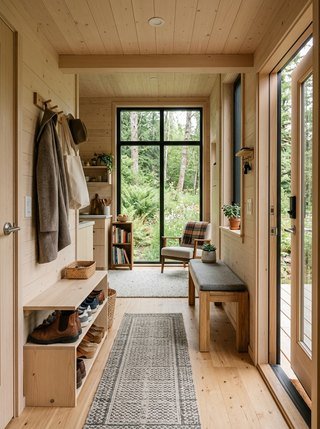
10. Entryway of a Scandinavian tiny house showcasing a light wood shoe rack and a large side window
This scandinavian tiny house entryway feels open and bright, thanks to the floor-to-ceiling window at the back. All the walls, ceiling, and floor are light-toned wood planks, making the space feel warm. A long, narrow patterned rug in shades of gray and white stretches down the center of the hall. On the left, a light wood shoe rack offers storage for boots and sneakers, with a woven basket on its top shelf. Hooks above the shoe rack hold a brown coat and a canvas tote bag.
Across the hall, a wooden bench with a gray fabric cushion provides a spot to sit down. You can see a small potted succulent on the bench, adding a touch of green. Near the large window, a cozy armchair with a plaid blanket invites you to relax. A small three-shelf bookcase sits next to the chair, filled with colorful books. Outside, lush green trees and ferns create a beautiful, natural backdrop. This design shows how a small area can be both functional and inviting.
To create a similar feel, choose light wood tones for your main surfaces and add natural textures like woven baskets and simple rugs.
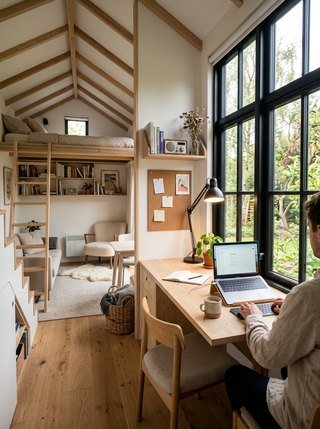
11. Work-from-home corner in a Scandinavian tiny house, brightened by an integrated desk lamp and wall of windows
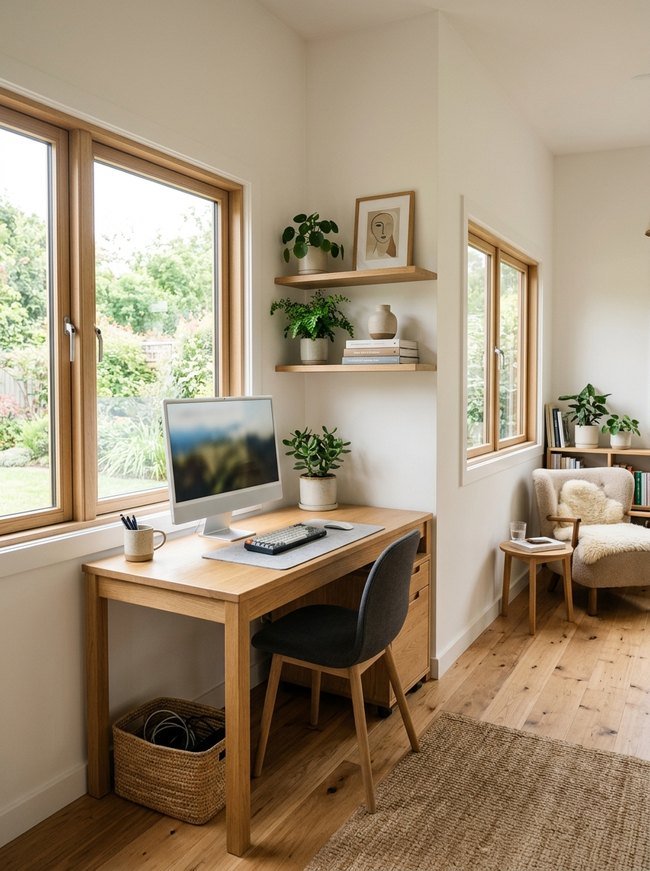
This scandinavian tiny house features a clever home office setup by a large black-framed window. A light oak desk stretches across the wall, providing ample space for a laptop, mug, and notebook. You see a black adjustable desk lamp on the corner, ready to brighten your workspace. Above the desk, a cork board holds several small papers and pictures, keeping important notes visible. A simple wooden shelf floats higher up, displaying a white radio, a small vase of dried flowers, and a few books. The warm wood tones of the desk and chair blend nicely with the lighter hardwood floor. Beyond the desk, a cozy living area includes a small beige sofa and a fluffy white rug. You can create a similar inviting work zone in your own home by using light-colored wood furniture and maximizing natural light.
12. Scandinavian tiny house interior featuring whitewashed shiplap walls and abundant natural light from multiple angles
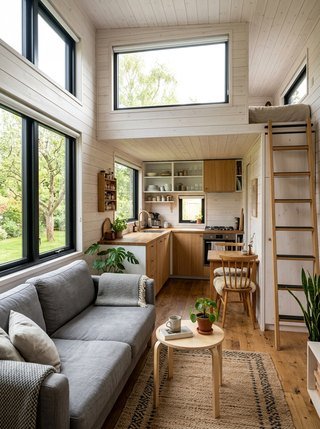
This scandinavian tiny house features whitewashed shiplap walls that make the space feel open and bright. Large black-framed windows let in plenty of natural light and offer views of green trees outside. A comfortable gray sofa sits on a textured jute rug with a black geometric pattern. You can see a small light wood side table next to the sofa, holding a potted plant and a mug. The kitchen area boasts light wood cabinetry and white countertops, creating a clean look. Open shelves above the sink display white dishes and clear glasses. A wooden ladder with black steps leads up to a cozy sleeping loft. The dining area has a simple wooden table with two wooden chairs, one covered with a fluffy white throw. Several green plants add freshness throughout the room. Wooden floorboards provide a warm base for this inviting home. To get this look, focus on light colors, natural wood, and ample windows in your own space.
13. Children’s play area within a Scandinavian tiny house, filled with soft light from a low-set window
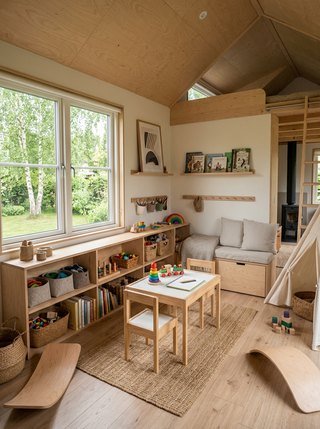
This bright room shows a children’s play area inside a cozy scandinavian tiny house. Pale wood paneling covers the sloped ceiling, adding warmth to the space. White walls and large windows let in plenty of natural light, making the room feel open and airy. A long, low wooden shelf unit sits under the window, holding baskets of toys, books, and craft supplies. You can see a small table and two chairs in the middle of the room, ready for drawing or building with blocks.
Woven jute rugs define the play zones on the light oak floor. A built-in wooden bench with striped cushions provides a comfortable seating spot, and it also features a storage drawer underneath. Beyond this bench, you can spot a black wood-burning stove, suggesting a main living area nearby. A light-colored canvas play tent stands in the corner, offering a fun hideaway for kids. Simple wooden toys, like a rainbow stacker and a small train, are neatly arranged on the shelves and table. This design balances fun and function, creating a welcoming spot for children.
Create dedicated storage solutions that are easy for children to access and put away their toys, like these low shelves and baskets.
14. Staircase leading to a loft in a Scandinavian tiny house, naturally lit by a tall, narrow window
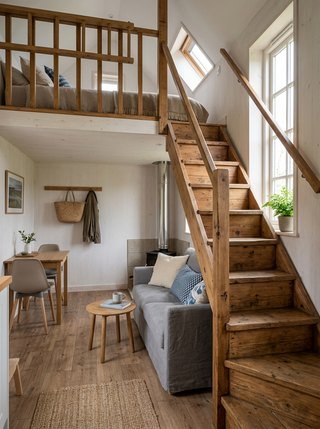
This Scandinavian tiny house maximizes vertical space with a clever loft bedroom. Rough-hewn wooden stairs with a matching railing lead you up to a cozy sleeping area. Light filters into the loft through a small skylight and a window at the far end, keeping the space bright. Downstairs, a plush gray sofa sits beneath the stairs, offering a comfortable spot to relax.
A small, round side table crafted from light wood holds a ceramic mug and a book, ready for a quiet moment. Pale cream and blue patterned throw pillows add a touch of color to the sofa. Across the room, a simple wooden dining table with two light taupe chairs creates a functional eating or working area. White vertical plank walls reflect the natural light, making the entire room feel larger than its actual footprint. You can see a small black wood-burning stove with a silver pipe in the corner, set against light gray tiles. A woven straw basket and a green jacket hang on wooden pegs near the dining space. The warm, medium-brown wood floors and a woven jute rug tie the natural elements together.
To make your own small space feel open and bright, choose light-colored walls and use natural wood for warmth and texture.
15. Scandinavian tiny house with a seamless indoor-outdoor feel thanks to a wide sliding glass door
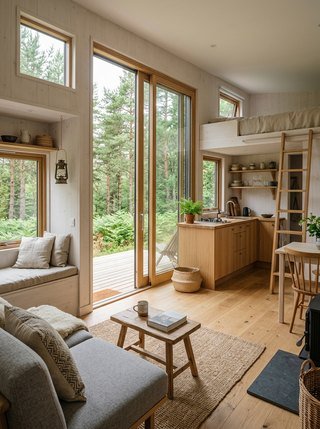
This scandinavian tiny house features tall, light wood sliding glass doors that open to a large outdoor deck. Pale wood plank walls and light oak floors create a bright, airy feeling inside this small space. A comfortable gray sofa with a beige throw and patterned pillow sits on a natural jute rug. You will find a small, rough-hewn wooden coffee table holding a mug and a book in front of the sofa.
On the left, a built-in window seat offers extra seating with light linen cushions and pillows. An old-fashioned hanging lantern adds a touch of rustic charm above the window seat. Across the room, a compact kitchen has light wood cabinets, open shelving, and a small gas stove. A green plant sits on the counter, bringing some nature indoors. Above the kitchen, a loft bedroom with a mattress and simple bedding is accessible by a wooden ladder. A small dining table with wooden chairs sits next to the kitchen, ready for meals.
A small black wood-burning stove on a dark slate hearth provides warmth for chilly evenings. The view through the large windows shows a lush green forest of ferns and tall pine trees. This scandinavian tiny house feels spacious because the outside world becomes part of the living area. You can create a similar open feeling in your own home by using light colors and natural materials, especially with large windows or doors that connect to your outdoor space.
Maximizing Natural Light in Your Own Scandi Tiny Home: Beyond the Window Count
Clever architects often use roof angles to bring in more sun. Skylights are a simple way to flood a small living area with brightness from above. You might angle your roof south, then place tall windows underneath for morning warmth. White paint on walls and ceilings bounces light around a Scandinavian tiny home with great effect. Pale wood floors, like birch or ash, also reflect sunshine beautifully. Consider polished concrete or light gray tiles for durable surfaces that still brighten rooms. Open shelving helps light travel through your space instead of blocking it with solid cabinets. Mirrors are powerful tools. Place them opposite windows to double the light and make a room feel larger. Furniture with slender legs and open designs prevents dark shadows. Avoid bulky pieces that absorb light. Sometimes a single, large pane of glass works better than several smaller ones. This minimizes visual breaks. Thin window frames in a light color disappear into the wall. Position your tiny home so main windows face south or southeast for peak daylight. North-facing windows offer soft, even light without harsh glare. Even small reflective surfaces, like brushed stainless steel appliances, help distribute light. Strategically placed translucent blinds can soften direct sunlight.
The Scandi Secret: Reflective Surfaces and Their Role in Illumination
Every Scandinavian tiny home owner understands the power of a large, frameless mirror. Place one opposite a window to double the apparent light in a small room. Often, designers select glossy white paint for ceilings and upper walls. This bright finish reflects up to 85% of incoming light, making spaces feel much larger. Consider light-colored ash or birch wood for your floors. Their pale tones naturally bounce light upwards, brightening dark corners without extra lamps. You might also notice sleek metallic accents. Shiny chrome drawer pulls or a polished copper light fixture scatter light around the room. These small elements make a big difference. Even a glass tabletop works wonders. It lets light pass through, preventing shadows underneath. These reflective surfaces are not just decorative; they actively work to illuminate the interior. They pull sunlight deep inside.
Which Idea Will You Try First?
That’s 15 different takes on scandinavian tiny house. The best ideas above are usually the smallest moves — one material, one layout shift, one piece of furniture in the right place. Pick whichever room feels closest to your space and start there before tackling the rest.
Found an idea worth keeping? Save this post to your Pinterest board so it’s waiting for you when you’re ready to start your own project.
Dreaming of the minimalist lifestyle but worried about feeling cramped? Think again. Modern tiny home interiors are revolutionizing small-space living, proving that thoughtful design can make even the most compact footprint feel remarkably expansive. Forget cluttered corners and dark nooks; today’s tiny homes embrace intelligent layouts, abundant natural light, and a serene aesthetic that maximizes every square inch. We’re talking clean lines, inviting neutral palettes, and the warmth of light woods creating an atmosphere of sophisticated spaciousness.
Get ready to be inspired! We’ve rounded up 21 stunning modern tiny home interiors, each a masterclass in making a small space live large. From ingenious storage solutions to breathtaking architectural elements, discover the clever design moves that transform these compact dwellings into airy, inviting havens. Prepare to envision your own big dreams in a beautifully designed, smaller package!
Modern tiny home interior with vaulted ceilings creating expansive vertical space.
This stunning modern tiny home interior masterfully demonstrates how thoughtful design can transform compact living, making it feel incredibly spacious. The most striking feature is undoubtedly the dramatic vaulted ceiling, which immediately creates an incredible sense of expansive vertical space, defying the typical limitations of a smaller footprint. Exposed natural wood beams not
A bright modern tiny home interior featuring floor-to-ceiling glass for spacious views.
This stunning example of a modern tiny home interior perfectly encapsulates how strategic design can transform compact living into an expansive, light-filled sanctuary. The most striking feature, undoubtedly, is the extensive use of floor-to-ceiling glass, which dissolves the boundaries between inside and out, inviting the breathtaking natural
Light-drenched modern tiny home interior design using crisp white walls to amplify brightness.
This stunning modern tiny home interior perfectly illustrates how strategic design choices can transform a compact footprint into a beacon of light and style. The foundation of this bright aesthetic begins with the crisp white walls, which serve as an expansive canvas, reflecting every available ray of sunshine and making the entire space feel significantly
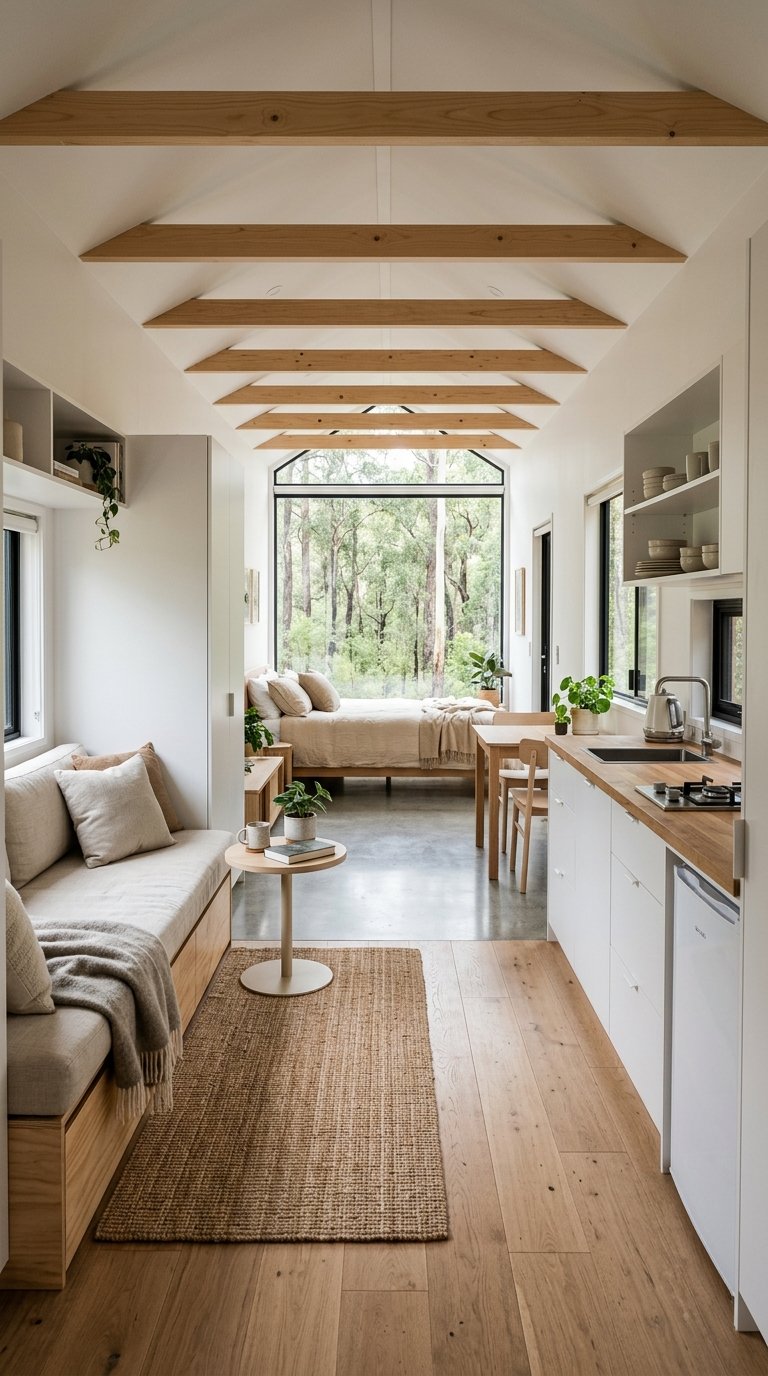
An airy modern tiny home interior with continuous light wood flooring extending visual lines.
This stunning modern tiny home interior masterfully demonstrates how thoughtful design can create an expansive feel within a compact footprint. The most impactful design choice is undoubtedly the continuous light wood flooring, which flows seamlessly from the cozy living area, past the efficient kitchen, and into the dedicated workspace beyond. This unbroken visual line stretches the perceived length of the home, making the entire space feel significantly larger and beautifully connected. Complementing this foundation, the
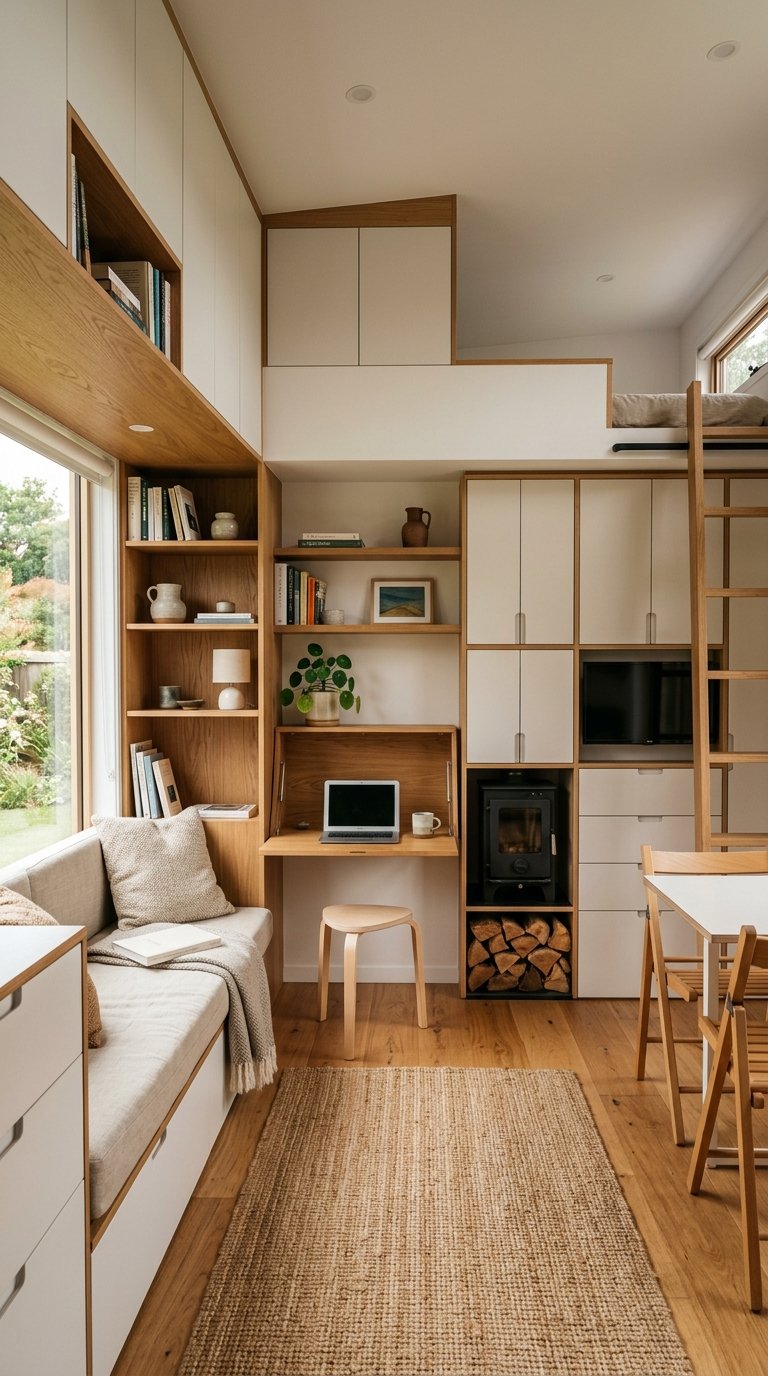
Clever modern tiny home interior maximizing space with built-in, flush wall storage solutions.
This stunning modern tiny home interior masterfully demonstrates how integrated design can transform compact living. The most striking feature is the comprehensive system of built-in, flush wall storage solutions that spans nearly every vertical surface. Notice how seamlessly the white cabinetry blends with the light wood open shelving, creating a cohesive aesthetic that feels both expansive and highly functional. This clever approach extends to a fold-down desk area, which disappears into the wall unit when not in use, offering a dedicated workspace without permanently occupying precious square footage. Further maximizing utility, the cozy window-side bench isn’t just for lounging; its base conceals deep drawers, providing essential hidden storage for linens or seasonal items, a brilliant move for any modern tiny home interior. Even the wood-burning stove and its accompanying log storage are thoughtfully integrated into the cabinetry, maintaining clean lines and preventing visual clutter. You can see how every element is meticulously planned to serve multiple purposes or recede into the background, ensuring an uncluttered and serene environment. To achieve a similar effect in your own space, consider custom built-ins that match your wall color for a truly flush look. This design truly exemplifies how a well-executed modern tiny home interior can offer both beauty and unparalleled efficiency.
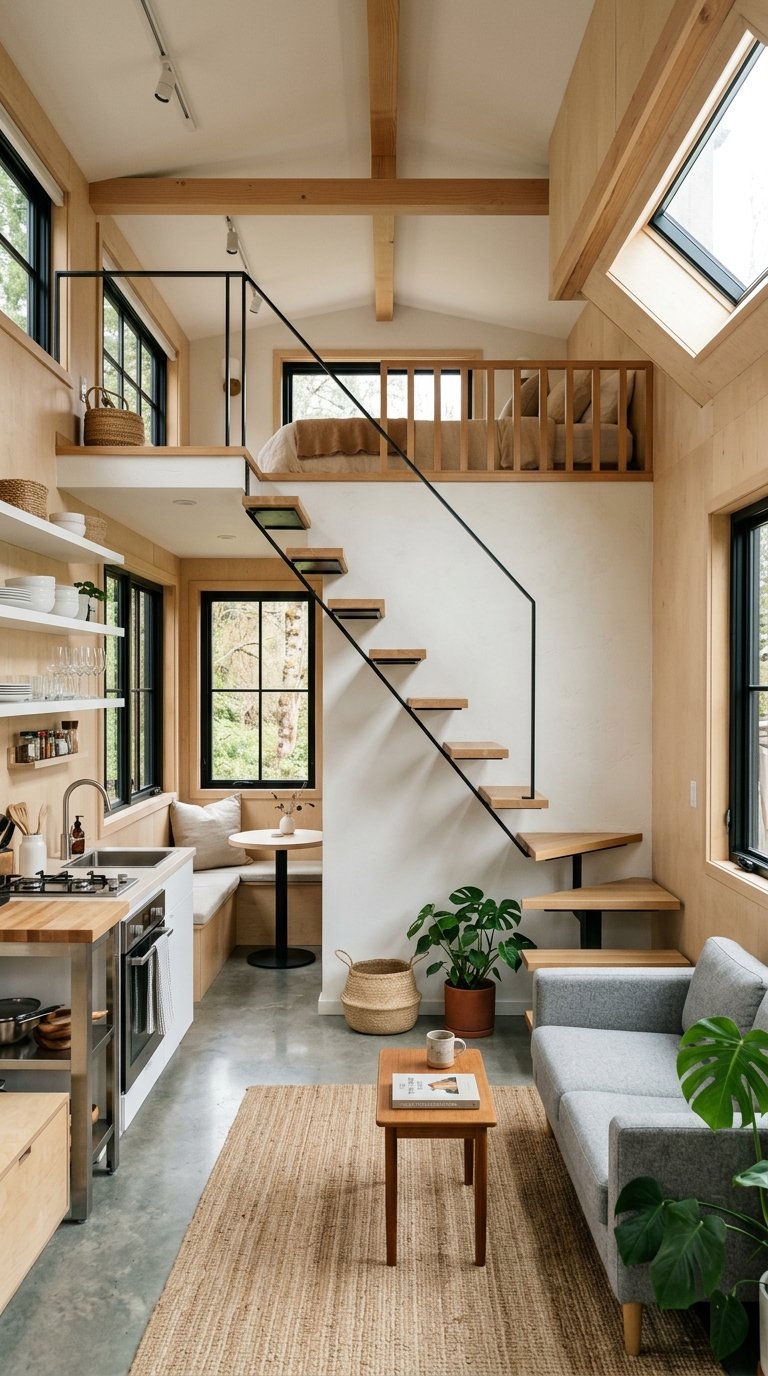
Open-concept modern tiny home interior featuring a minimalist floating staircase that feels light.
This exceptional modern tiny home interior masterfully demonstrates how to create an expansive feel within a compact footprint. The star of this open-concept modern tiny home interior is undoubtedly the minimalist floating staircase, which instantly draws the eye upward without creating any visual bulk. Crafted from warm wooden treads anchored to a crisp white
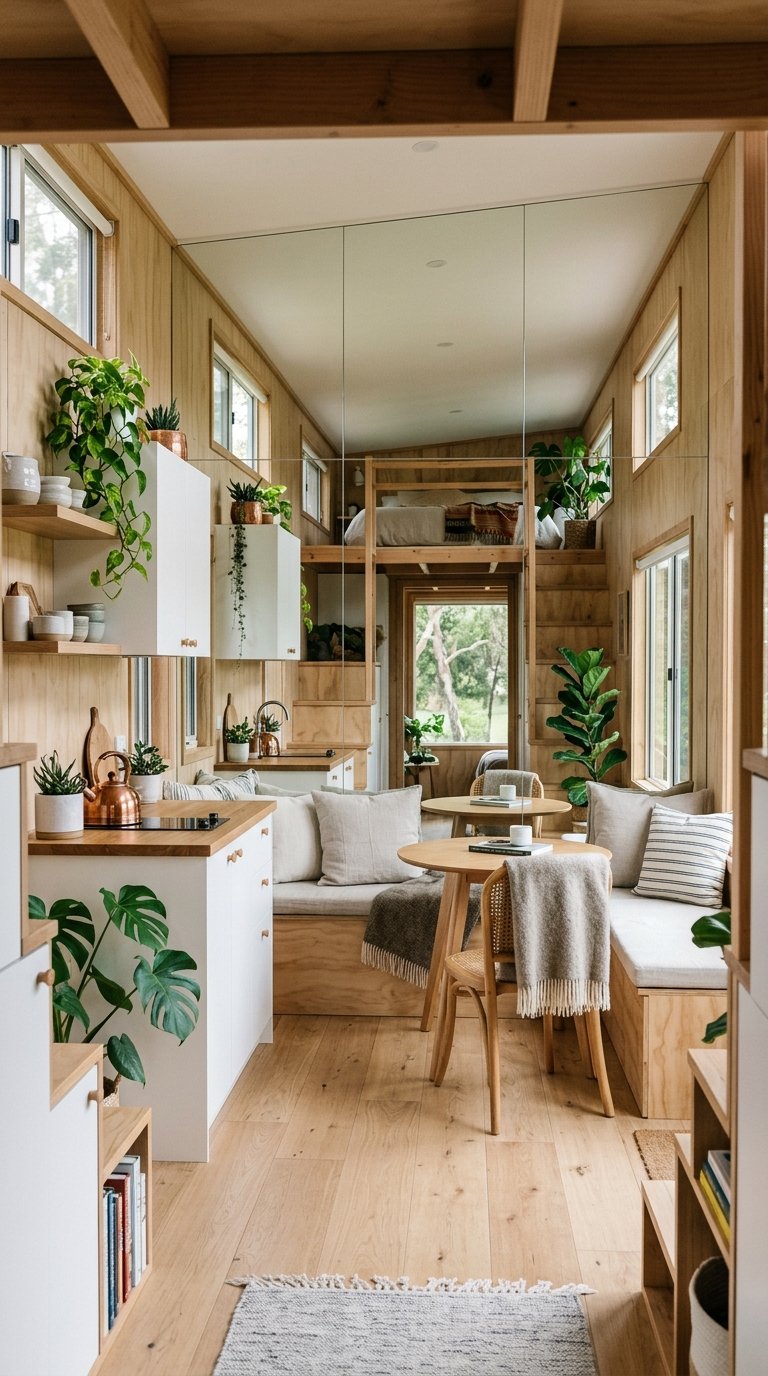
A modern tiny home interior utilizing large, strategically placed mirrors to double perceived space.
This stunning example of a modern tiny home interior truly masters the art of illusion to maximize its footprint, creating a sense of expansive comfort. The most impactful design choice is undoubtedly the expansive, full-height mirrored wall seamlessly integrated above the kitchen and dining area. This strategically placed mirror paneling brilliantly reflects
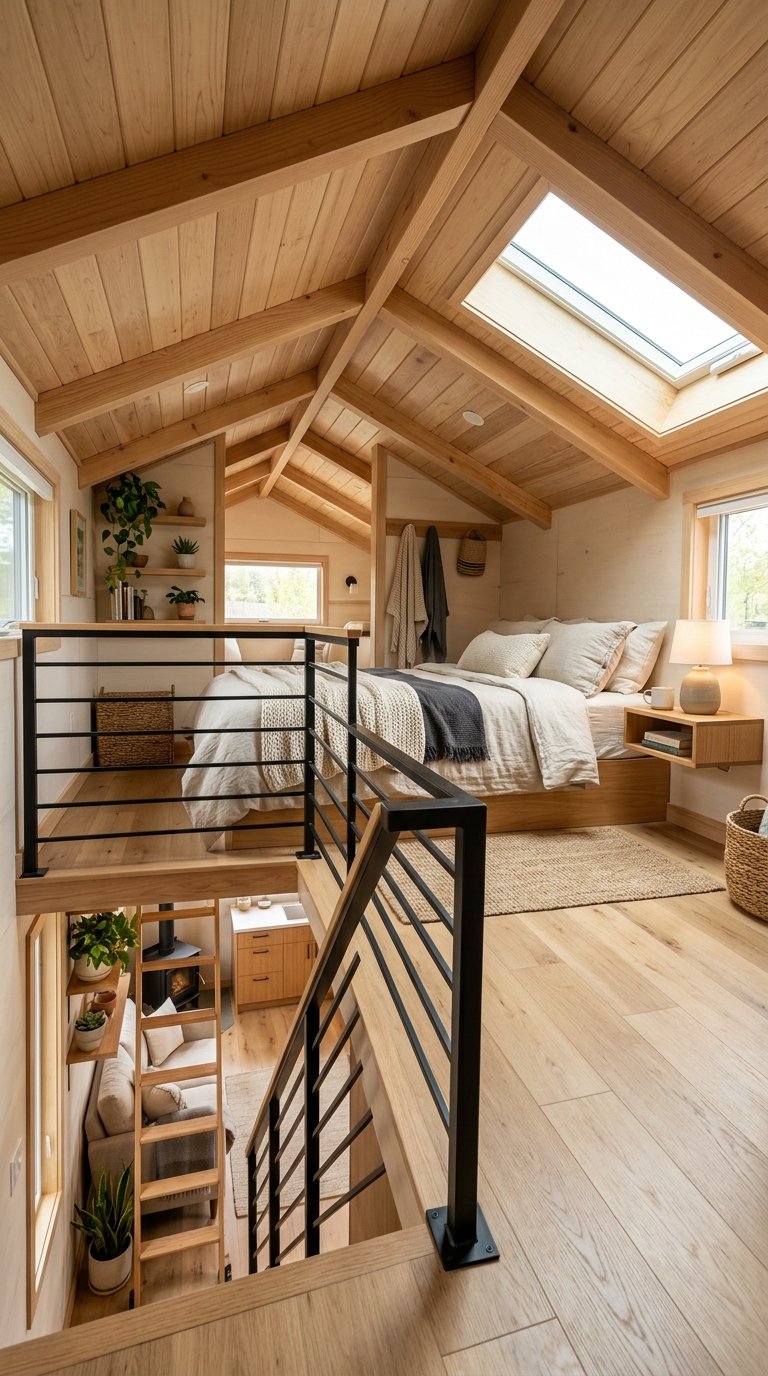
Elevated modern tiny home interior loft bedroom designed with an open railing for visual continuity.
This stunning loft bedroom truly exemplifies an elevated modern tiny home interior, masterfully designed to maximize both style and spaciousness. The most striking feature is undoubtedly the open railing, crafted from sleek black metal horizontal bars, which perfectly achieves visual continuity, allowing your eye to effortlessly sweep from the cozy sleeping nook
Seamless modern tiny home interior merging with the outdoors via wide bi-fold doors.
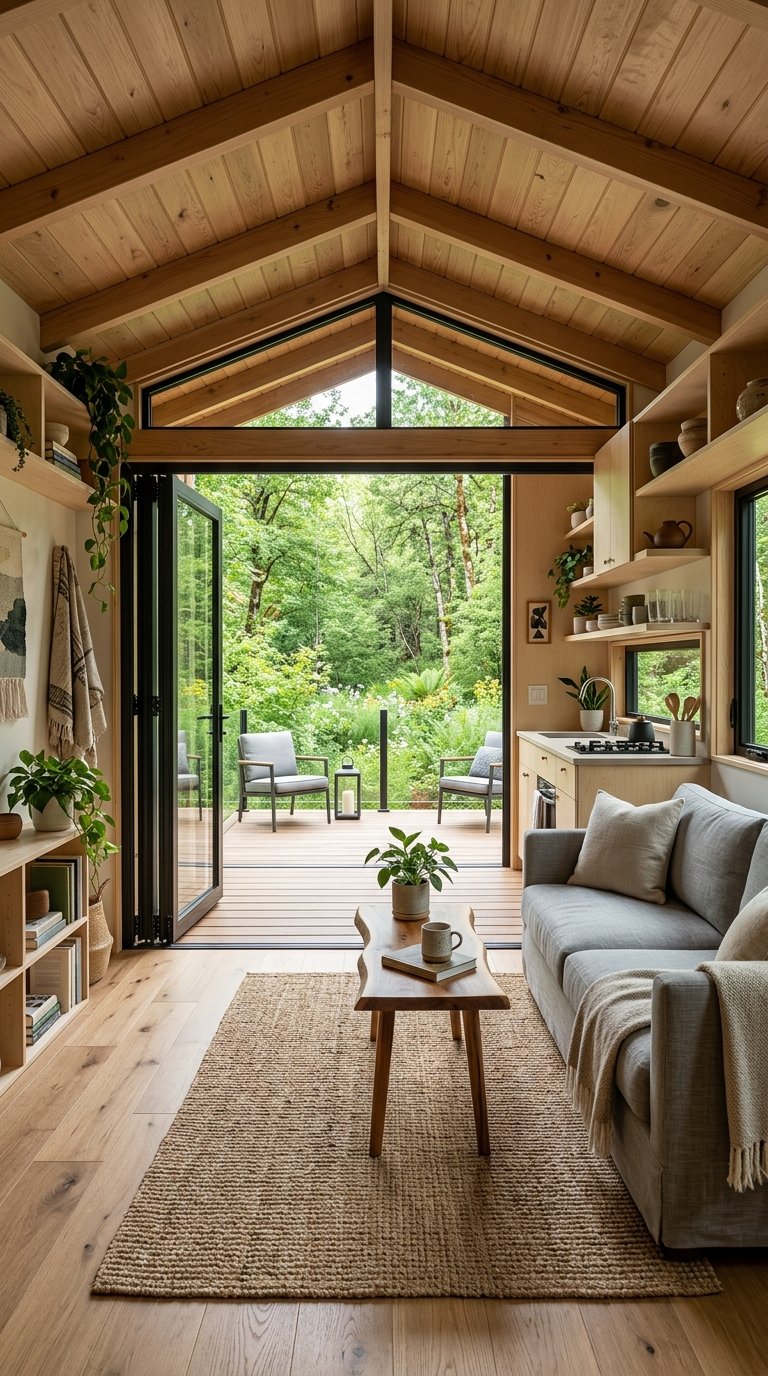
This stunning modern tiny home interior masterfully blurs the lines between indoor comfort and the wild beauty of the outdoors, primarily through its expansive use of wide bi-fold doors. When fully retracted, these doors transform the entire living space, creating an uninterrupted vista of lush greenery and inviting the fresh air to flow freely throughout. Notice how the warm, light-toned wood flooring extends visually onto the outdoor deck, creating an uninterrupted flow that tricks the eye into perceiving one continuous living area, a brilliant move for a seamless modern tiny home interior. The soaring vaulted ceiling, clad in natural wood planks and featuring exposed beams, further elevates the sense of openness, drawing the eye upwards to the triangular window above the bi-folds, which perfectly frames the forest canopy and floods the space with natural light. Even the minimalist kitchen and
Bright modern tiny home interior illuminated by subtle recessed lighting and overhead skylights.
This bright modern tiny home interior illuminated by subtle recessed lighting and overhead skylights. brings modern tiny home interior to life with thoughtful styling and considered details.
Uncluttered modern tiny home interior showcasing slim-profile, essential furniture pieces for spaciousness.
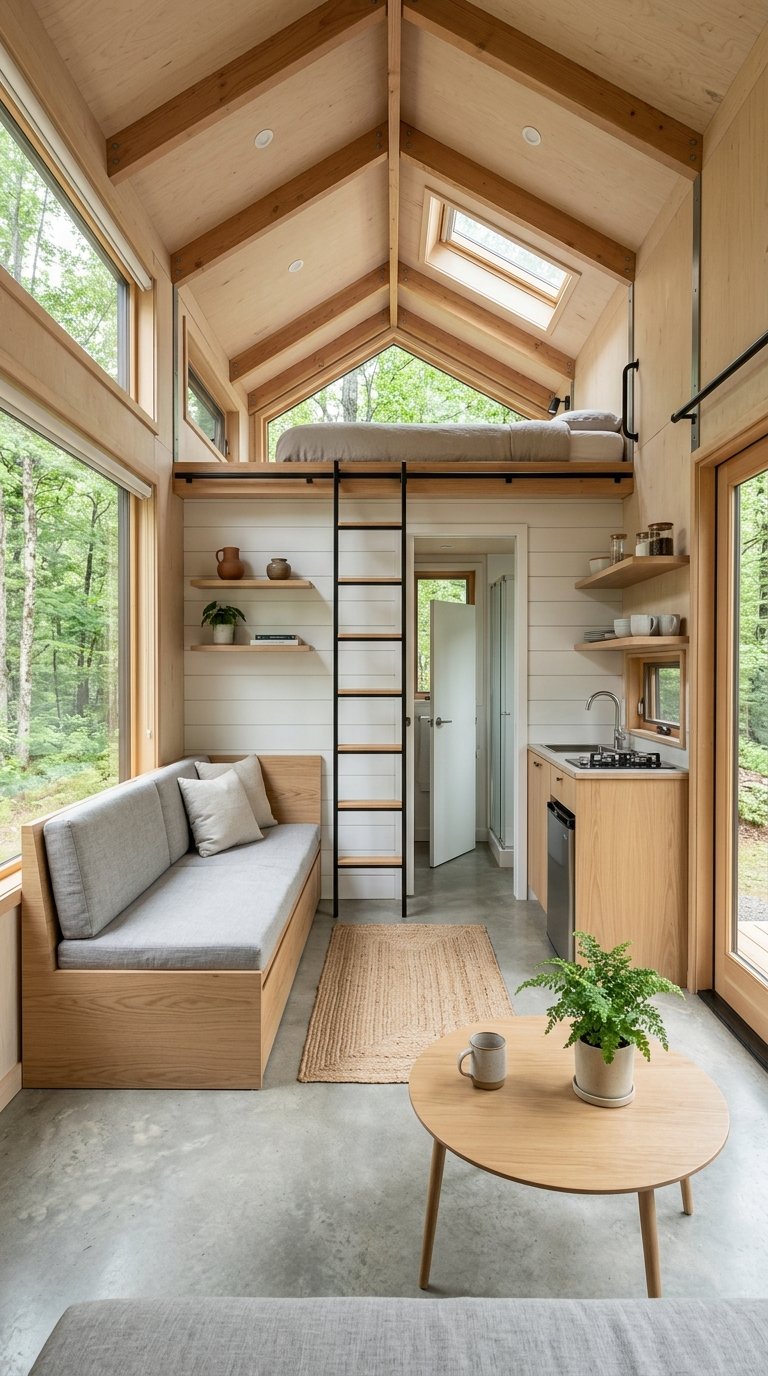
This stunning example perfectly illustrates how thoughtful design can transform compact living into an expansive retreat. The pervasive use of light-toned wood on the walls and vaulted ceiling, paired with crisp white shiplap and a cool concrete floor, establishes an incredibly bright and airy foundation, immediately contributing to an
Open modern tiny home interior using frosted glass or sheer dividers to maintain light flow.
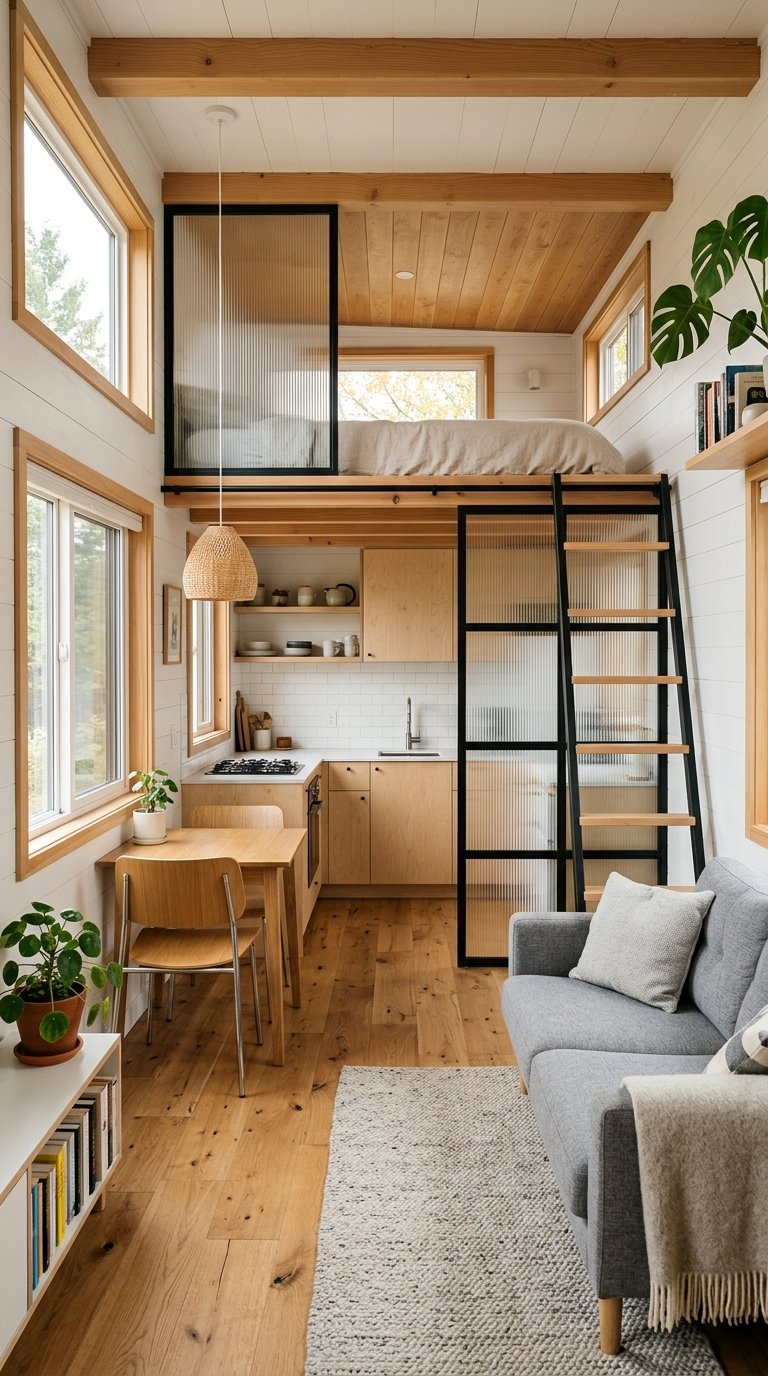
This incredible modern tiny home interior perfectly illustrates how thoughtful design can maximize both space and light. Notice the ingenious use of frosted, reeded glass panels that serve as a soft division for the upper sleeping loft and a clever partition in the kitchen, allowing natural light to cascade through while still offering a sense
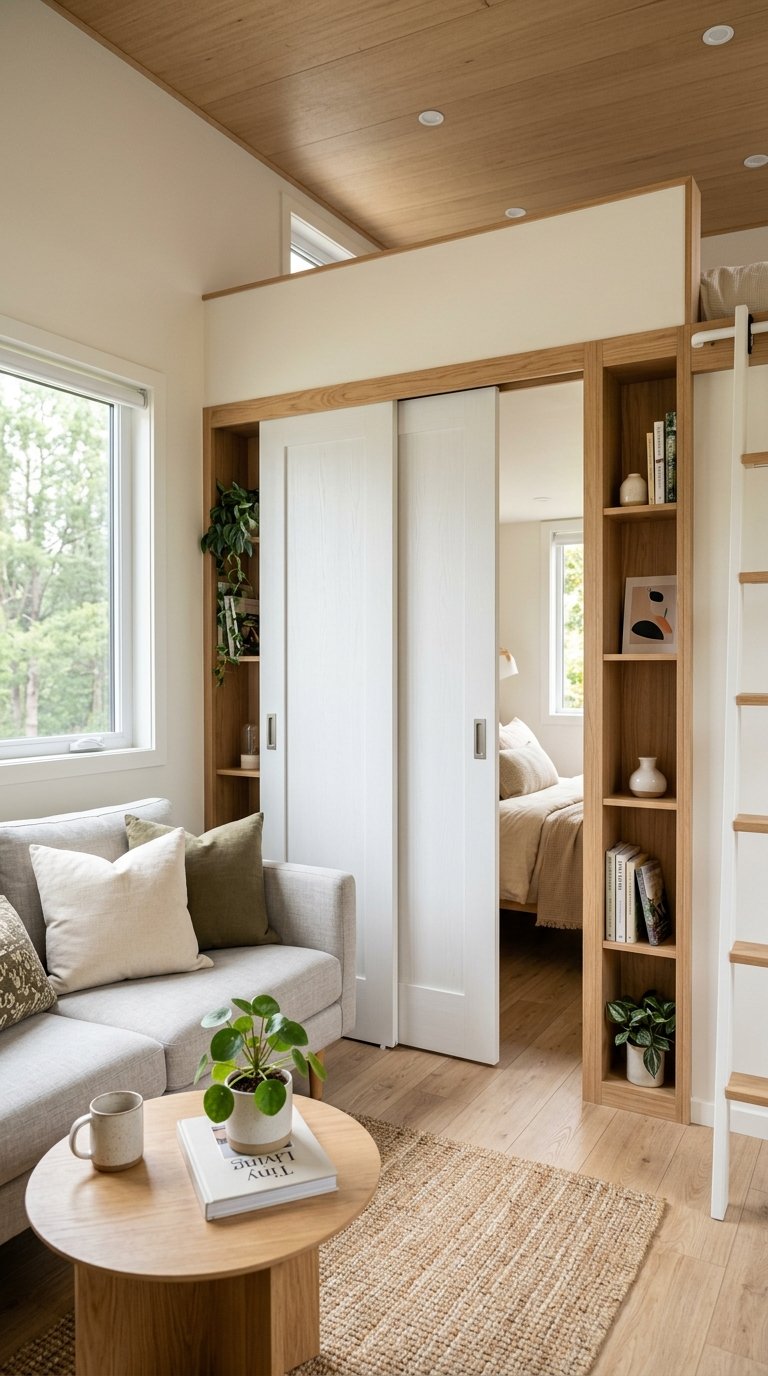
Space-saving modern tiny home interior design integrating sleek pocket doors for fluid movement.
This beautifully designed space perfectly illustrates how strategic choices can create a remarkably open and functional modern tiny home interior. A standout feature, the sleek pocket doors, are ingeniously integrated to separate the living area from the bedroom, disappearing seamlessly into the wall when open. This clever design move is paramount for space
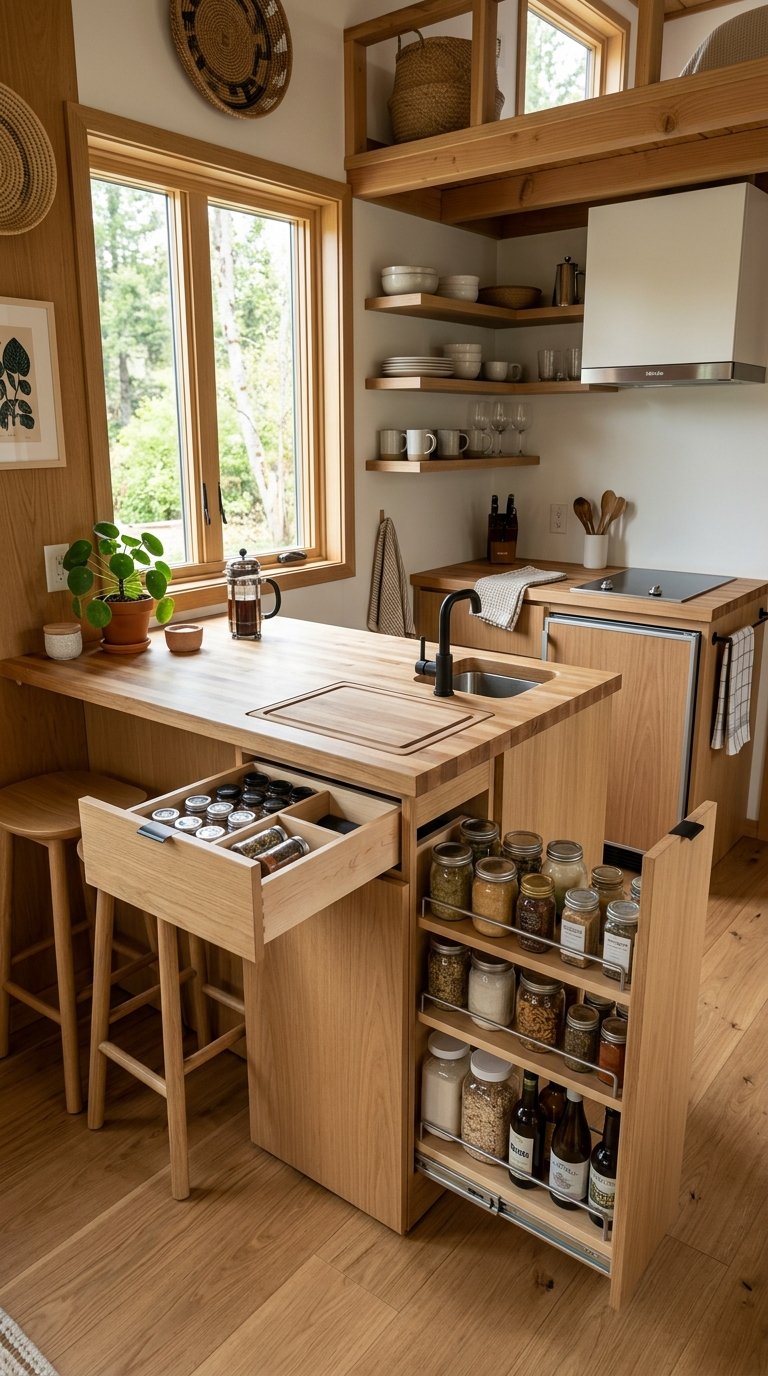
Functional modern tiny home interior kitchen featuring an island with ingenious hidden storage solutions.
This inviting kitchen exemplifies how a well-designed island can transform a compact space into a highly functional hub, perfectly embodying the spirit of a modern tiny home interior. Notice the seamless light wood cabinetry and flooring that create a cohesive, expansive feel, making the entire area appear larger and brighter, a crucial element for any tiny footprint. The island itself is a masterclass in efficiency, featuring an integrated sink with a fitted cutting board that slides over, instantly expanding your prep surface when needed and neatly tucking away when not. But the true brilliance lies in its ingenious hidden storage solutions, starting with the deep pull-out pantry unit. This vertical storage marvel, brimming with neatly organized jars and bottles, ensures every inch is utilized, keeping essentials easily accessible yet completely out of sight. Adjacent to this, another clever drawer reveals a perfectly sorted spice collection, demonstrating how thoughtful organization can prevent clutter even in the busiest of culinary zones. Beyond the storage, the island extends into a practical breakfast bar, offering a dedicated
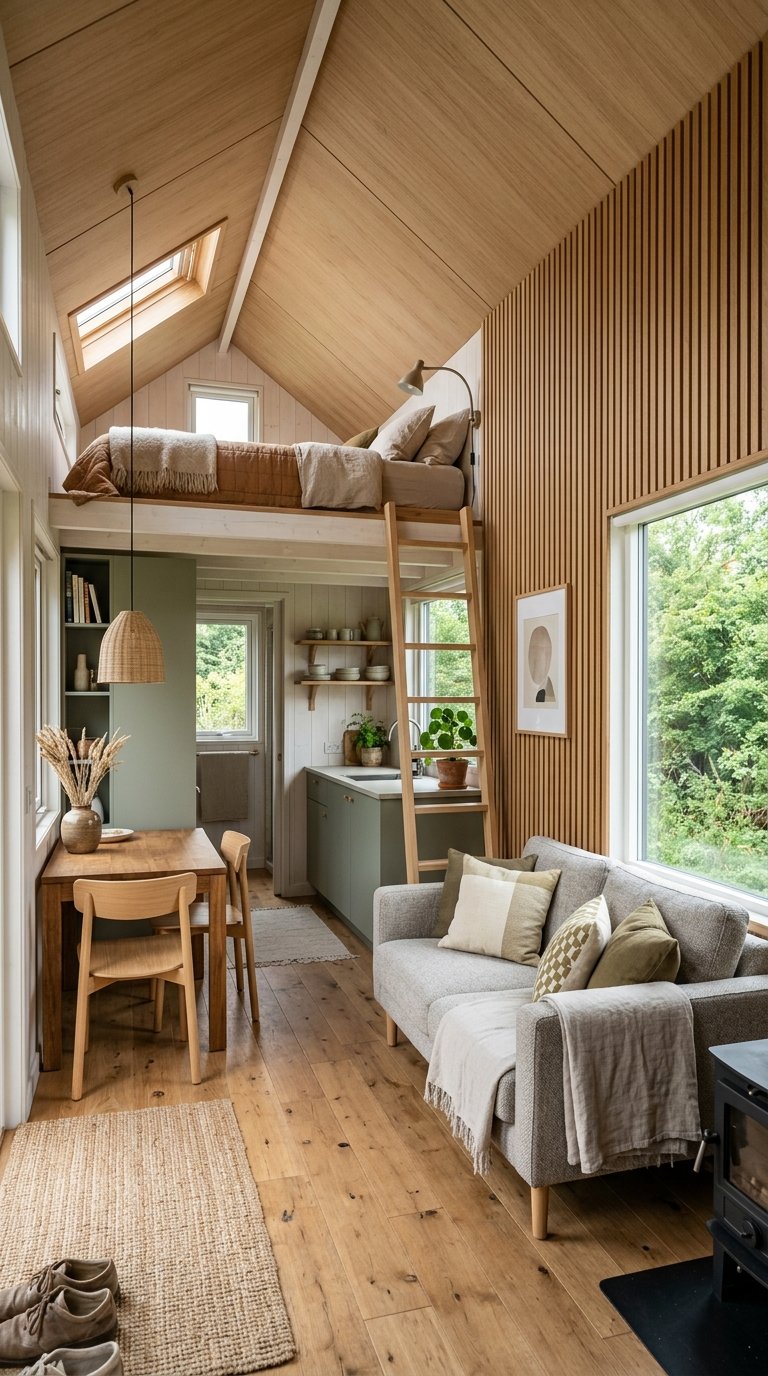
A modern tiny home interior with vertical slatted wood panels drawing the eye upward for height.
This inviting modern tiny home interior masterfully employs clever design strategies to create an expansive feel within a compact footprint. Immediately captivating is the prominent feature wall clad in striking vertical slatted wood panels, a brilliant design move that undeniably draws the eye upward, enhancing the perception of impressive ceiling height. This natural wood
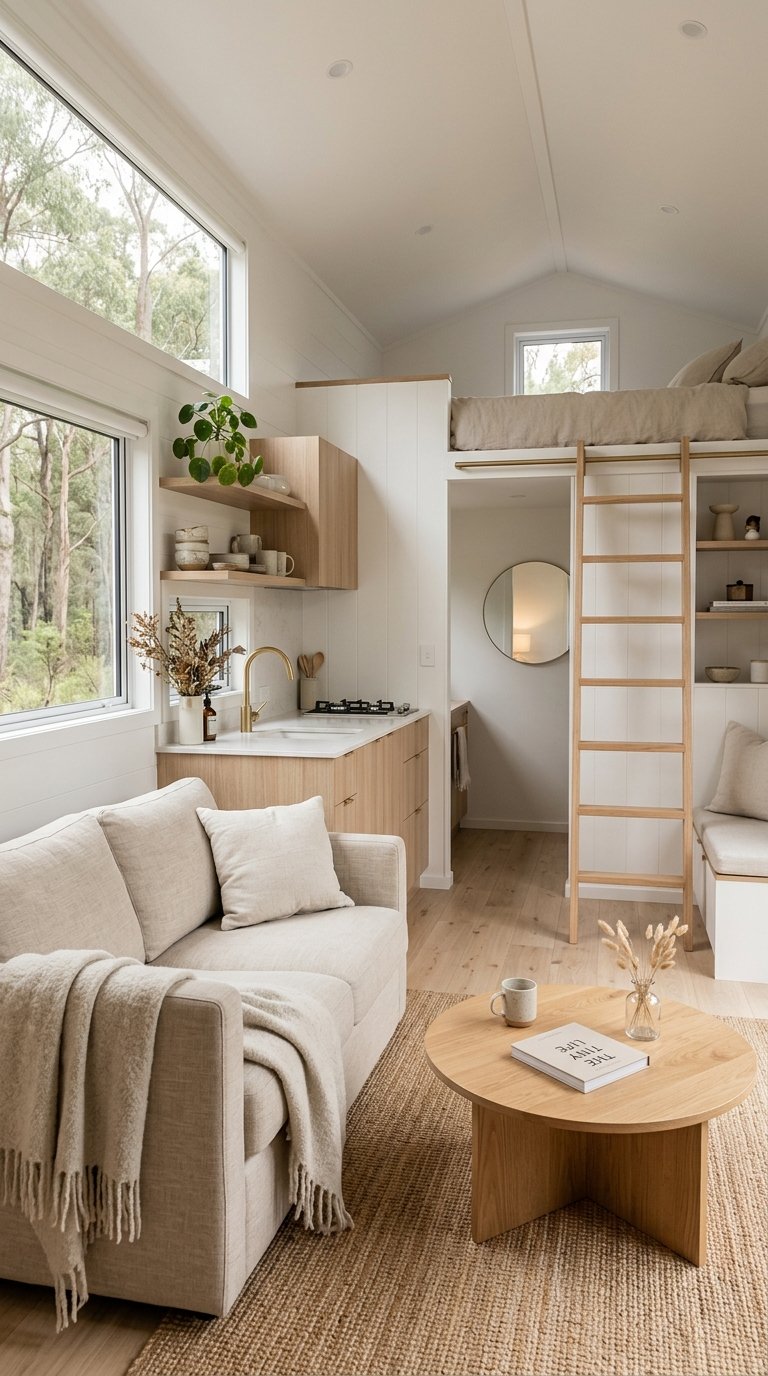
Serene modern tiny home interior enveloped in a cohesive light neutral color palette for an expansive feel.
This exquisite modern tiny home interior masterfully demonstrates how a thoughtful design approach can transform a compact space into an oasis of calm and openness. The foundation of its appeal lies in a truly serene modern tiny home interior enveloped in a cohesive light neutral color palette for an expansive feel. Notice how the crisp
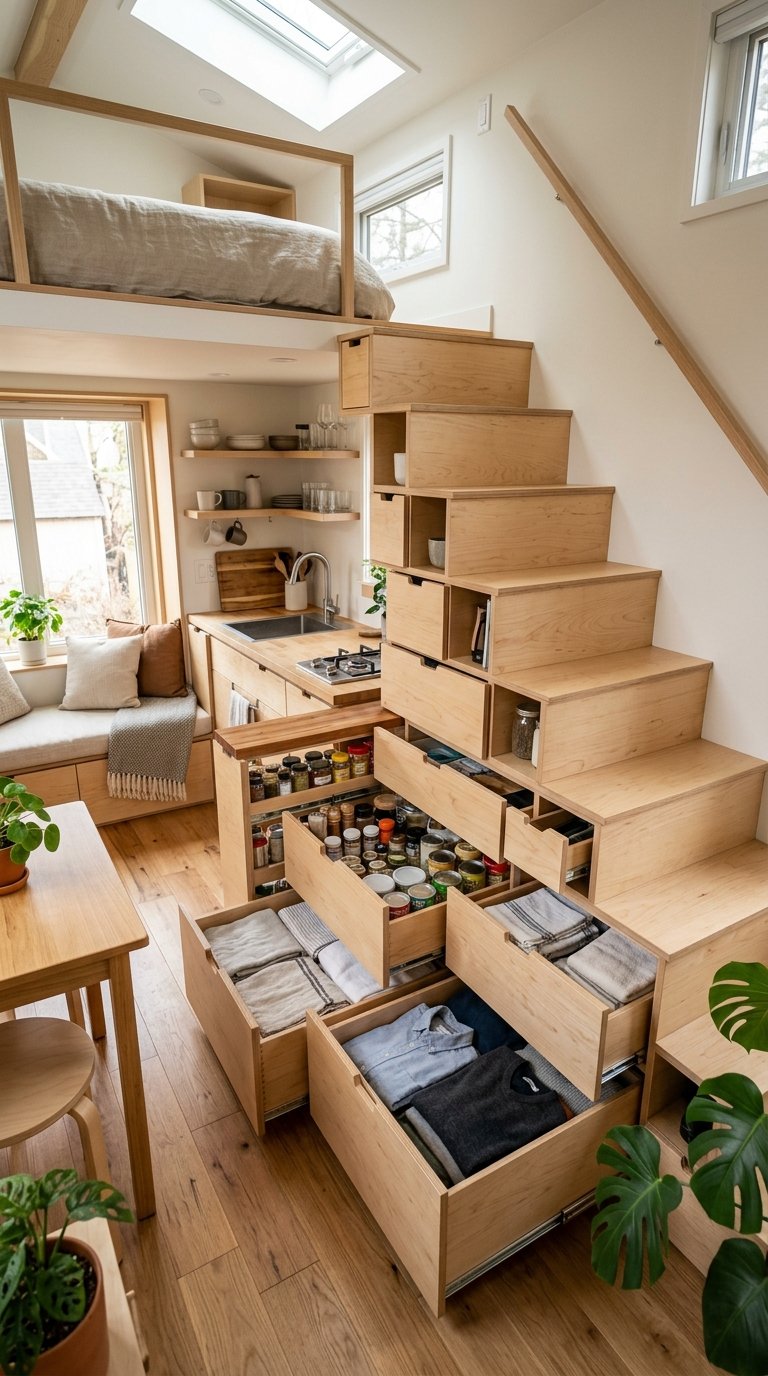
Efficient modern tiny home interior utilizing clever under-stair pull-out storage maximizing every inch.
Step inside this remarkable modern tiny home interior, where every design choice is a testament to ingenious space-saving and effortless style. The absolute highlight is the bespoke under-stair pull-out storage system, a masterclass in maximizing every inch of vertical and horizontal space. Imagine deep,
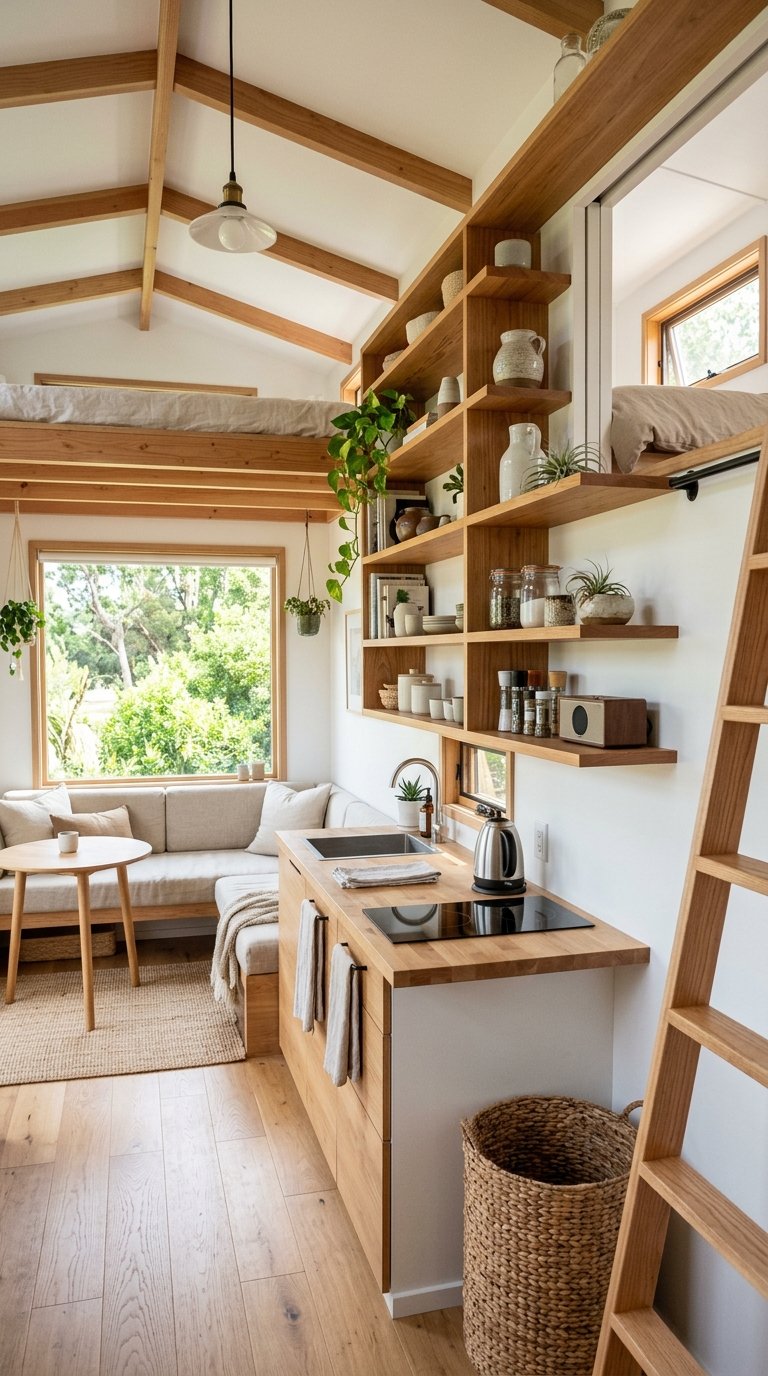
Contemporary modern tiny home interior using open shelving to maintain visual lightness and airiness.
This stunning example of a contemporary modern tiny home interior perfectly illustrates how thoughtful design can create an expansive feel in a compact footprint. The prominent use of open shelving along the main kitchen wall is a brilliant design move, allowing for both practical storage and a curated display of beautiful objects without any visual bulk.
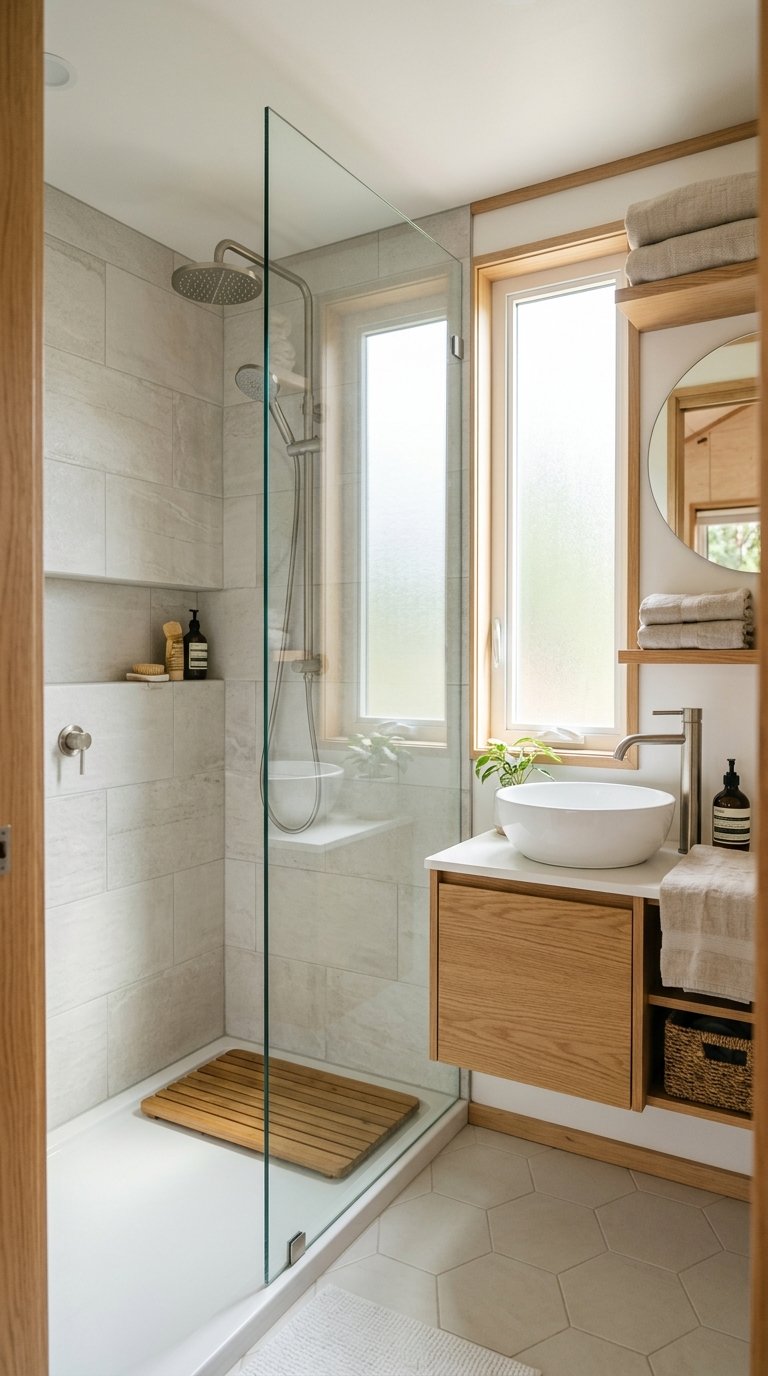
A sleek modern tiny home interior bathroom featuring a frameless glass shower enclosure for openness.
This stunning bathroom exemplifies how intelligent design can transform even the most compact of spaces into a serene retreat, perfectly embodying the principles of a modern tiny home interior. The most striking feature, and a masterclass in maximizing square footage, is undoubtedly the frameless glass shower enclosure for openness. This transparent barrier virtually disappears, allowing the eye to travel freely across the entire room and preventing the visual chop that traditional framed showers often create. Notice how
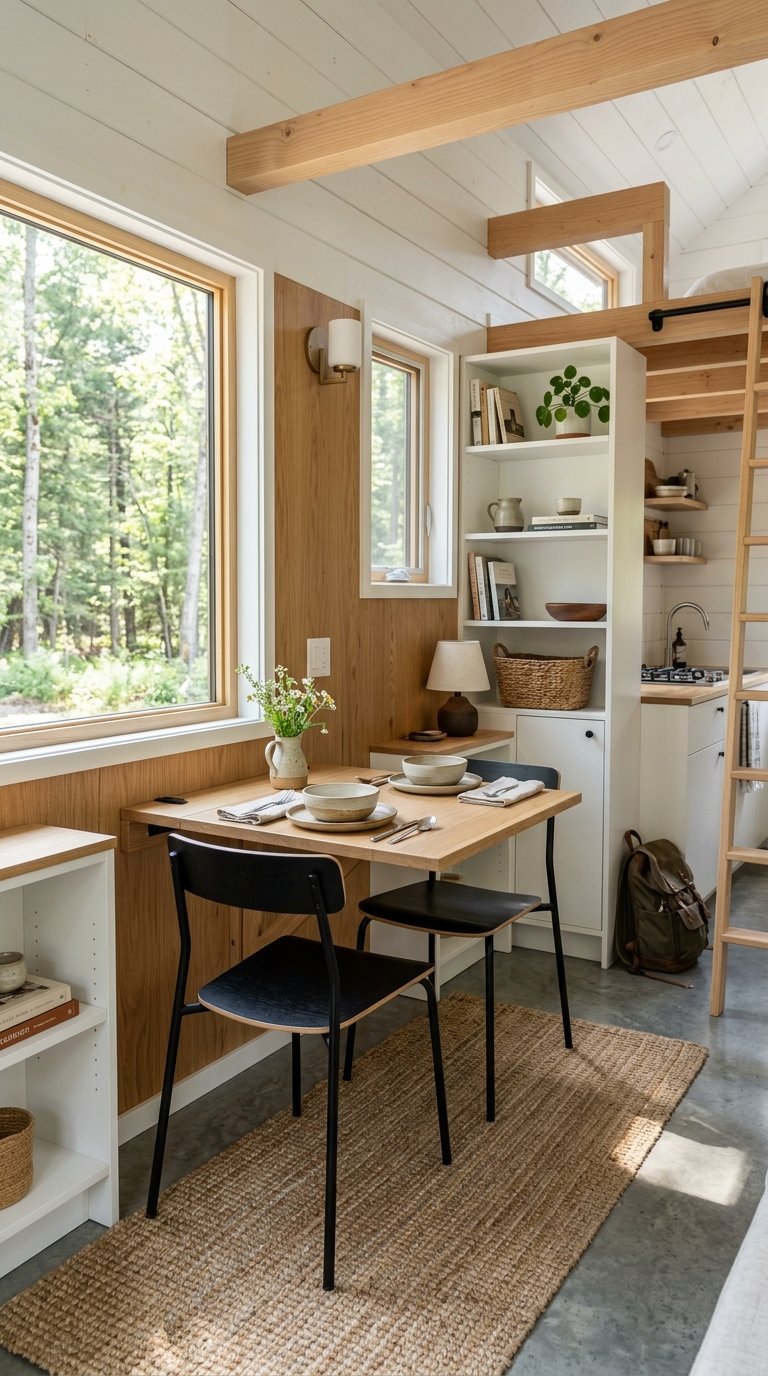
Practical modern tiny home interior integrating a wall-mounted fold-down table for flexible dining.
This beautifully executed modern tiny home interior truly masters the art of multi-functional design, making every square inch count. The centerpiece of this flexible dining zone is undeniably the ingenious wall-mounted fold-down table, a paramount feature for any practical modern tiny home interior. Seamlessly integrated into the
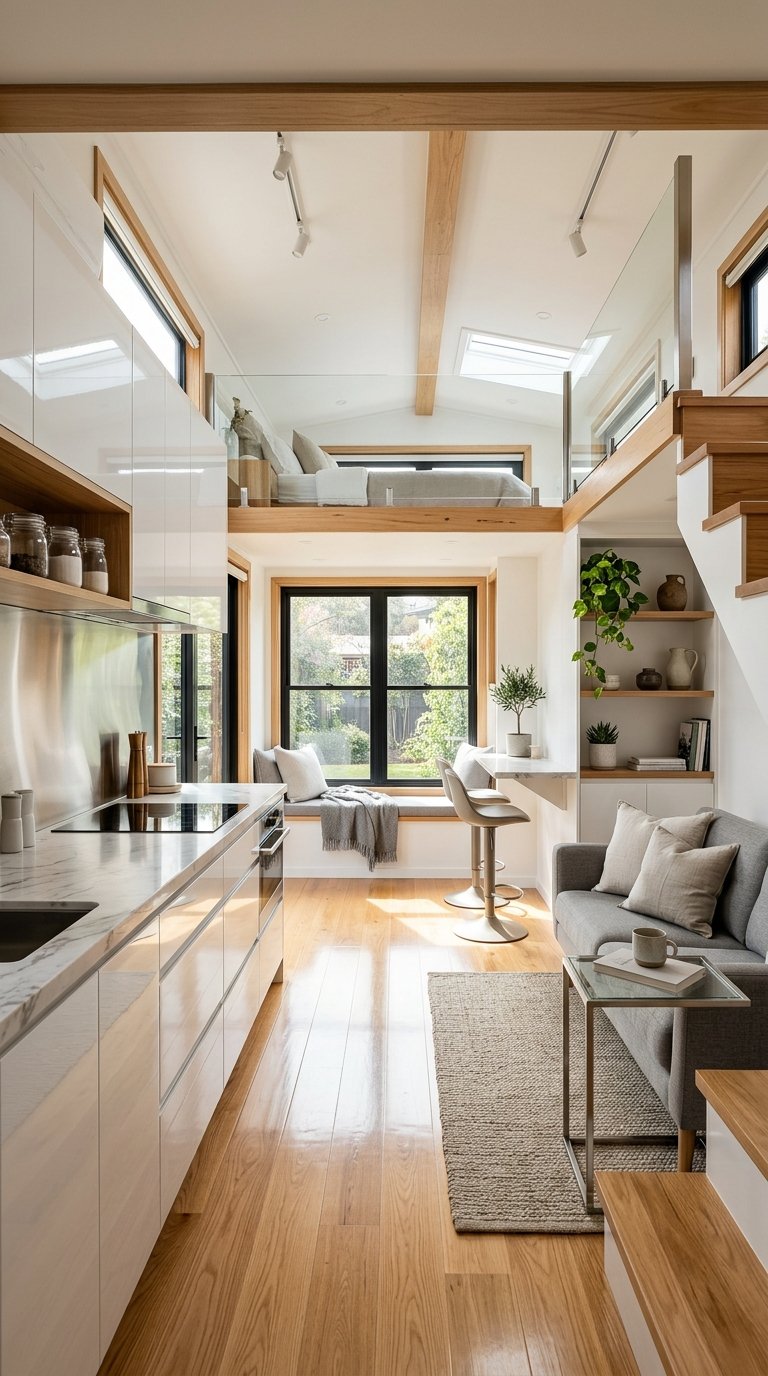
Expansive modern tiny home interior creating a seamless, multifunctional kitchen and living zone.
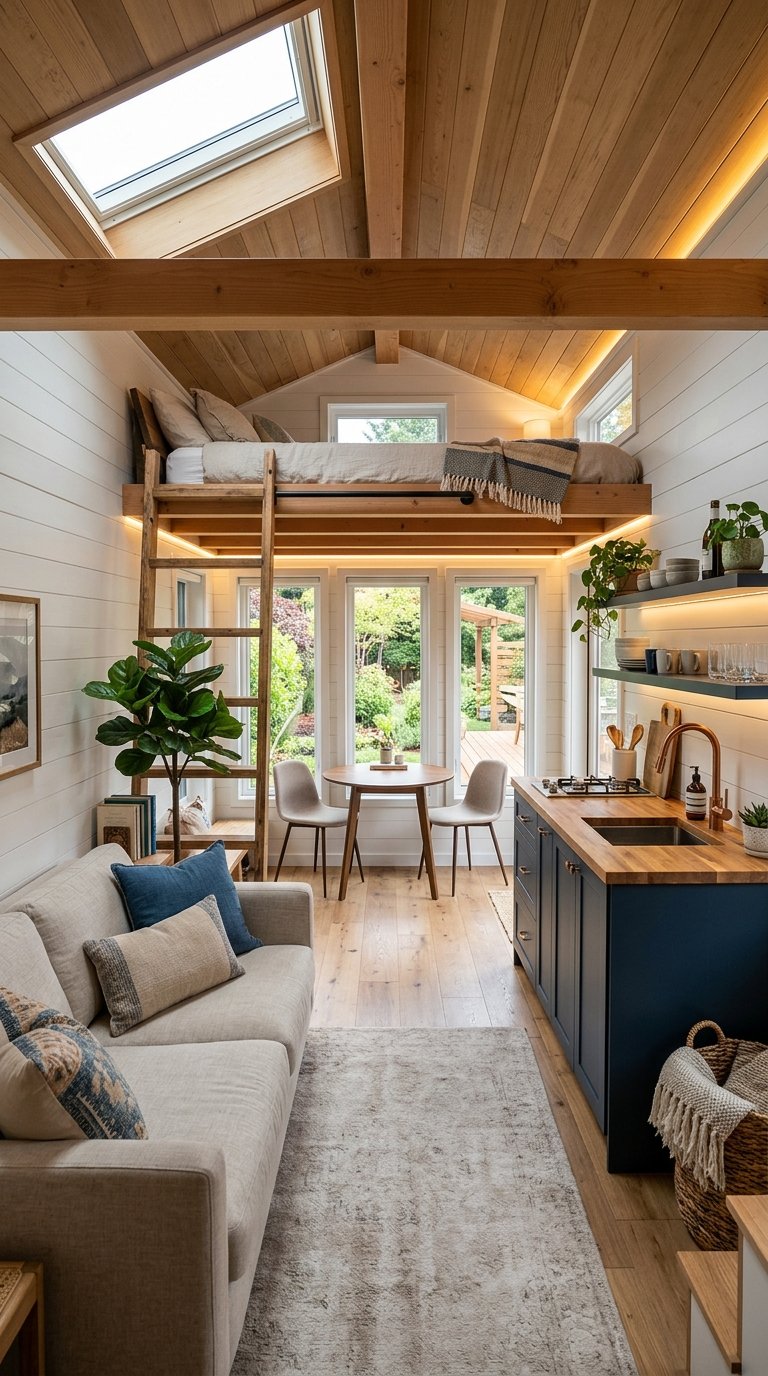
This stunning modern tiny home interior masterfully blurs the lines between its functional zones, creating an incredibly open and inviting atmosphere despite its compact footprint. The most striking feature is undoubtedly the expansive, floor-to-ceiling window wall that floods the entire space with natural light and breathtaking views, instantly making the living and kitchen areas feel boundless and deeply connected to nature. Notice how the consistent application of light-toned wood, from the wide plank flooring to the custom cabinetry and ceiling beams, further unifies the space, contributing to that desired expansive feel and a serene, minimalist aesthetic. This thoughtful material palette is key to an expansive modern tiny home interior, ensuring visual continuity. For true multi-functionality, the clever fold-down dining table positioned directly beside the cozy sofa transforms the living area into a flexible dining or workspace in mere seconds, perfectly aligning with the seamless kitchen and living zone concept. Even the kitchen itself embraces this fluidity, featuring sleek white cabinetry paired with warm wood countertops and integrated appliances that blend harmoniously into the overall design rather than standing out. You could try incorporating a similar light wood and white palette or a fold-down element in your own small space to achieve a similar open feel. The strategic placement of the loft bed above the living area also maximizes vertical space, leaving the main floor uninterrupted and free-flowing. This thoughtful design proves that a modern tiny home interior can offer both practical living and a profound sense of spaciousness.
The allure of tiny living often comes with a big question: can a small footprint truly feel spacious and luxurious? Absolutely! Forget cramped quarters and embrace a world where thoughtful design transforms every inch into an expansive experience. We’re diving into 21 stunning modern tiny home interiors that master the art of feeling way bigger than their square footage suggests.
From ingenious storage solutions to strategic natural light and seamless indoor-outdoor connections, these homes are testaments to the power of smart design. Get ready to be inspired by clean lines, serene neutral palettes, and the warmth of light woods, all meticulously crafted to create an open, airy, and truly magnificent living space. Prepare to have your perceptions of small-space living completely transformed.
A modern tiny home interior with soaring vaulted ceilings creating expansive vertical space.
This modern tiny home interior masterfully utilizes its vertical dimensions to create an airy and open feel. Soaring
Inviting natural light into a modern tiny home interior with dramatic floor-to-ceiling windows.
This stunning example masterfully demonstrates how to maximize light and views, creating an expansive feel within a compact footprint
Seamless integrated storage transforming a modern tiny home interior into an uncluttered haven.
This compact design brilliantly showcases how integrated storage can transform a small footprint into an effortlessly uncluttered haven. Light oak cabinetry
Bright light wood paneling making this modern tiny home interior feel airy and expansive.
This charming dwelling masterfully employs a consistent palette of bright, light wood paneling to create an incredibly inviting
An open concept modern tiny home interior fostering flow and eliminating visual barriers.
This inviting interior masterfully employs an open concept to foster effortless flow and eliminate visual barriers. Expansive, floor-to
Strategic mirrored feature walls cleverly expanding the perceived space in this modern tiny home interior.
Embracing light and openness, this design demonstrates how clever choices can transform a compact footprint into a spacious
Elevated loft sleeping areas maximizing floor space in a compact modern tiny home interior design.
This ingenious design brilliantly elevates the sleeping area, creating a private retreat while freeing up valuable floor space below.
Seamless indoor-outdoor living with sliding glass doors in a chic modern tiny home interior.
The expansive sliding glass doors are the hero of this space, dissolving the boundary between the interior and the lush outdoor environment
Clean-lined minimalist furniture maintaining an uncluttered aesthetic in this modern tiny home interior.
The serene atmosphere of this space is expertly achieved through a thoughtful selection of furnishings that prioritize both form and function.
Unified continuous light-toned flooring visually stretching every modern tiny home interior.
A brilliant design strategy for maximizing perceived space in smaller dwellings involves the thoughtful selection of flooring. Notice how the consistent use of
Bright skylight illumination bathing a modern tiny home interior in natural light from above.
The architectural choice of multiple generous skylights dramatically transforms this compact living space. Positioned within the high,
Floating shelves and cabinetry creating an open, airy feel in a sleek modern tiny home interior.
This charming interior masterfully utilizes floating shelves to maintain a light and expansive feel, showcasing everyday essentials without weighing down the walls
A serene neutral monochromatic palette visually widening this inviting modern tiny home interior.
The clever use of a serene neutral monochromatic palette is immediately apparent, transforming this compact space into an airy retreat. Walls and
Clever built-in banquette seating optimizing space and comfort in a cozy modern tiny home interior.
Clever built-in banquette seating takes center stage, wrapping around two walls and a large window to create an
Stylish transparent room dividers defining zones without sacrificing openness in a modern tiny home interior.
The clever use of a black-framed glass partition serves as an elegant solution for delineating distinct areas within a compact
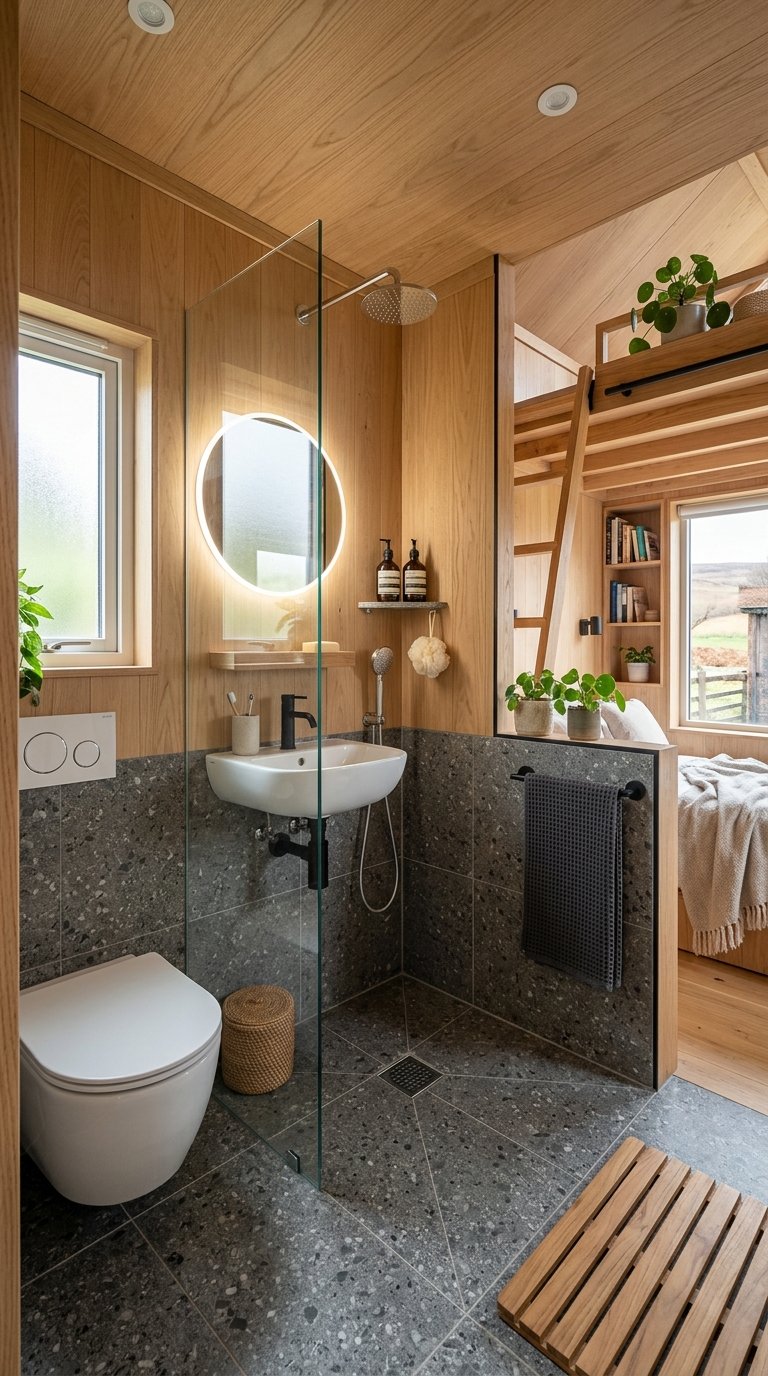
An efficient wet room bathroom design integrating functionality within a compact modern tiny home interior.
This ingenious wet room bathroom design masterfully integrates functionality within a compact modern tiny home interior. Utilizing a seamless floor-to
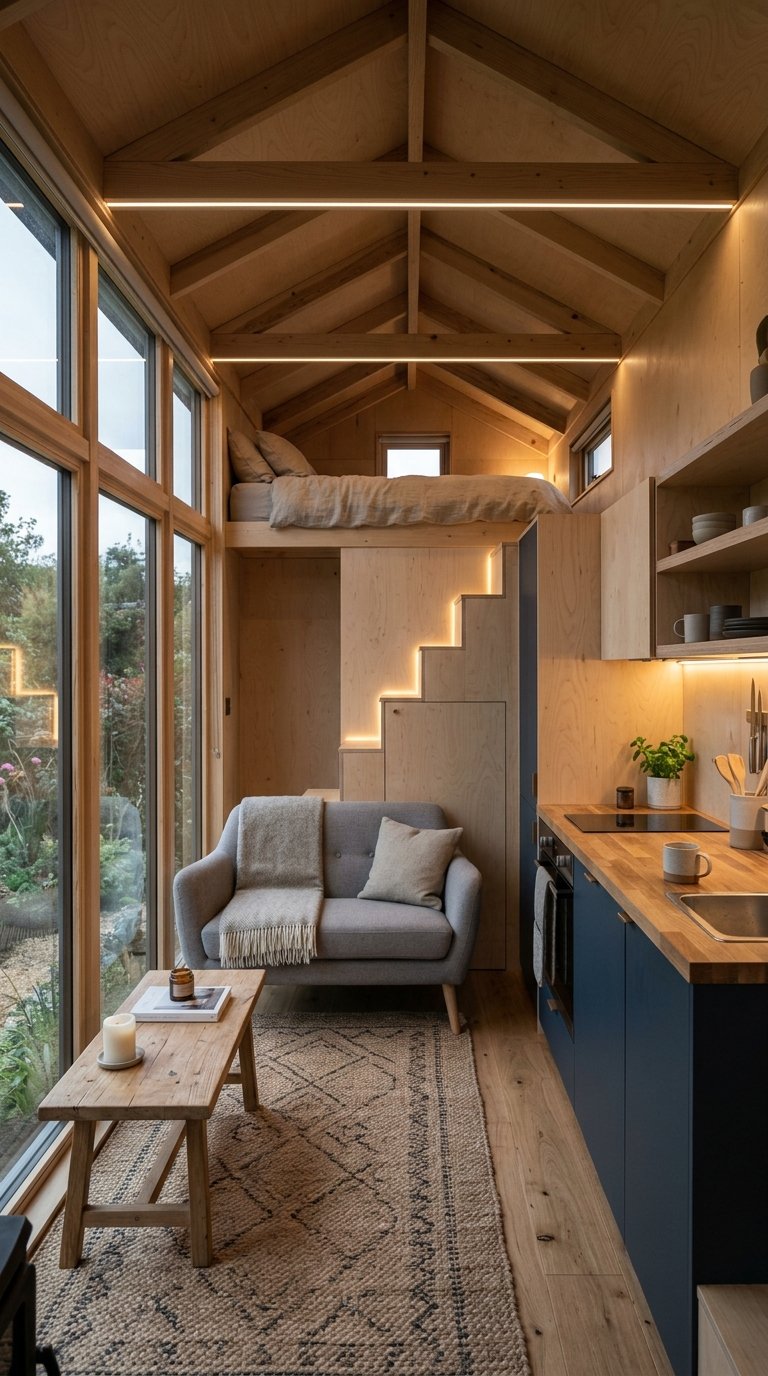
Subtle integrated LED strip lighting enhancing depth and atmosphere in a minimalist modern tiny home interior.
The warm embrace of light-toned wood paneling and exposed beams creates an inviting, airy feel throughout this compact space,
Smart multi-functional furniture effortlessly adapting spaces in a dynamic modern tiny home interior.
Clever design truly shines in compact living, where smart multi-functional furniture effortlessly adapting spaces in a dynamic modern
Polished light-reflecting finishes on surfaces enhancing brightness throughout this modern tiny home interior.
Maximizing every ray of natural light is a hallmark of clever small-space design, and this inviting dwelling truly excels.
A living vertical garden wall adding depth and biophilic design to a compact modern tiny home interior.
A truly captivating vertical garden wall anchors this living space, transforming a compact area into an immersive natural retreat.
Carefully planned unobstructed sightlines creating a sense of expansive flow in this modern tiny home interior.
This clever design maximizes every inch, creating an immediate sense of openness through deliberately unobstructed sightlines. From the moment you
Transform Your Sanctuary: Inspiring Modern Minimalist Bedroom Ideas for a Serene Escape
Imagine waking up in a space that feels utterly calm, effortlessly stylish, and completely conducive to relaxation. That’s the promise of a modern minimalist bedroom. Far from stark or cold, this design philosophy invites you to curate a sanctuary where every element serves a purpose, bringing a profound sense of peace and clarity to your daily life. Get ready to discover how “less is more” can become your favorite mantra for a truly beautiful bedroom.
The Core Philosophy of Modern Minimalist Bedroom Design
At its heart, modern minimalism in the bedroom is about intentionality. It’s not just about decluttering; it’s about making conscious choices about what you allow into your most personal space. Think clean lines, uncluttered surfaces, and a deliberate absence of excess. This approach helps to reduce visual noise, allowing your mind to unwind and find true rest. You’re creating an environment that supports tranquility, encourages focus, and reflects a peaceful state of mind.
Embracing this philosophy means letting go of items that don’t bring you joy, serve a practical purpose, or contribute to the overall aesthetic. It’s a liberating process that simplifies your routine and elevates your sense of well-being. Your bedroom becomes a dedicated space for rejuvenation, a private retreat from the demands of the outside world.
Mastering the Minimalist Color Palette
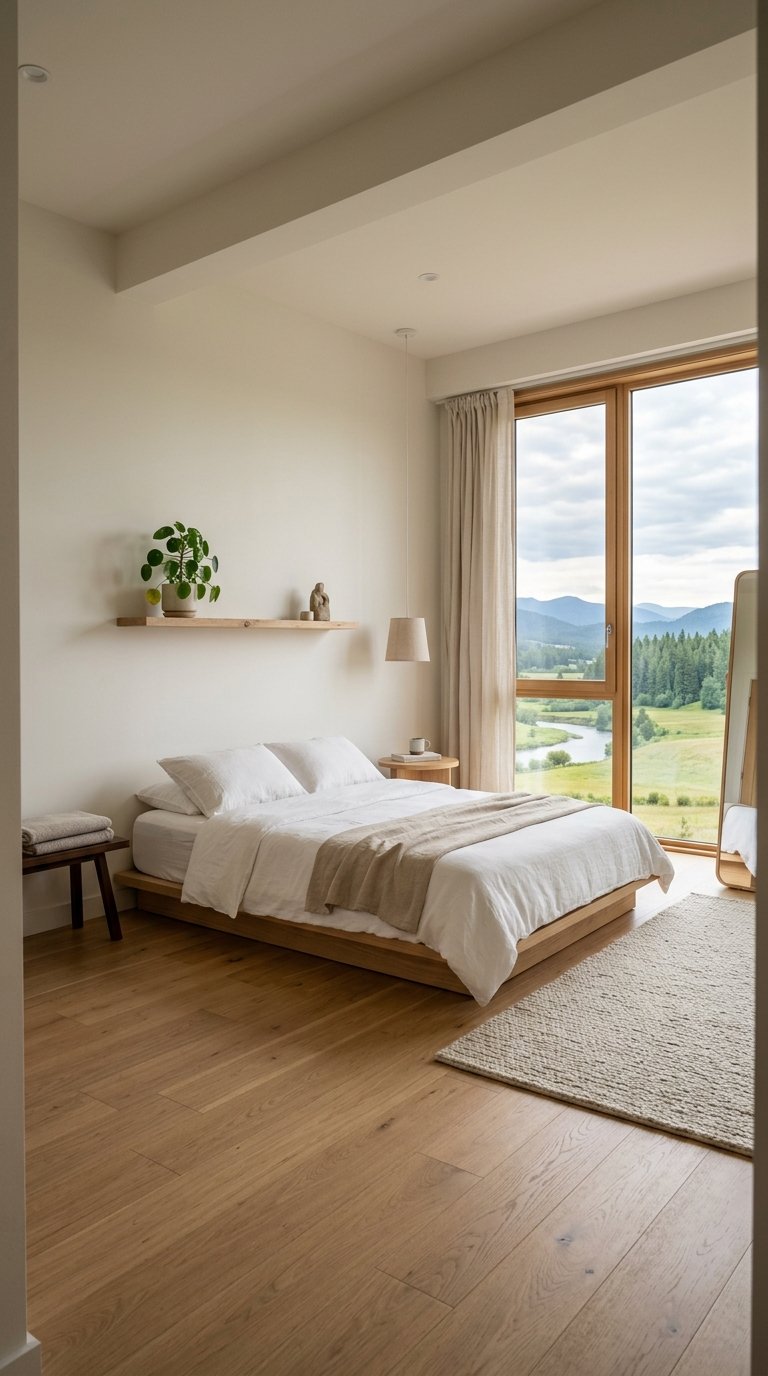
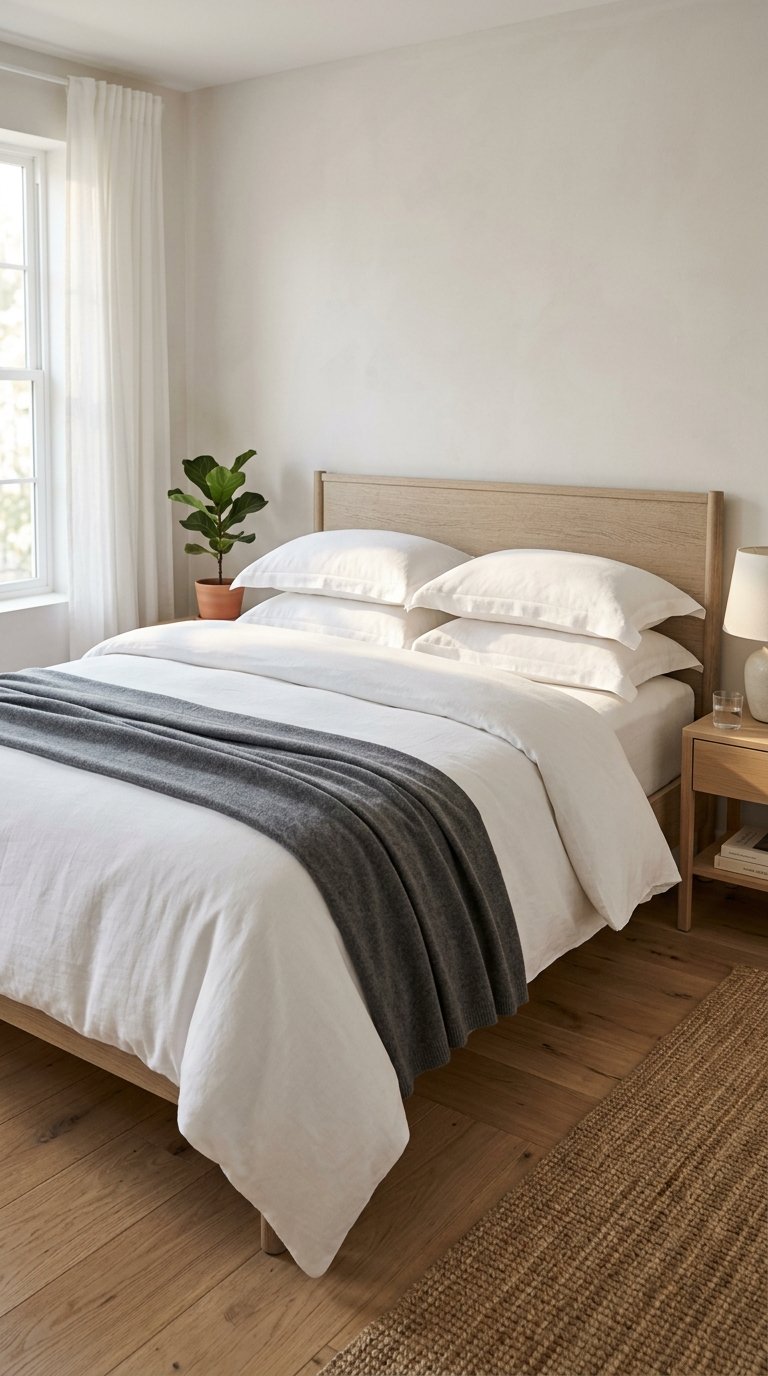
The foundation of any modern minimalist bedroom is its color scheme. You’ll find yourself drawn to a palette of serene neutrals: think crisp whites, warm creams, soft greys, and earthy beiges. These colors create a calm backdrop that feels expansive and airy, allowing the subtle textures and forms within the room to take center stage. But minimalist doesn’t mean boring! You can introduce depth and interest through varying shades of the same color, or by adding a carefully chosen accent.
Consider a muted charcoal grey for an accent wall, or perhaps a hint of dusty rose or sage green in your textiles. The key is subtlety and harmony. These subdued tones prevent the space from feeling stark, instead imbuing it with a comforting, sophisticated aura. The goal is to create a cohesive and calming visual experience that encourages relaxation and introspection.
Furniture: Form Meets Function in Every Piece
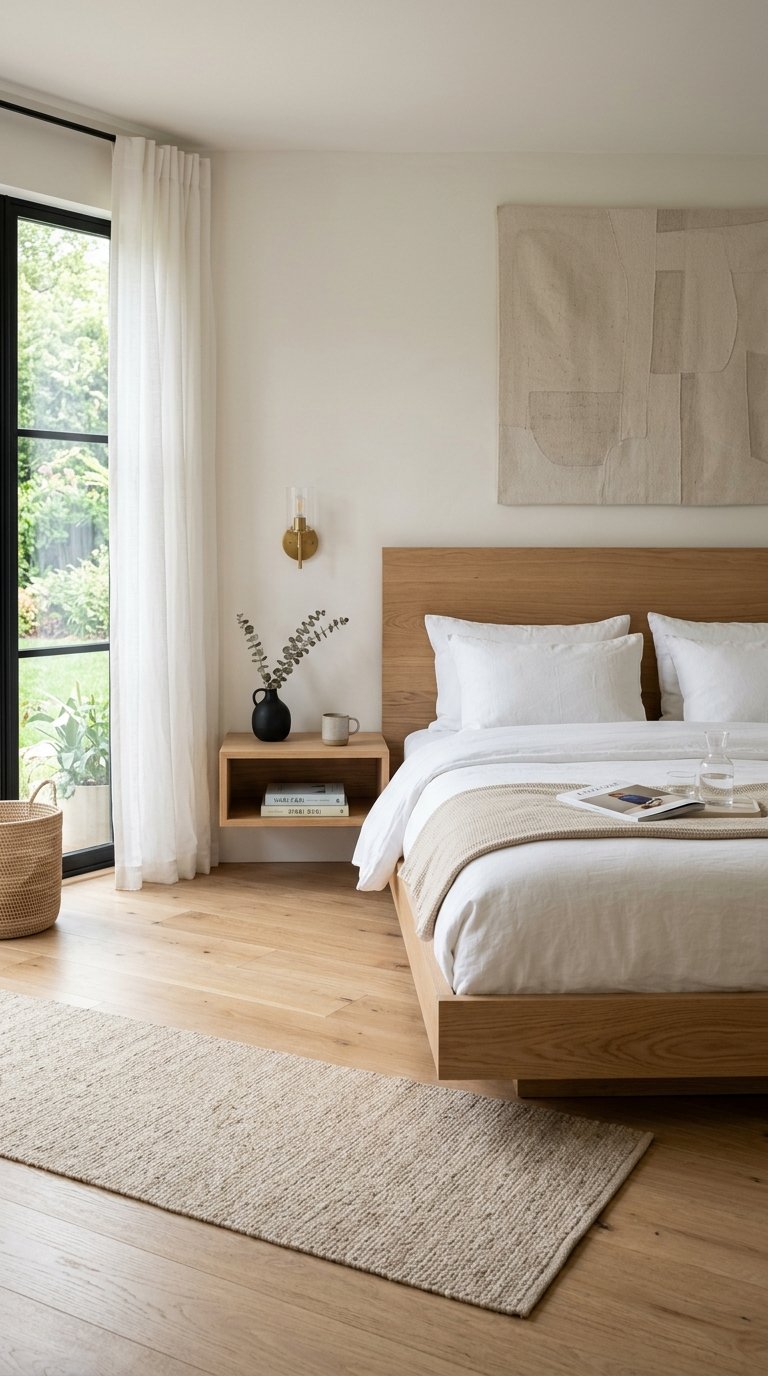
In a modern minimalist bedroom, every piece of furniture is a statement of purpose and design. You’ll prioritize quality over quantity, opting for well-crafted pieces with clean lines and understated elegance. Low-profile platform beds are a popular choice, as they visually expand the room and offer a streamlined aesthetic. Look for designs that integrate storage, like drawers beneath the bed, to maintain that coveted clutter-free look.
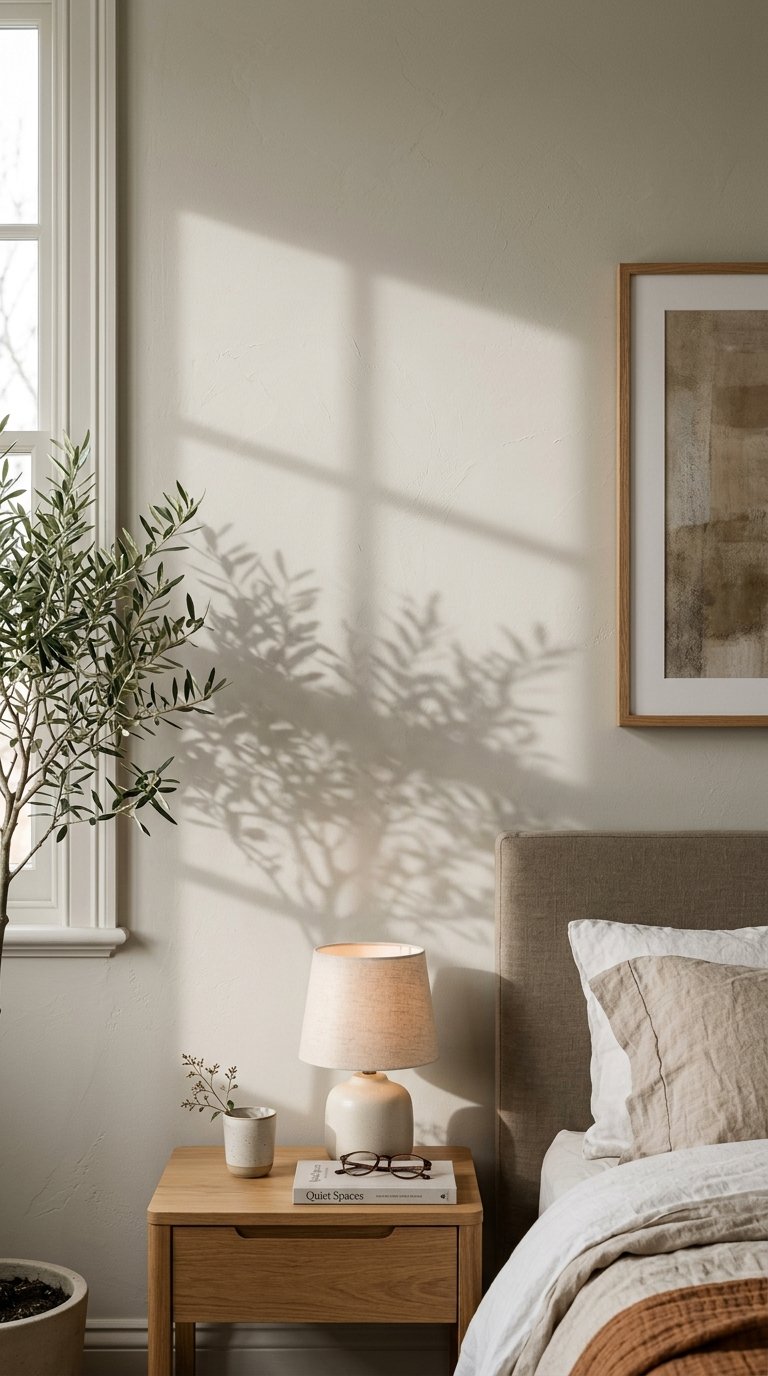
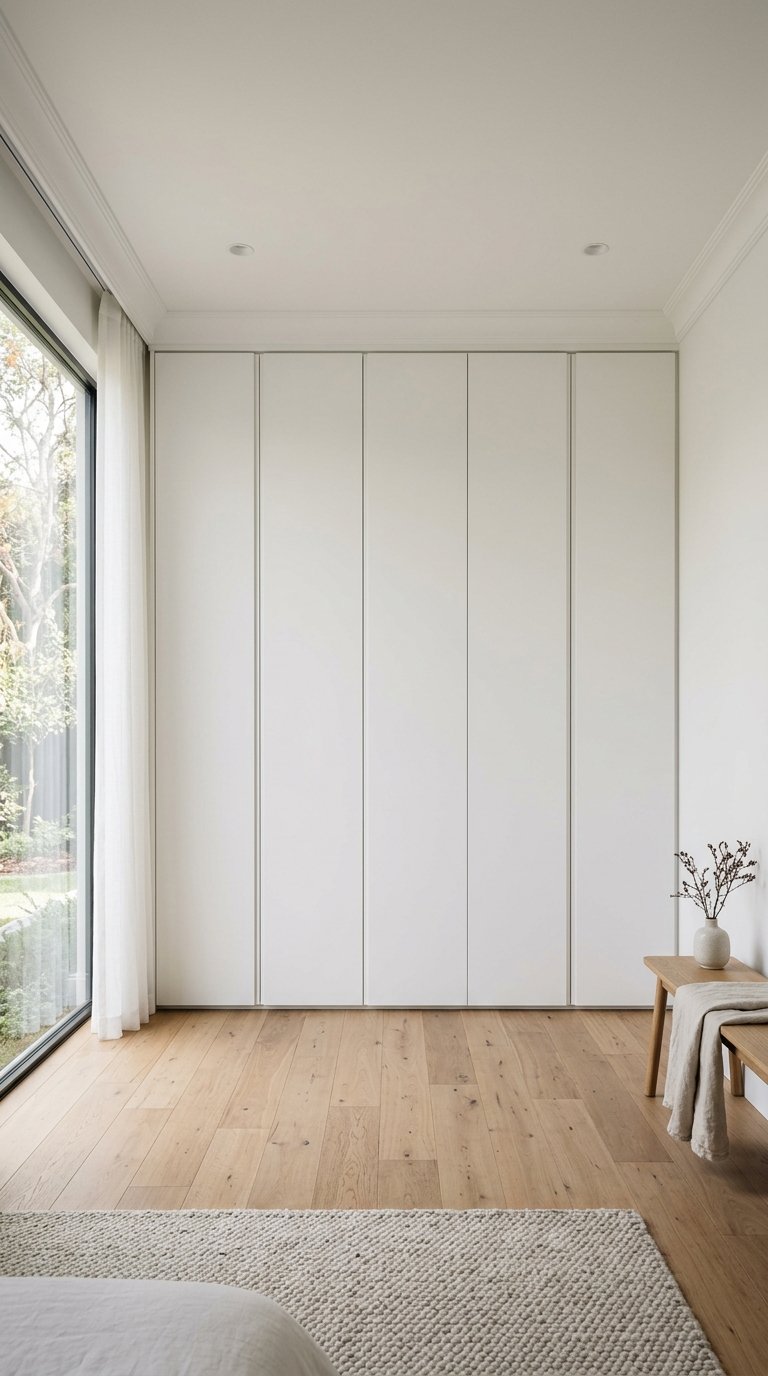
Your bedside tables should be simple and functional, perhaps a floating shelf or a small, sculptural table with just enough space for a lamp and a book. Consider a minimalist dresser or wardrobe with flush handles that blends seamlessly into the wall. When choosing furniture, ask yourself: does this piece serve a vital function? Does its design contribute to the serene aesthetic? If the answer is yes, you’re on the right track.
The Art of Illumination: Lighting Your Minimalist Haven
Lighting is paramount in setting the mood for your minimalist sanctuary. Maximize natural light as much as possible; sheer curtains or blinds allow light to filter in gently while maintaining privacy. For artificial lighting, think layers. Recessed ceiling lights provide ambient illumination, while elegant sconces or a sculptural pendant lamp can serve as focal points and task lighting.
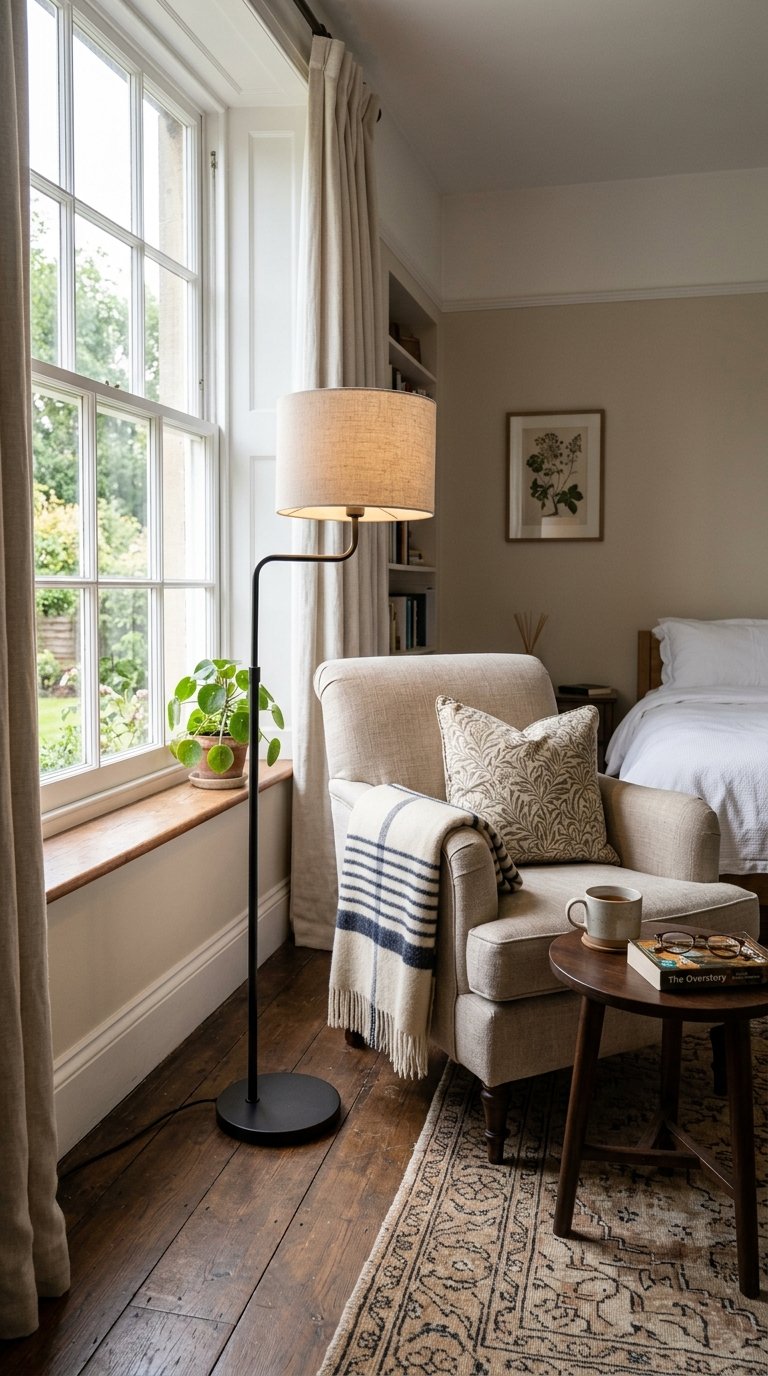
Avoid harsh, overhead lights. Instead, opt for warm-toned bulbs that cast a soft, inviting glow. A minimalist floor lamp in a corner can add a touch of sophistication and provide a cozy reading nook. Dimmer switches are your best friend, allowing you to adjust the intensity of light to suit your mood and the time of day, transforming your bedroom from a bright morning space to a serene evening retreat.
Texture Talk: Adding Depth Without Clutter
One of the secrets to making a minimalist bedroom feel warm and inviting, not sterile, is the strategic use of texture. Since you’re working with a limited color palette and minimal decor, textures become your primary tool for adding visual interest and tactile richness. Think about combining different materials that appeal to the senses.
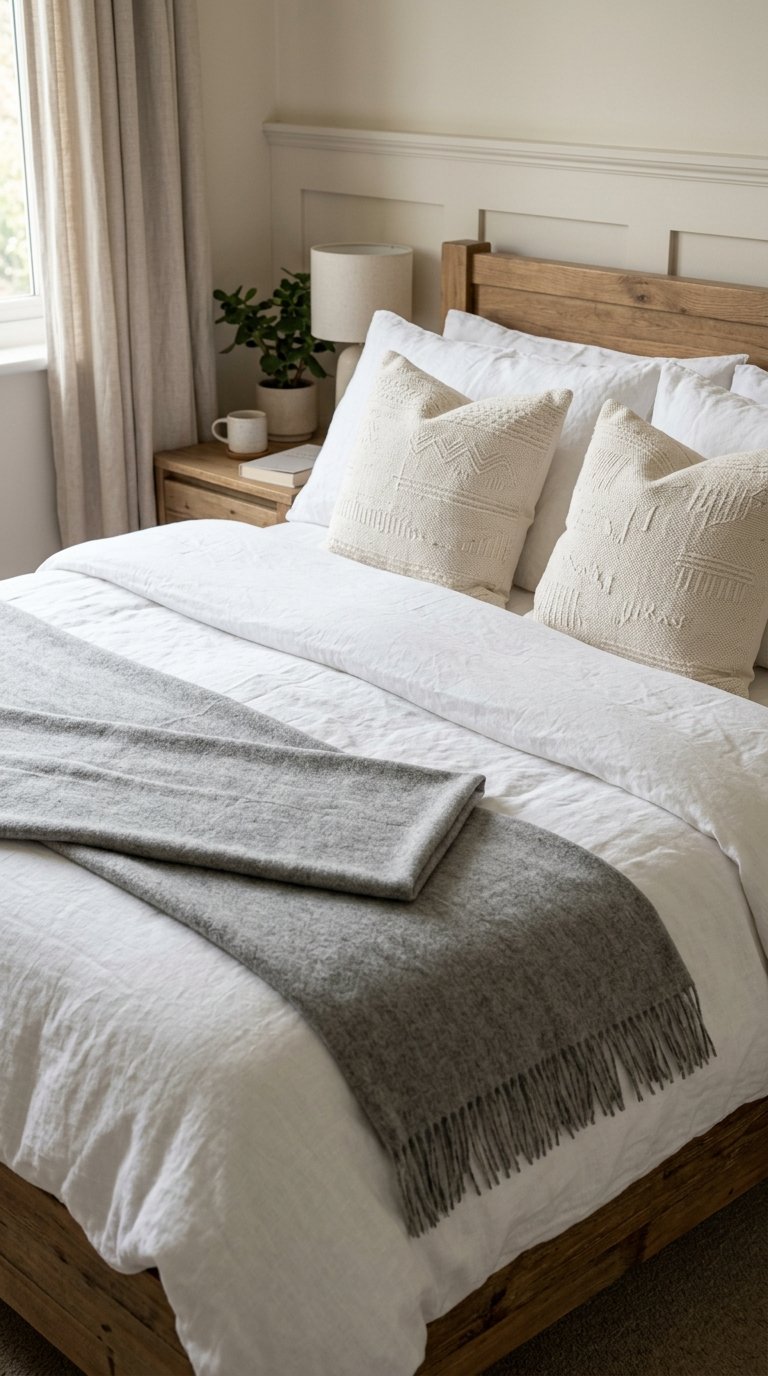
Layer crisp linen bedding with a chunky knit wool throw or a luxurious velvet pillow. Introduce natural elements through a woven jute rug, a smooth ceramic vase, or a piece of furniture with exposed wood grain. These textural contrasts create depth and warmth, inviting you to linger and relax. The key is to choose high-quality materials that feel good to touch and look beautiful, without creating visual busyness.
Curated Decor: Every Item Tells a Story
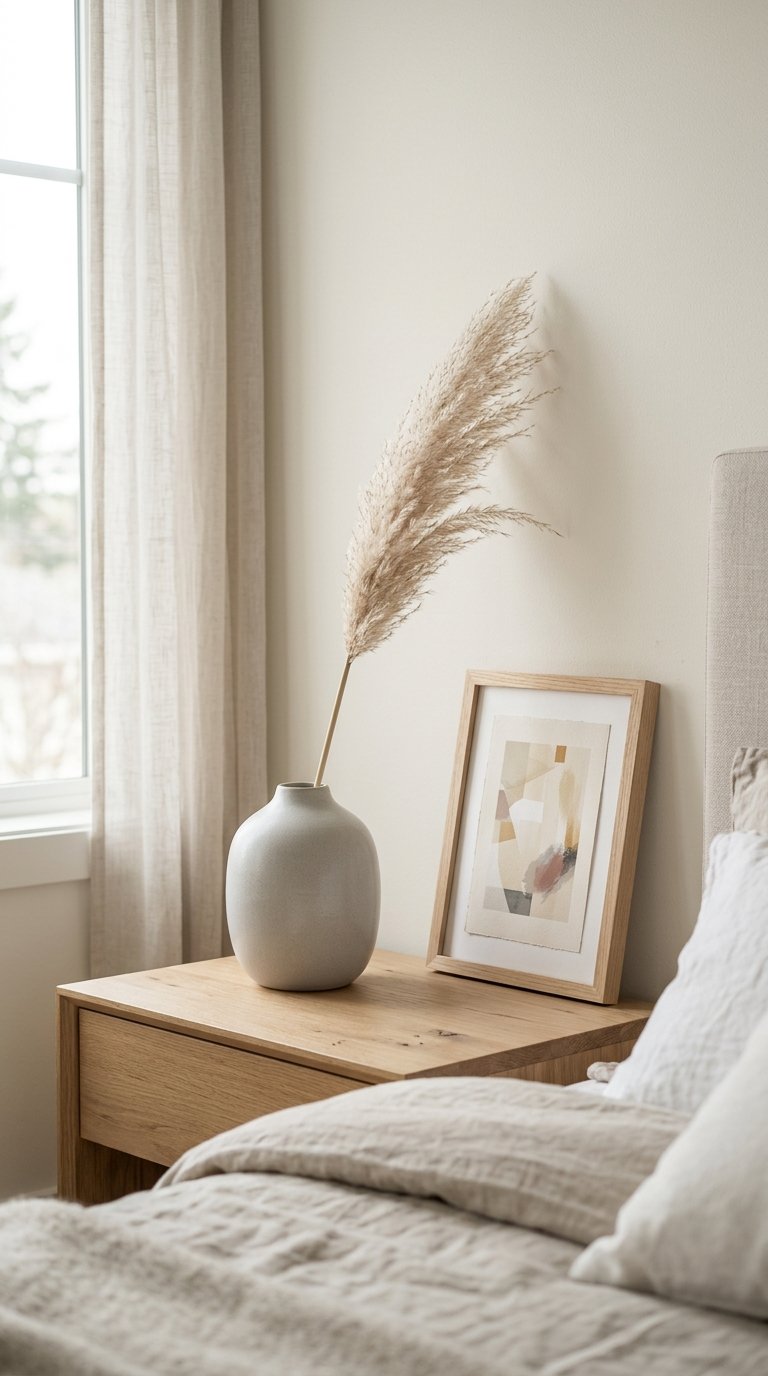
In a modern minimalist bedroom, every decorative item earns its place. This isn’t a space for trinkets or excessive collections. Instead, you’ll choose a few carefully selected pieces that resonate with you, add personality, and enhance the room’s aesthetic. A single, striking piece of abstract art on the wall can draw the eye without overwhelming the space. Consider a sculptural vase holding a single dried botanical or a small, elegant ceramic bowl on your bedside table.
Books can be decorative too; a neatly stacked pile of beautifully bound volumes can add warmth and intellectual appeal. The trick is to resist the urge to fill every empty surface. Allow breathing room around your chosen decor to emphasize its beauty and significance. Each item should feel like a treasured piece, thoughtfully placed to contribute to the overall feeling of calm and sophistication.
Smart Storage Solutions: The Unseen Hero
A truly minimalist bedroom relies heavily on smart, often hidden, storage solutions to maintain its serene and uncluttered appearance. The goal is to keep surfaces clear and visible clutter at bay. Built-in wardrobes or custom cabinetry that blend seamlessly with the walls are ideal, offering ample space for clothes, accessories, and linens without protruding into the room.
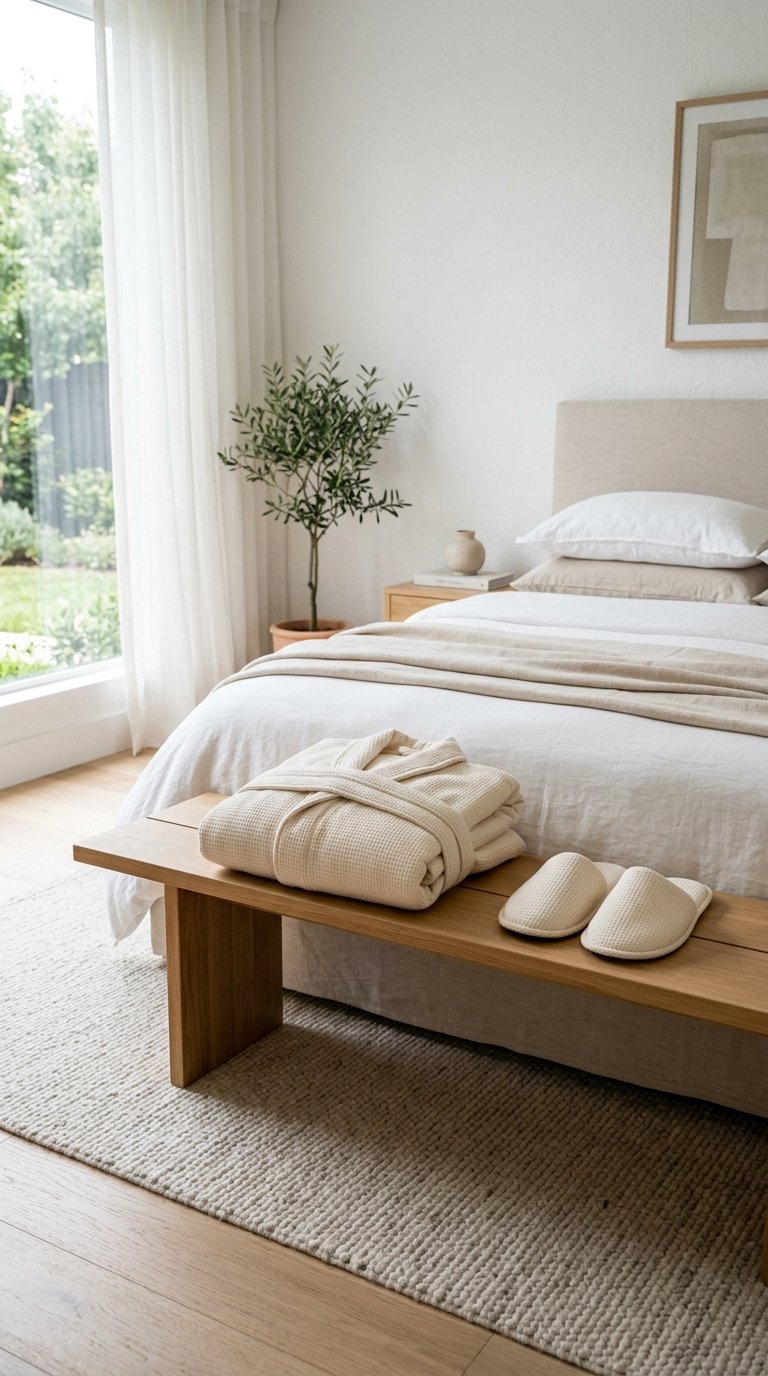
Consider under-bed storage drawers, sleek nightstands with hidden compartments, or even a bench with a lift-top lid for extra blankets. Wall-mounted shelving can be minimalist and functional, but ensure it’s used sparingly and styled with intention, holding only a few essential items or curated decor. The less you see, the more peaceful your space will feel. Investing in smart storage is an investment in your mental tranquility.
Bringing Nature In: Organic Touches for Serenity
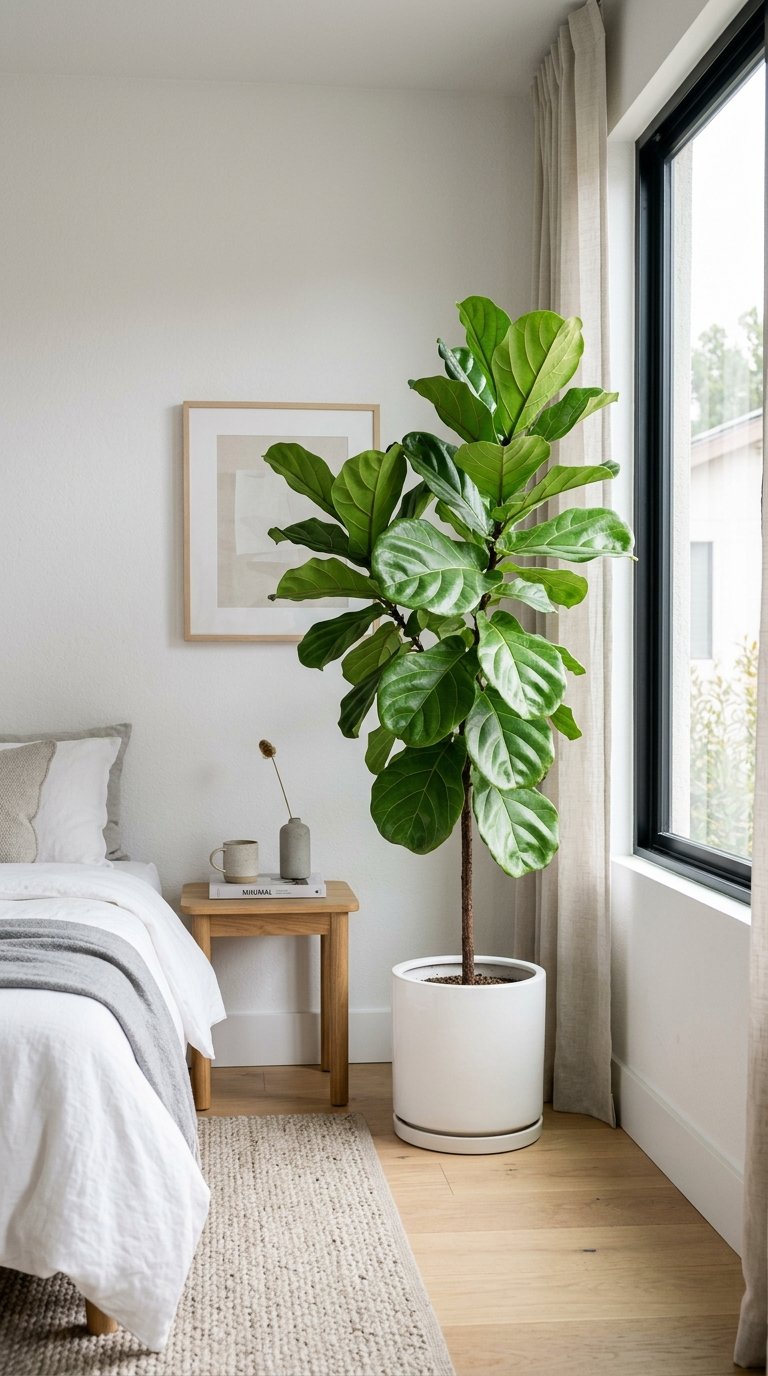
Even the most modern minimalist spaces benefit from the calming influence of nature. Incorporating organic elements can soften the clean lines and cool tones, adding a vital touch of life and warmth. A simple potted plant, like a snake plant, ZZ plant, or a small olive tree, can purify the air and bring a refreshing splash of green. Choose pots that align with your minimalist aesthetic – think terracotta, unglazed ceramic, or simple concrete.
Wooden elements, whether in your furniture, a decorative bowl, or a small sculpture, connect you to the natural world. Dried botanicals, like eucalyptus branches or pampas grass, offer texture and a subtle, earthy palette without requiring ongoing maintenance. These natural touches enhance the feeling of a peaceful retreat, grounding your space and fostering a deeper connection to well-being.
The Fashion Connection: Styling Your Sleep & Lounge Wear
Your minimalist aesthetic doesn’t stop at your decor; it extends to how you dress even in the privacy of your bedroom. Embracing high-quality, comfortable, and simple sleepwear and loungewear can enhance the serene vibe of your space. Think about luxurious fabrics like organic cotton, silk, or linen in muted tones that complement your bedroom’s color palette. Investing in a few well-made pieces that feel wonderful against your skin elevates your self-care routine.
Imagine slipping into a perfectly tailored silk robe or a soft linen pajama set after a long day, further immersing yourself in the calm of your minimalist sanctuary. These choices reflect a holistic approach to living, where quality and intentionality are valued in every aspect of your life, even in your personal style when you’re unwinding at home.
Cultivating a Mindful Retreat: Beyond the Aesthetics
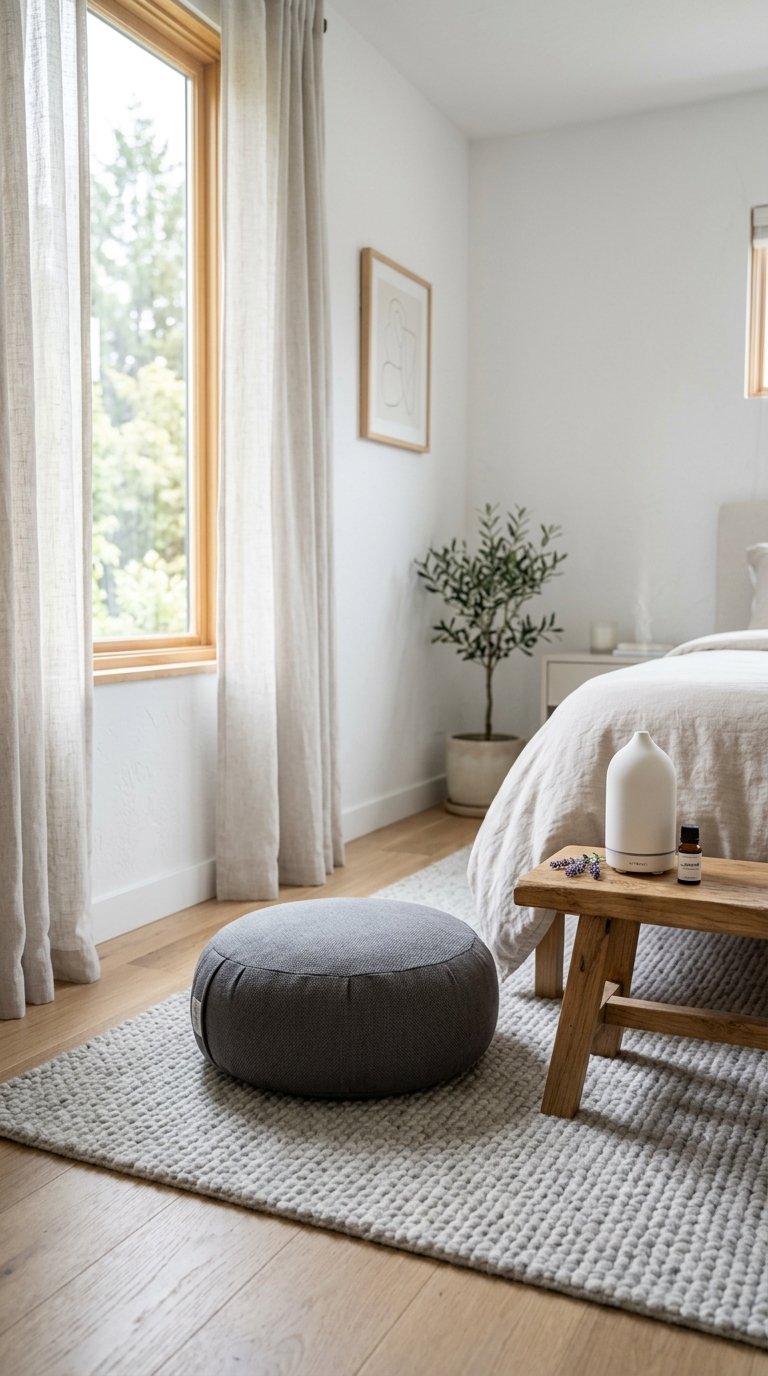
Ultimately, a modern minimalist bedroom is more than just a beautifully designed space; it’s a foundation for a more mindful way of living. It encourages you to slow down, disconnect from digital distractions, and truly be present. Consider creating a small, dedicated zone for meditation or quiet contemplation, perhaps a comfortable cushion on a woven rug by a window.
Establish rituals that reinforce the tranquility of your space: a warm cup of herbal tea before bed, a few moments of journaling, or simply enjoying the quiet. By consciously designing your bedroom to be a peaceful haven, you’re not just creating an aesthetic; you’re cultivating an environment that supports your mental health, encourages deep rest, and inspires a renewed sense of calm every single day.
Your Journey to a Minimalist Oasis
Stepping into the world of modern minimalist bedroom design is an exciting journey towards a more peaceful and aesthetically pleasing lifestyle. It’s about stripping away the non-essential to reveal the beauty of simplicity, functionality, and calm. From the deliberate choice of a neutral palette to the careful curation of every single item, you’re crafting a personal sanctuary that truly supports your well-being. Start small, perhaps by clearing your bedside table, and slowly work your way towards a complete transformation. You’ll be amazed at how a minimalist approach can profoundly impact your sleep, your mood, and your overall sense of peace.
Snuggle Up! Your Ultimate Guide to Creating the Most Irresistibly Cozy Room
Imagine a space where the outside world melts away, a haven of peace and comfort designed just for you. Creating a truly cozy room isn’t just about adding blankets; it’s about curating an atmosphere that soothes your soul and invites you to relax, recharge, and simply be. Let’s dive into the art of transforming your living spaces into sanctuaries you’ll never want to leave.
The Soul of Serenity: What Truly Defines a Cozy Room?
Before we dive into the decor specifics, let’s talk about what “cozy” truly means. It’s more than just a temperature; it’s a profound feeling of warmth, security, and tranquility. A cozy room is a sanctuary, a personal retreat where you feel completely at ease, free from the stresses of the day. It’s a space that wraps you in a gentle embrace, encouraging you to slow down and savor the moment.
For some, coziness might evoke images of crackling fireplaces and heavy knits, while for others, it’s about soft natural light and the quiet hum of a happy home. The beauty of creating a cozy room is that it’s deeply personal, a reflection of your unique desires for comfort and peace. It’s about creating an environment that nurtures your well-being, whether you’re curling up with a book, enjoying a quiet cup of tea, or simply unwinding after a long day.
Beyond the Aesthetic: The Feeling of Hygge
You might have heard of “Hygge” (pronounced hoo-gah), the Danish concept that perfectly encapsulates this feeling. Hygge isn’t just a style; it’s a lifestyle, a philosophy centered around finding joy in simple moments and creating a warm, comfortable atmosphere. It’s about appreciating the small pleasures – the gentle glow of a candle, the warmth of a homemade meal, the comfort of a soft blanket. When we talk about creating a cozy room, we’re essentially inviting the spirit of Hygge into our homes, cultivating a space that encourages contentment and connection, whether with yourself or loved ones.
Embracing coziness means consciously choosing elements that foster relaxation and warmth. It’s about building layers, engaging your senses, and selecting pieces that tell a story and bring you joy. It’s an investment in your mental and emotional well-being, transforming your living space into a true haven where you can always feel safe, nurtured, and utterly comfortable.
Building Blocks of Bliss: Color, Light, and Texture
To truly achieve that sought-after cozy ambiance, you need to start with the foundational elements of your room: color, light, and texture. These three work in harmony to set the mood and create a deeply inviting atmosphere.
The Comforting Embrace of Color
When selecting a color palette for your cozy room, think warm, muted, and earthy tones. Deep jewel tones like emerald green or sapphire blue can add richness and depth, while warm neutrals such as creamy whites, soft beiges, gentle greys, and terracotta hues provide a calming backdrop. Avoid stark, bright, or overly cool colors that can feel sterile or uninviting. Instead, opt for shades that feel comforting and grounding, creating a sense of natural warmth. Consider colors inspired by nature – the deep greens of a forest, the soft browns of soil, or the muted blues of a twilight sky.
The Gentle Glow of Layered Lighting
Lighting is paramount in creating a cozy atmosphere. Harsh overhead lighting can instantly kill any chance of coziness, so instead, focus on layering multiple light sources. Think about warm, diffused light from table lamps, floor lamps, and sconces. Dimmers are your best friend, allowing you to adjust the intensity to suit your mood. Candles, both real and LED, add an undeniable touch of magic and a soft, flickering glow that instantly makes a room feel more intimate. String lights can also add a whimsical, inviting sparkle, especially draped along a bookshelf or headboard. The goal is a warm, inviting glow rather than bright, functional illumination.
The Tactile Richness of Texture
Texture is the unsung hero of coziness. It’s what engages our sense of touch and adds visual depth, making a room feel rich and inviting. Incorporate a variety of textures to create interest and warmth: think chunky knits, luxurious velvets, soft faux furs, rustic wood, smooth ceramic, and supple leather. Contrast is key – pair a smooth wooden coffee table with a fluffy sheepskin rug, or a sleek metal lamp with a soft linen lampshade. Don’t shy away from mixing and matching; the more varied and tactile your textures, the more dynamic and comforting your space will feel. From the weave of your curtains to the grain of your furniture, every surface offers an opportunity to add to the tactile symphony of your cozy room.
Furniture & Flow: Crafting an Inviting Layout
Once you have your foundational elements in place, it’s time to consider how your furniture and its arrangement contribute to the overall cozy feel. The right pieces, thoughtfully placed, can transform a room from merely functional to wonderfully inviting.
Inviting Seating for Ultimate Comfort
When it comes to furniture, prioritize comfort above all else. Think deep, overstuffed sofas and armchairs that you can truly sink into. Pieces with soft, rounded edges tend to feel more welcoming than sharp, angular ones. Consider a chaise lounge or an armchair with a matching ottoman, perfect for putting your feet up and truly relaxing. The goal is to create seating that encourages lounging, reading, and quiet contemplation. Don’t be afraid to choose pieces that look and feel incredibly soft and plush, inviting you to stay awhile.
Arranging for Intimacy and Flow
The layout of your furniture plays a crucial role in fostering coziness. Instead of pushing all furniture against the walls, try creating intimate groupings that encourage conversation and connection. For a living room, arrange sofas and chairs to face each other, perhaps around a central coffee table, to create a natural gathering spot. Define different zones within a larger room – a reading nook with an armchair and a floor lamp, a conversation area, or a dedicated space for quiet reflection. Ensure there’s enough room to move comfortably, but keep groupings relatively close to maintain an intimate feel. A thoughtful layout makes a room feel intentional and welcoming, rather than vast and impersonal.
Scale and Substance
While an abundance of soft textiles is key, the underlying furniture should also contribute to the cozy vibe. Choose pieces that feel substantial and well-made, conveying a sense of stability and comfort. Avoid overly delicate or sparse furniture that can make a room feel cold. However, be mindful not to overcrowd your space; a few well-chosen, comfortable pieces are better than many small, uncomfortable ones. Balance larger anchor pieces with smaller, functional items like side tables for drinks and books, ensuring everything is within easy reach, enhancing that feeling of effortless comfort.
The Art of Softness: Layering with Textiles
This is where the magic truly happens! Textiles are the heart and soul of a cozy room, providing unparalleled warmth, comfort, and visual appeal. Layering them thoughtfully will transform your space into an inviting sanctuary.
Rugs: Anchoring Warmth and Softness
Start from the ground up with a soft, inviting rug. A plush, high-pile rug not only feels wonderful underfoot but also adds a crucial layer of warmth and sound absorption, making the room feel quieter and more enclosed. Choose a rug large enough to anchor your main seating area, allowing at least the front legs of your furniture to rest on it. Natural fibers like wool, jute, or cotton in warm tones or subtle patterns can instantly elevate the cozy factor, adding both texture and visual interest to your floor.
Throws & Blankets: An Abundance of Comfort
You can never have too many throws and blankets in a cozy room! Drape them artfully over sofas, armchairs, and even the foot of your bed. Mix different textures – a chunky knit wool blanket, a soft faux fur throw, a lightweight linen, or a luxurious cashmere wrap. The visual abundance signals warmth and an invitation to snuggle up. Keep a basket filled with extra blankets within easy reach, so you or your guests can effortlessly grab one whenever a chill sets in or a moment of extra comfort is desired. They’re not just for warmth; they add depth, color, and undeniable softness.
Pillows: Plushness in Every Corner
Pillows are another essential for creating that cloud-like comfort. Don’t be afraid to pile them on! Mix and match sizes, shapes, and textures to create a truly inviting look. Square, lumbar, round – combine them for visual interest. Incorporate different materials like velvet, linen, cotton, and faux fur. Pillows aren’t just for decoration; they provide crucial back support and extra cushioning, making any seating area more comfortable and welcoming. The more plush and inviting your pillows, the more you’ll want to sink into your space.
Curtains: Framing Light and Privacy
Finally, consider your window treatments. Soft, flowing curtains in a natural fabric like linen or velvet can frame your windows beautifully, adding a layer of warmth and privacy. Sheer curtains can diffuse harsh daylight, while thicker, lined curtains can block drafts and create a cocoon-like feel at night. Choose colors that complement your overall palette, enhancing the soft, inviting atmosphere. The way light filters through or is blocked by your curtains significantly impacts the mood of your cozy room.
Sensory Delights & Personal Touches: Elevating Your Cozy Haven
Once you’ve established the visual and tactile foundations, it’s time to engage the other senses and inject your unique personality into your cozy room. These are the details that truly make a space feel like home.
The Power of Scent
Our sense of smell has a powerful connection to memory and comfort. Introduce warm, inviting scents into your cozy room with candles, essential oil diffusers, or subtle room sprays. Think notes of vanilla, sandalwood, amber, cinnamon, or a gentle pine. Avoid overly strong or artificial fragrances. A natural, comforting aroma can significantly enhance the feeling of coziness, creating a multi-sensory experience that envelops you as soon as you step into the room. A crackling wooden wick candle can even add a subtle auditory element!
Soothing Sounds and Sights
Minimize harsh noises in your cozy space. Consider a small, portable speaker for playing soft, ambient music, nature sounds, or even the gentle crackle of a digital fireplace. The absence of jarring sounds contributes greatly to a peaceful atmosphere. Visually, fill your room with objects that bring you joy and reflect your personality. Curate bookshelves with your favorite reads, display cherished photographs, or hang art that evokes calm and inspiration. These personal touches transform a decorated space into a truly lived-in and loved home.
The Living Element: Plants and Greenery
Bringing the outdoors in with plants adds life, freshness, and a touch of organic beauty to any cozy room. Choose plants with soft, trailing leaves like a Pothos or Philodendron, or a lush, full Peace Lily. The natural green hues contribute to a calming palette, and caring for them can be a meditative, grounding ritual. They purify the air and add a vibrant touch that contrasts beautifully with soft textiles and warm wood tones.
Fashion’s Embrace: Cozy Style Beyond the Walls
The concept of coziness isn’t confined to your decor; it extends to your personal style too! Imagine slipping into soft, luxurious loungewear as you settle into your beautifully designed room. Think oversized chunky knit sweaters, cashmere socks, soft cotton joggers, or a flowing silk robe. Your wardrobe can complement your cozy environment, creating a holistic experience where your clothing feels as comforting and inviting as your surroundings. When your personal style aligns with your home’s aesthetic, the feeling of coziness becomes a truly immersive experience.
Beyond the Walls: Embracing a Cozy Lifestyle
Ultimately, creating a cozy room is about more than just the physical space; it’s about cultivating a cozy lifestyle. It’s a mindset that encourages slowing down, appreciating small moments, and prioritizing your well-being. Your beautifully designed cozy room serves as the perfect backdrop for this intentional way of living.
Cozy Wardrobe & Rituals
Extend the feeling of coziness to your daily rituals. As mentioned, investing in a comfortable, stylish loungewear collection means you can truly embody the cozy aesthetic. Think soft, breathable fabrics that feel luxurious against your skin. Establish comforting routines: a warm beverage in your favorite mug, a quiet half-hour of reading, or listening to a podcast in your most comfortable armchair. These small, consistent actions reinforce the feeling of a cozy life. Your surroundings become a natural extension of your self-care practices.
Bringing Coziness Outdoors
Don’t limit coziness to your indoor spaces. Extend the concept to your balcony, patio, or even a small garden nook. Add soft outdoor cushions, weather-resistant throws, and perhaps some string lights or lanterns to create an inviting al fresco retreat. Imagine sipping your morning coffee or enjoying an evening drink surrounded by soft textures and gentle lighting, even under the open sky. A fire pit can add an instant dose of outdoor coziness, inviting conversation and warmth. This expands your sanctuary, allowing you to find comfort and peace in nature as well.
Creating a cozy room is an ongoing journey of discovery and personalization. It’s about listening to what makes you feel truly comfortable, safe, and happy in your own space. With these tips and a little intention, you can transform any room into an irresistibly cozy haven that reflects your unique style and offers a constant invitation to relax and rejuvenate. So go ahead, layer those textures, dim those lights, and create the cozy sanctuary you deserve!
Transform Your Space: The Ultimate Guide to Creating a Cozy Room You’ll Never Want to Leave
Imagine a space where every corner whispers comfort, every texture invites a touch, and every light bathes you in warmth. Creating a truly cozy room isn’t just about throwing a few blankets around; it’s about crafting an atmosphere, a feeling, a sanctuary that nourishes your soul. In this guide, we’ll dive deep into the art of coziness, blending practical decor tips with inspiring lifestyle ideas to help you design a haven you’ll cherish.
The Foundation of Coziness: Color and Light
The journey to a cozy room begins with its most fundamental elements: color and light. These aren’t just aesthetic choices; they’re mood-setters, shaping how a space feels the moment you step into it. You want colors that envelop you, like a warm hug, and lighting that soothes rather than strains.
Embracing Warm Hues and Earth Tones
When selecting your color palette, think warmth and depth. Muted, earthy tones are your best friends here – soft creams, warm beiges, gentle greys, and deep greens or blues. These colors create a serene backdrop, allowing other elements to shine without overwhelming the senses. Consider a rich olive green accent wall, or perhaps a calming terracotta shade that evokes a sense of grounding. Even if your preference leans towards cooler tones, you can still infuse warmth with undertones, like a grey with a hint of taupe, or a blue with a touch of green.
Don’t shy away from deeper, saturated colors for accents. A plush armchair in a jewel-toned emerald or a collection of throw pillows in a rich, warm rust can add a sophisticated layer of coziness. The key is to create a harmonious blend that feels organic and inviting, avoiding stark contrasts that can make a room feel cold or clinical.
Mastering the Art of Layered Lighting
Lighting is arguably the most crucial element in transforming a space into a cozy haven. Forget harsh overhead lights; your goal is to create a warm, inviting glow that mimics natural light at its most beautiful moments – dawn and dusk. This is achieved through layered lighting:
Ambient Lighting: This is your general, soft illumination. Think dimmable overhead fixtures, or better yet, multiple floor lamps and table lamps strategically placed around the room. The goal is to eliminate dark corners and cast an even, gentle light.
Task Lighting: For reading nooks or workspaces, you’ll need focused light. A stylish desk lamp or a reading lamp next to your favorite armchair provides functionality without sacrificing warmth. Look for lamps with fabric shades that diffuse light beautifully.
Accent Lighting: This is where you highlight specific features or create mood. Picture a small spotlight on a piece of art, or string lights draped behind a sheer curtain. Candles, both real and LED, are also fantastic for adding a flickering, intimate glow.
The magic happens when you combine these layers, using dimmer switches to adjust the intensity throughout the day. Opt for bulbs with a warm color temperature (around 2700K-3000K) to enhance that inviting, golden hour feel. You’ll be amazed at how a well-lit room can instantly feel more intimate and comforting.
Texture Play: A Feast for the Senses
Once your foundation of color and light is set, it’s time to indulge in the tactile world of textures. A truly cozy room engages more than just your sight; it invites you to touch, to feel, to sink into its comfort. This is where you can let your inner maximalist (within reason!) shine, layering different fabrics and materials to create depth and warmth.
Rugs, Throws, and Pillows: Your Coziness Arsenal
Think of these as the essential building blocks of a cozy space. You can never have too many! Start with a large, plush rug that anchors the room and feels wonderfully soft underfoot. A sheepskin rug, a thick wool area rug, or a high-pile shag rug will instantly absorb sound and add immense warmth. Layering smaller rugs, such as a faux fur throw rug over a larger jute one, can add even more visual and tactile interest.
Next, blankets and throws are your secret weapon. Drape chunky knit throws over sofas and armchairs, allowing them to spill generously. Opt for materials like cashmere, merino wool, faux fur, or soft fleece. The goal is an effortless, inviting look that practically begs you to curl up. Pillows are equally important – mix and match sizes, shapes, and textures. Velvet, linen, embroidered cotton, and bouclé pillows in varying shades will add luxurious depth and comfort to any seating area.
Beyond Fabric: Integrating Diverse Materials
Coziness isn’t just about soft fabrics. Incorporate other natural materials to add an organic, grounding feel. Wood, in its various forms, brings warmth and character. A rustic wooden coffee table, a hand-carved decorative bowl, or even exposed wooden beams can contribute significantly. Woven elements like rattan baskets, jute poufs, or wicker accents add a touch of natural texture and an earthy charm.
Even smooth, cool materials like ceramics or stone can contribute to coziness when used thoughtfully. Think handcrafted ceramic mugs, a matte stone diffuser, or a beautifully glazed planter. The contrast between soft fabrics and harder, natural elements creates a rich sensory experience, making the room feel more lived-in and authentic.
Furniture & Layout: Inviting Nooks & Comfort
The way you arrange your furniture and the types of pieces you choose are paramount to creating a truly cozy environment. It’s about more than just filling a space; it’s about inviting connection, encouraging relaxation, and defining zones for different activities.
Arranging for Intimacy and Flow
When planning your layout, prioritize intimacy and comfort. Instead of pushing all furniture against the walls, pull pieces closer together to create conversation areas. An L-shaped sofa or two comfortable armchairs facing each other around a coffee table instantly fosters a sense of closeness. Ensure there’s enough space for movement, but not so much that the room feels sparse. Consider creating distinct zones within a larger room – perhaps a reading nook by a window, a dedicated meditation corner, or a small work area that can be easily tucked away.
Think about scale as well. Oversized, plush furniture often feels more inviting than sleek, minimalist pieces. A deep-seated sofa with ample cushions begs you to sink in and relax. Pair it with an ottoman or a soft pouf for propping up your feet. Round shapes can also contribute to a softer, more fluid feel, contrasting with sharp edges that might feel less welcoming.
The Power of Soft Edges and Versatile Pieces
To enhance the cozy factor, opt for furniture with soft edges and rounded corners over harsh, angular designs. This applies to everything from coffee tables to bookshelves. Consider upholstered pieces like padded ottomans or benches, which can double as extra seating or a place to rest your feet. Modular furniture can also be fantastic for cozy rooms, allowing you to reconfigure your space to suit different needs or moods.
Don’t forget the importance of vertical space. Tall bookshelves filled with beloved books, decorative objects, and perhaps a trailing plant can add a sense of history and lived-in charm. A wall-mounted tapestry or a large piece of textile art can also soften a bare wall, adding texture and absorbing sound to make the room feel more enclosed and intimate.
Personal Touches & Sensory Delights
A truly cozy room is a reflection of you, filled with items that tell your story and engage all your senses. It’s the small, intentional details that transform a well-decorated space into a cherished sanctuary.
Curated Collections and Meaningful Art
Surround yourself with things you love and that hold personal significance. This could be a gallery wall of family photos and travel memories, a collection of vintage finds, or unique pieces of art that speak to your soul. Instead of buying generic decor, seek out items that have character and a story. Display your favorite books prominently, perhaps arranged by color for an aesthetic touch, or simply stacked on a side table, inviting you to pick one up.
Don’t underestimate the power of natural elements. Fresh flowers or dried botanicals add a touch of organic beauty and life. Green plants, from lush ferns to sculptural snake plants, not only purify the air but also bring a calming, vibrant energy to the room. Even a simple branch collected on a walk can become a beautiful, grounding decor piece.
Engaging All the Senses: Scent, Sound, and Taste
Coziness isn’t just visual; it’s a full sensory experience. Introduce inviting scents into your room with candles, essential oil diffusers, or even a simmering potpourri on the stove. Opt for warm, comforting aromas like vanilla, sandalwood, cedar, or cinnamon during colder months, and lighter, fresh scents like lavender or citrus for warmer seasons. Be mindful not to overwhelm the space – a subtle, lingering scent is best.
Consider the soundscape of your cozy room. Is it a place for quiet reflection, or do you enjoy soft background music? Invest in a good quality speaker for gentle tunes, or simply embrace the silence. If outside noise is an issue, thick curtains, rugs, and upholstered furniture can help absorb sound, creating a peaceful cocoon. And finally, don’t forget taste! Keep a selection of your favorite teas, coffees, or hot chocolate readily available, along with a beloved mug, ready for those moments of quiet indulgence.
Fashioning Your Cozy Self: Style & Comfort
A truly cozy room isn’t just a backdrop; it’s an extension of your lifestyle and personal comfort. How you dress and present yourself within this sanctuary plays a significant role in fully embracing the cozy experience. It’s about aligning your personal style with the comforting ambiance you’ve so thoughtfully created.
Loungewear as a Lifestyle Choice
Just as you carefully select textures for your home, consider the textures you wear. Loungewear has evolved far beyond old sweatpants; it’s now a statement of self-care and intentional living. Imagine slipping into an oversized cashmere sweater, soft linen pants, or a luxurious silk robe. These aren’t just clothes; they’re an invitation to relax, to unwind, and to truly feel at home in your own skin. Look for natural fibers like cotton, wool, linen, and silk, which breathe well and feel incredible against your skin. The silhouette should be relaxed and flowing, allowing for ease of movement and ultimate comfort.
Think about creating a “cozy uniform” for your time at home – a collection of comfortable yet stylish pieces that make you feel put-together without sacrificing an ounce of comfort. This might include a matching knit set, a soft jumpsuit, or even just your favorite pair of incredibly soft socks paired with a long, flowy cardigan. When your personal style harmonizes with your home environment, the sense of peace and comfort is amplified.
Accessorizing for Warmth and Ease
Beyond clothing, consider the accessories that enhance your personal cozy experience. A pair of plush slippers is a non-negotiable for keeping your feet warm and comfortable as you move through your space. A soft headband or a silk scrunchie can keep your hair neatly out of the way without pulling or discomfort. Even simple accessories like delicate jewelry can make you feel a little more polished, even if you’re just enjoying a quiet evening in.
And let’s not forget the power of a warm beverage in a beautiful mug. Holding a warm, comforting drink in your hands is an integral part of the cozy ritual. Choose mugs that feel good to hold, perhaps with a pleasing texture or a unique design. These small, intentional choices about what you wear and what you interact with elevate the entire cozy room experience, making it a truly holistic practice of self-nourishment.
The Art of Slow Living: Embracing Your Cozy Haven
Ultimately, a cozy room is more than just a beautifully designed space; it’s an invitation to slow down, to be present, and to embrace a more intentional way of living. It’s a physical manifestation of self-care, a sanctuary where you can truly disconnect from the outside world and reconnect with yourself.
Cultivating Cozy Rituals
Once you’ve created your perfect cozy room, make a conscious effort to use it. Establish rituals that encourage relaxation and mindfulness. This could be a morning routine of sipping coffee while watching the sunrise, an evening practice of reading a physical book by lamplight, or simply taking a few moments to sit quietly and enjoy the ambiance. Light a candle, put on some calming music, or brew your favorite herbal tea. These small, consistent actions reinforce the purpose of your cozy room and help you fully appreciate its comforting embrace.
Your cozy room is your personal retreat, a place where you can shed the stresses of the day and recharge. It’s an investment in your well-being, a testament to the power of a well-designed environment to positively impact your mood and mindset. So, go ahead – sink into that plush sofa, wrap yourself in that soft throw, and let the warmth of your cozy room wash over you. You’ve earned this beautiful, comforting space.