Japandi Bedroom Design: Create a Serene & Stylish Retreat
Imagine stepping into a bedroom that instantly calms your mind and soothes your soul. A space that feels both impeccably stylish and deeply personal, a true sanctuary from the world’s chaos. This isn’t just a fantasy; it’s the very essence of japandi bedroom design, a beautiful fusion of Japanese minimalism and Scandinavian functionality that’s taking the interior world by storm. It’s more than a trend; it’s a holistic approach to living that promises peace, balance, and a profound sense of well-being. If you’re yearning for a bedroom that feels like a warm, calming hug at the end of a long day, you’ve found your inspiration.
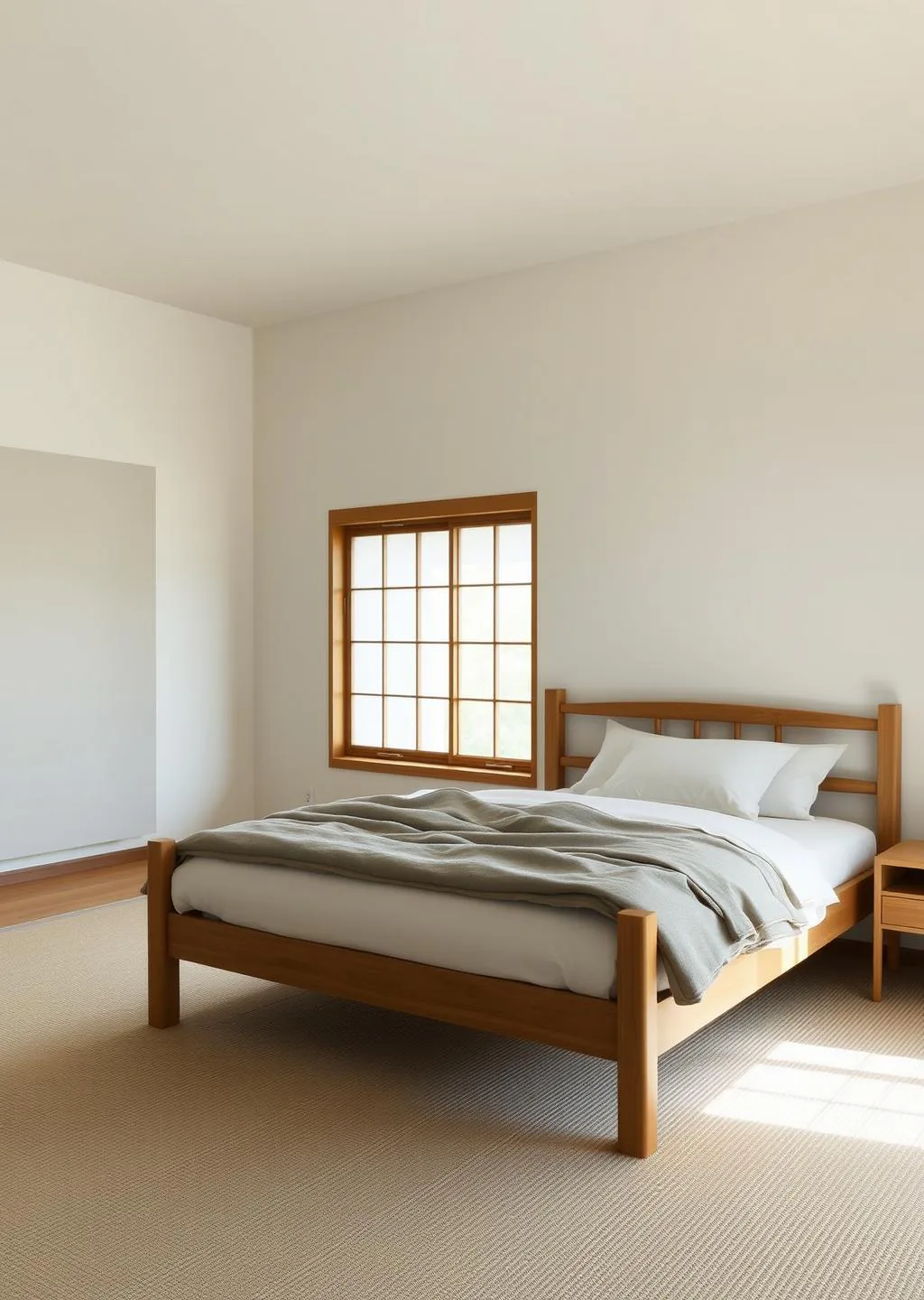
What Exactly Is Japandi Bedroom Style?
Before we dive into the beautiful details, let’s uncover the heart of this style. Japandi isn’t just about mixing a Japanese tatami mat with an IKEA bed frame. It’s a thoughtful, harmonious marriage of two distinct but deeply compatible philosophies. Scandinavian design, or ‘Hygge’, champions light, warmth, functionality, and connection to nature. It’s about creating a cozy, livable, and inviting space. Japanese aesthetics, or ‘Wabi-Sabi’, embrace imperfection, simplicity, natural materials, and a deep sense of zen and tranquility.
When these two worlds collide, magic happens. The result is a japandi style for bedroom spaces that are:
- Minimal yet Warm: It avoids cold minimalism by infusing warm textures and organic shapes.
- Functional yet Serene: Every item has a purpose, but the overall feeling is one of calm, not clutter.
- Natural yet Refined: It uses raw, untouched materials in a sophisticated and intentional way.
Think of it as the intersection where ‘less is more’ meets ‘cozy and comfortable’. It’s the perfect recipe for a bedroom, a room that should be your ultimate retreat.
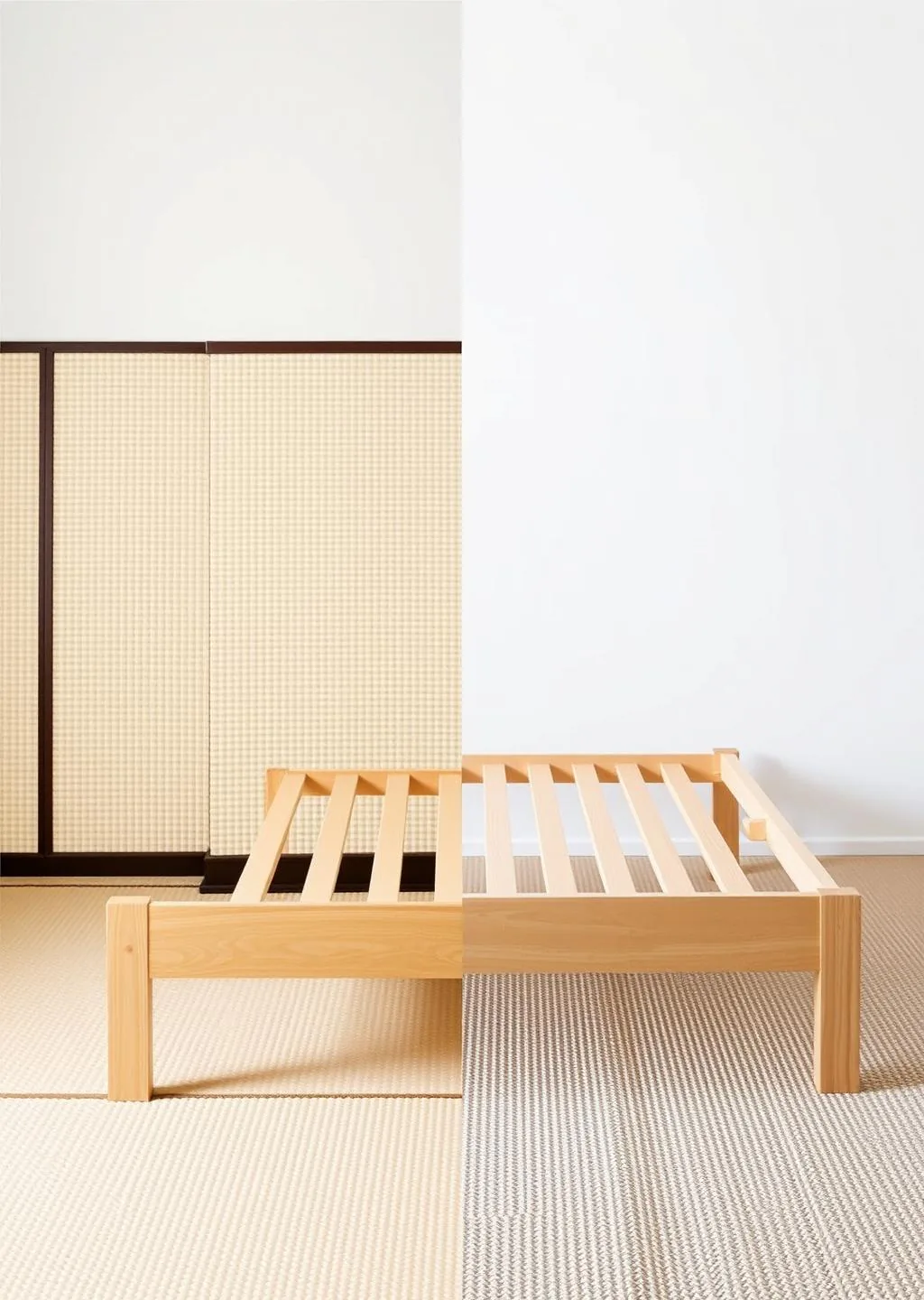
Core Principles for Your Perfect Japandi Bedroom Design
Creating an authentic Japandi space is about embracing a mindset. These core principles will guide every decision you make, from the color on your walls to the trinket on your nightstand.
1. A Neutral and Earthy Color Palette
The foundation of any japandi bedroom design is its color story. This is not the place for bold, bright accent walls. Instead, think of the colors found in nature. We’re talking soft, muted, and earthy tones that create an instant sense of calm.
- Base Colors: Creamy whites, soft beiges, warm greys, and oatmeals. These act as your canvas, making the room feel light, airy, and spacious.
- Earthy Accents: Muted greens (like sage or olive), dusty blues, and browns (from light taupe to rich chocolate). These colors bring the outside in and add depth.
- How to use them: Paint your walls in a warm white or beige. Use a slightly darker shade for your bedding or a large area rug. Introduce accent colors through smaller decor items like cushions, a ceramic vase, or a piece of art.
2. The Beauty of Natural Materials and Textures
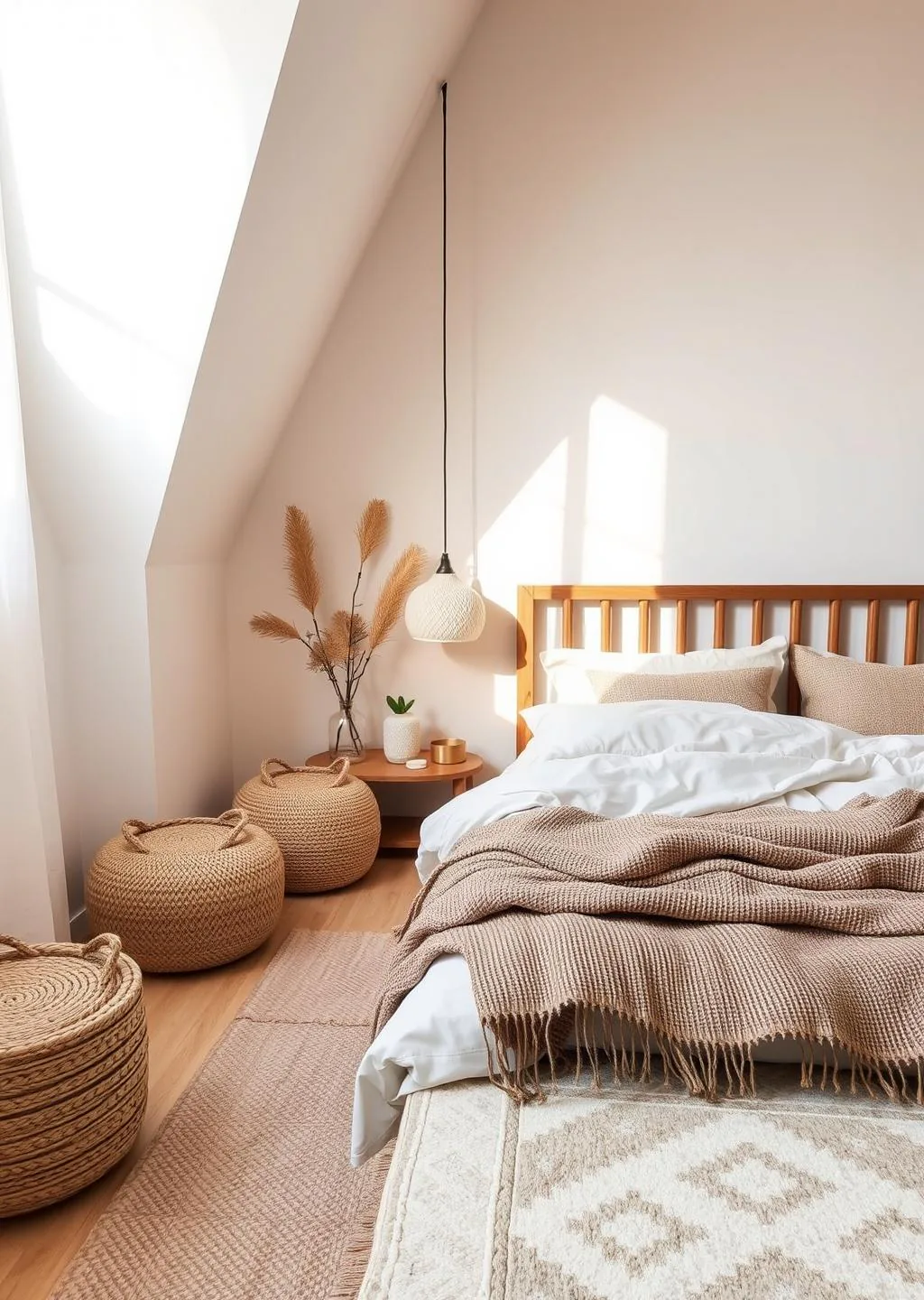
This is where your bedroom truly comes to life. Japandi bedroom style is deeply tactile. It begs to be touched and felt. The key is to mix a variety of natural materials to create a rich, layered look that is far from boring.
- Wood: Light-toned woods like oak, ash, and pine are staples. They keep the space feeling bright and airy. Look for pieces with a natural, matte finish that shows off the wood grain.
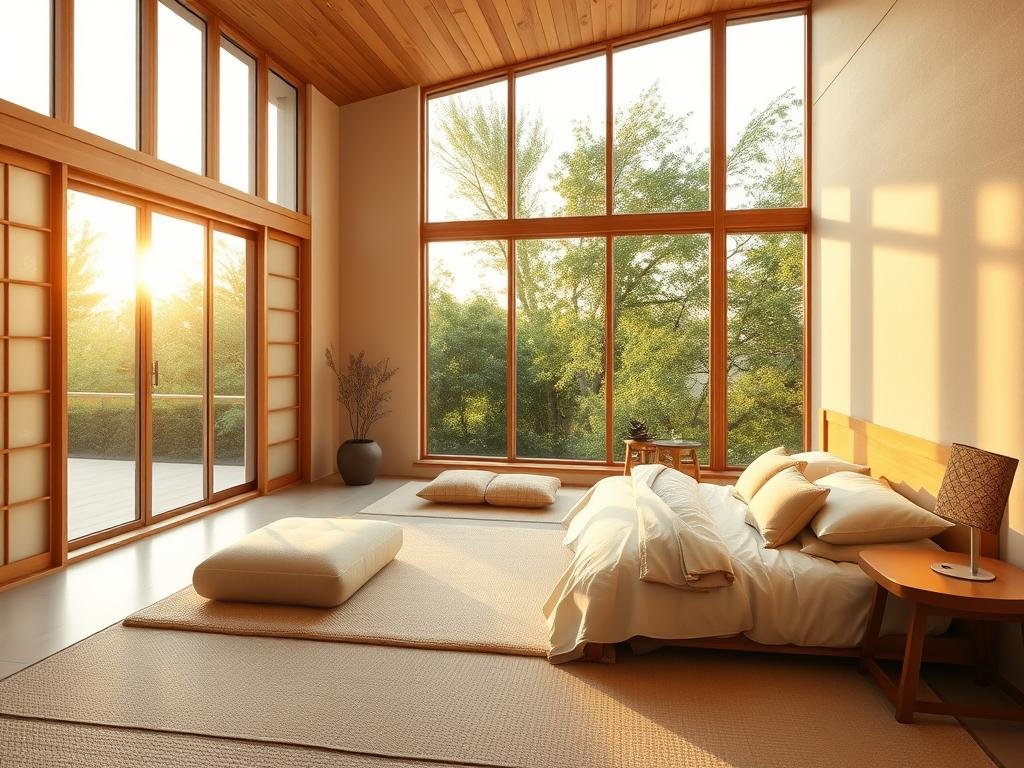
- Textiles: This is your chance to add the ‘Hygge’ coziness. Think linen bedding, a chunky wool throw, a soft cotton rug, and sheer cotton curtains that filter the light beautifully.
- Other Elements: Incorporate stone, hand-thrown ceramics, woven rattan baskets, and paper lanterns. Each material tells a story and adds to the authentic, grounded feel.

3. Mindful Minimalism and Intentional Decluttering
At its core, a bedroom japandi design is clutter-free. But it’s not about being stark or empty. It’s about being intentional. Every single object in the room should earn its place, either through its beauty or its function (and ideally both).
Embrace the Japanese concept of ‘Ma’ – the thoughtful use of empty space. This negative space is not empty; it’s full of potential and peace. It allows your eyes to rest and your mind to unwind. Go through your bedroom and ask yourself: Does this spark joy? Does it serve a purpose? If not, it might be time to let it go. This creates a visual calm that is essential for restful sleep.
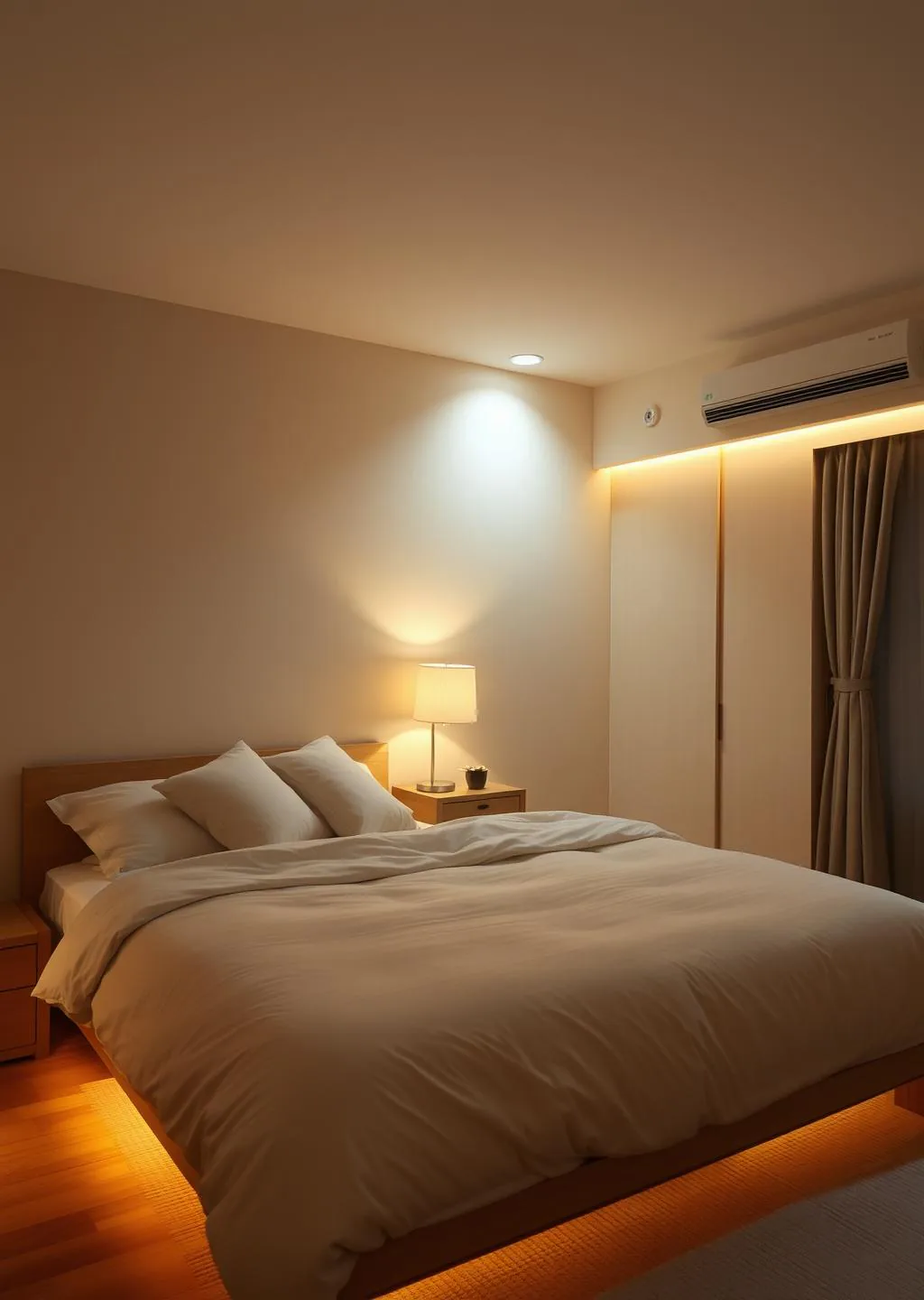
4. Soft, Indirect, and Layered Lighting
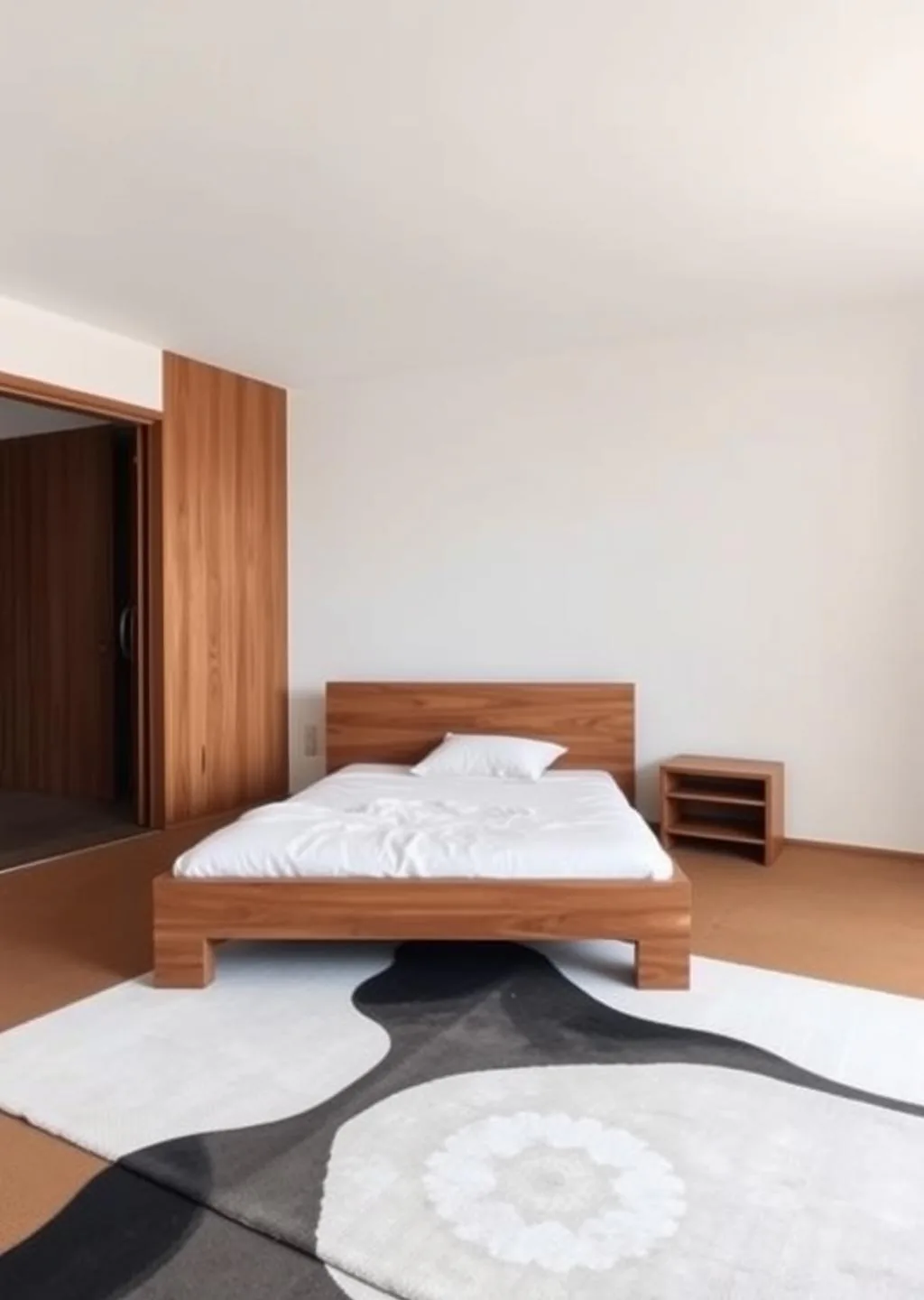
Harsh, overhead lighting has no place in a Japandi sanctuary. Lighting should be soft, warm, and layered to create a soothing ambiance. The goal is to mimic the gentle, diffused light of nature.
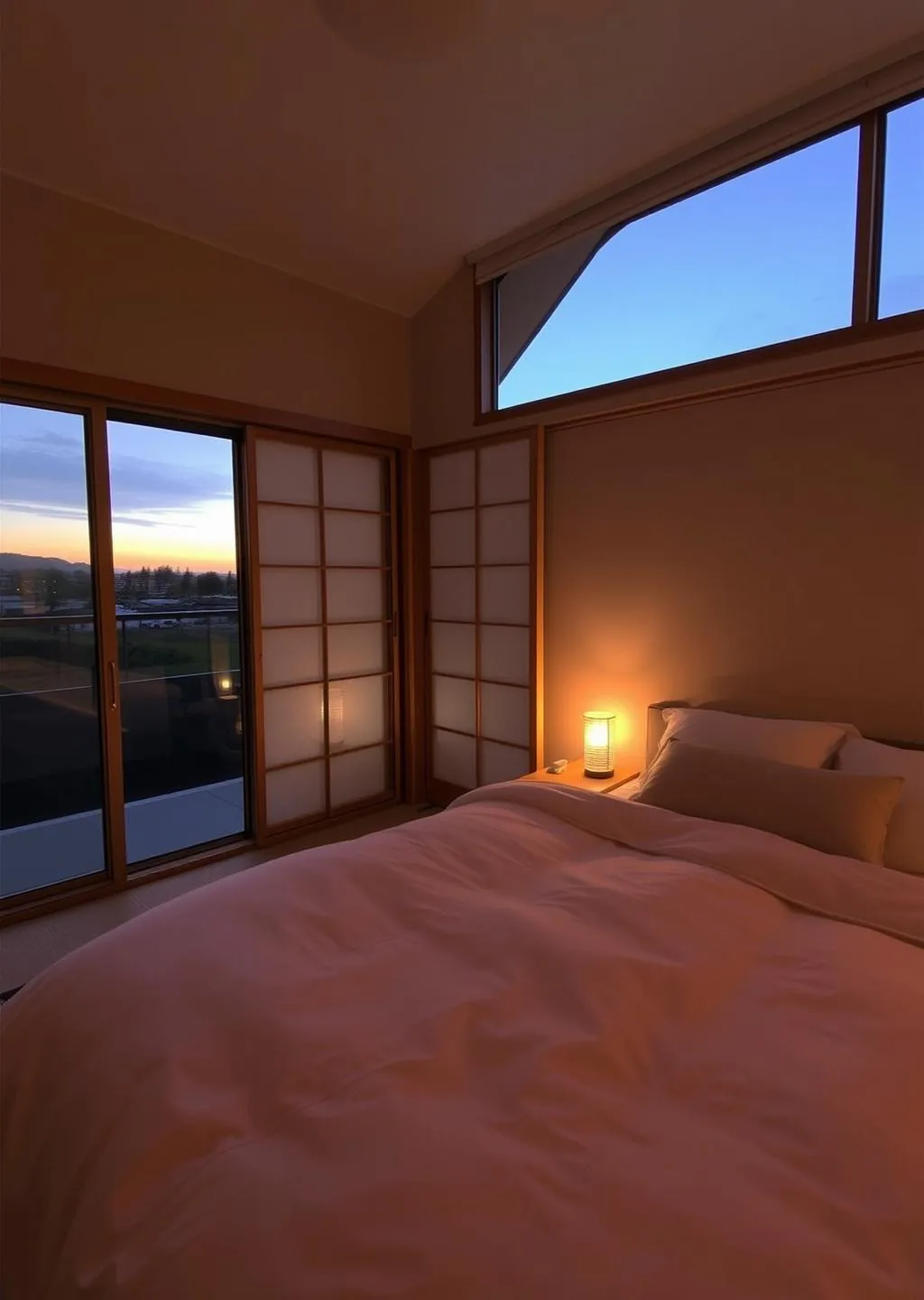
- Ambient Light: Use a large paper lantern or a fabric pendant light as your main light source. It will cast a beautiful, soft glow across the entire room.
- Task Lighting: Add simple, sculptural reading lights on your nightstands or wall-mounted sconces for reading in bed.
- Accent Lighting: This is the magic touch. Place a small LED candle on a shelf, use a discreet strip light behind your headboard, or add a small table lamp on a dresser. These small pools of light create incredible warmth and depth in the evening.
Bringing It All Together: A Step-by-Step Japandi Bedroom Makeover
Ready to transform your space? Let’s break down the key elements of your bedroom and how to approach them with a Japandi mindset.
The Bed: Your Peaceful Focal Point
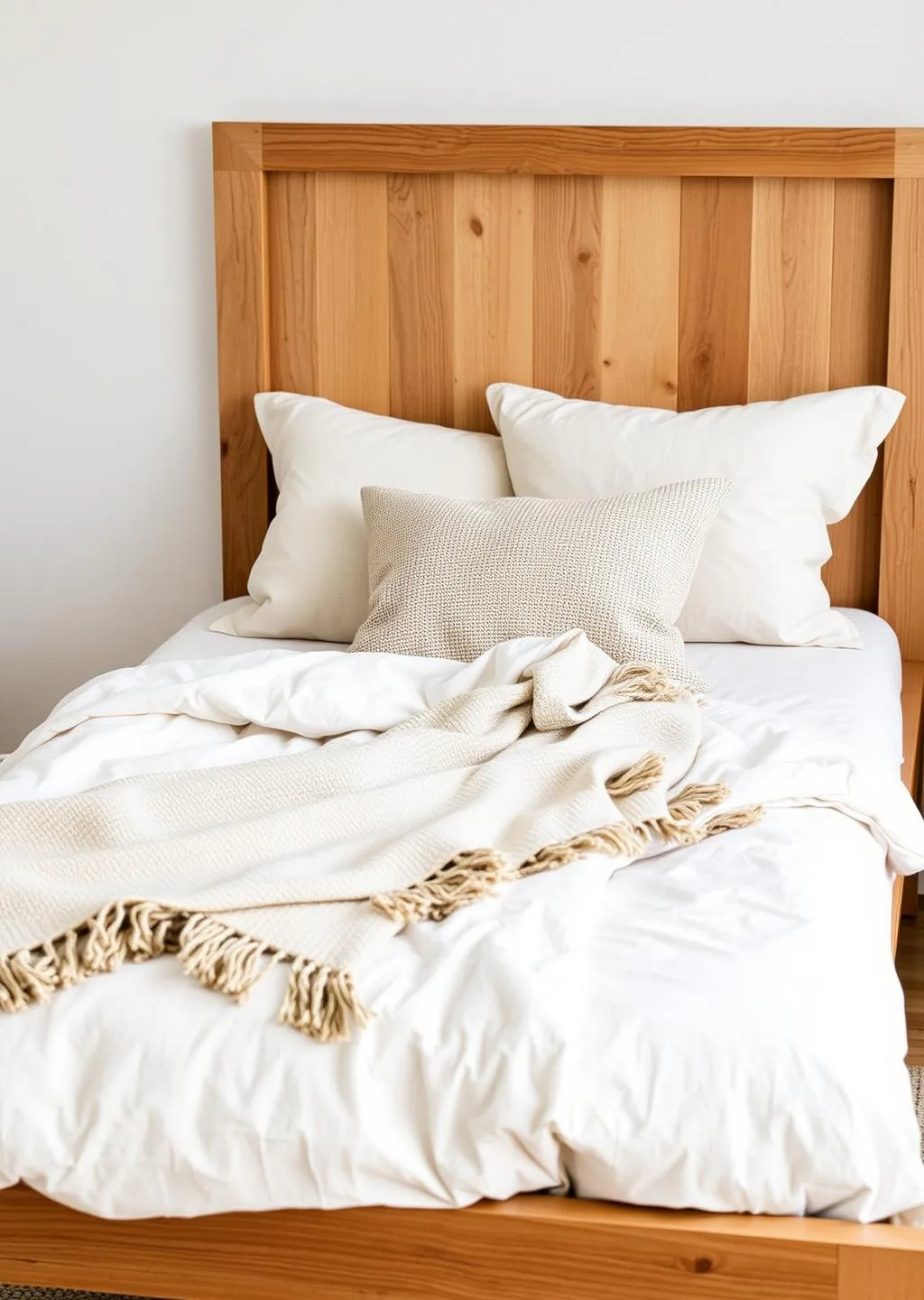
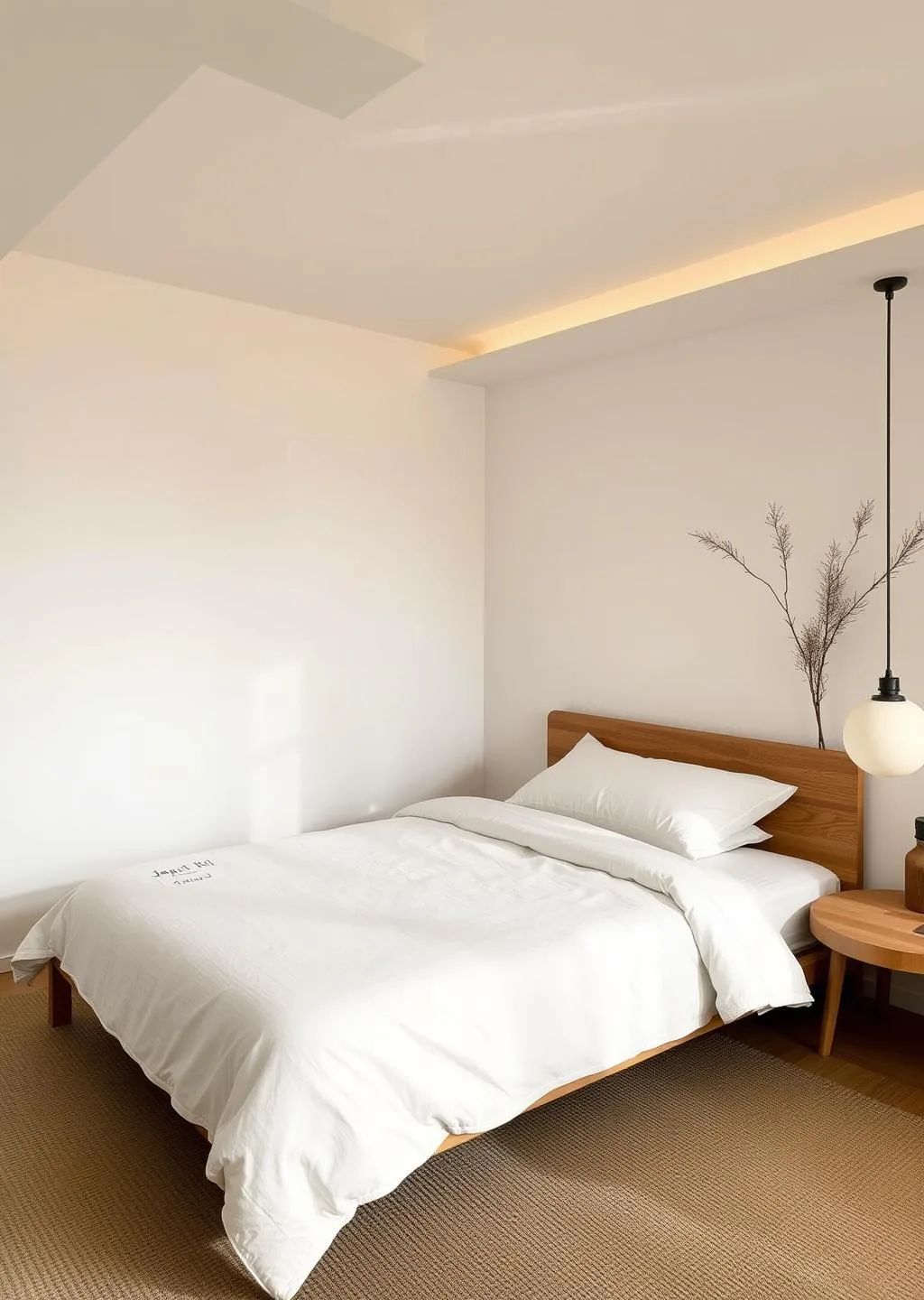
Your bed is the heart of the room. Keep the frame simple – a low-profile platform bed in light wood is the quintessential choice. It grounds the space without overwhelming it.
Then, layer on the texture! Start with a high-quality mattress. Then, build your bedding:
- A crisp cotton or linen fitted sheet.
- A flat sheet in a complementary neutral tone.
- A lightweight duvet inserted into a linen or cotton duvet cover.
- Two to four pillows in a mix of sizes and textures (e.g., two standard sleeping pillows and two larger Euro shams).
- The pièce de résistance: a beautifully textured throw blanket draped across the foot of the bed. Think chunky knit, wool, or a nubby weave.
Furniture: Functional Art Pieces
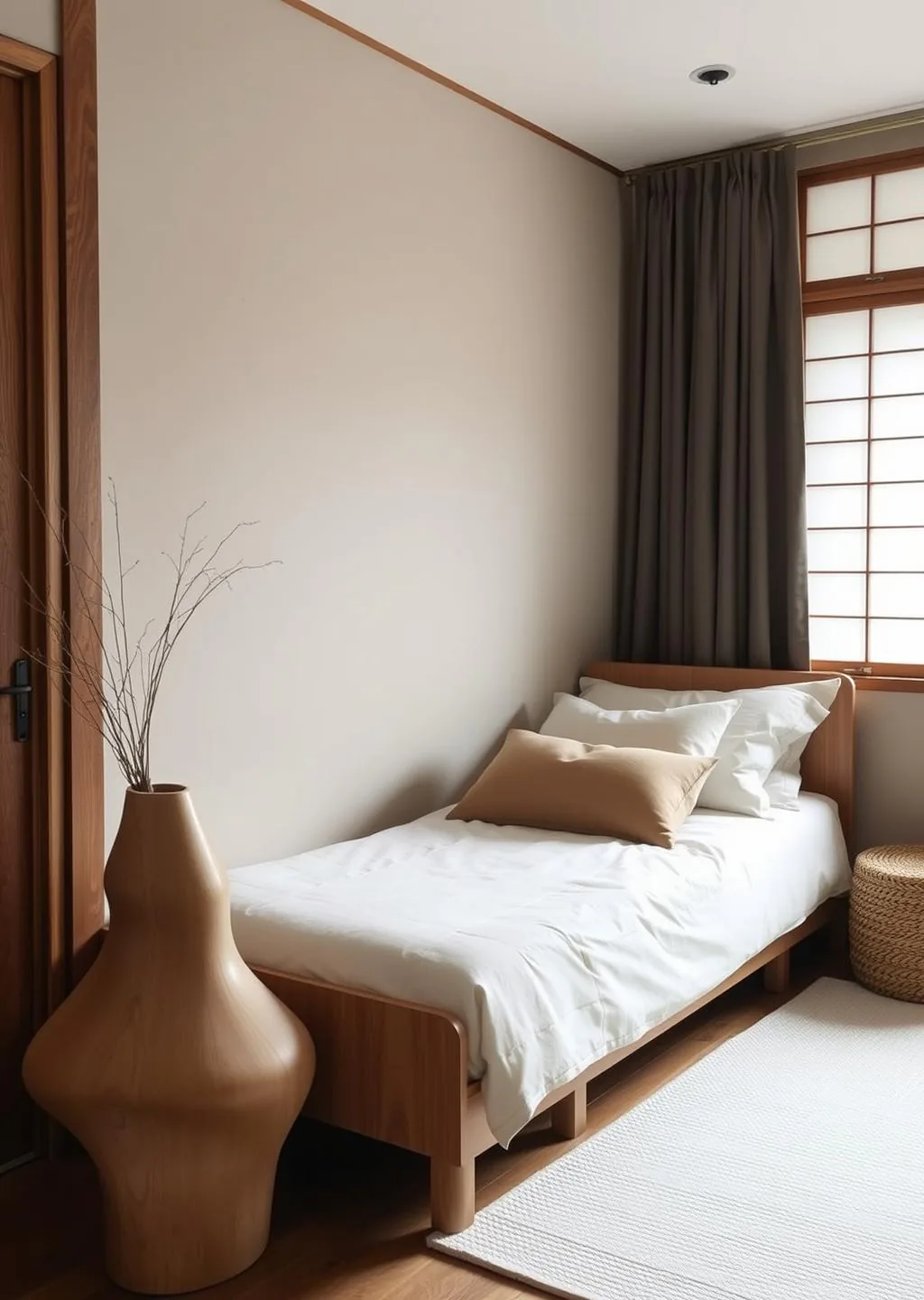
Choose furniture with clean lines, organic shapes, and honest materials. Each piece should feel like a sculptural object.
- Nightstands: Opt for a small wood stool, a floating shelf, or a minimalist drawer unit with tactile hardware.
- Storage: Banish clutter with beautiful closed storage. A low dresser with wooden knobs or woven baskets that slide under the bed are perfect solutions.
- Seating: If you have space, a simple wooden chair or a small woven bench adds function and style.
Remember, the goal is to have only what you need. The space around the furniture is just as important as the furniture itself.
Decor: The Art of Less
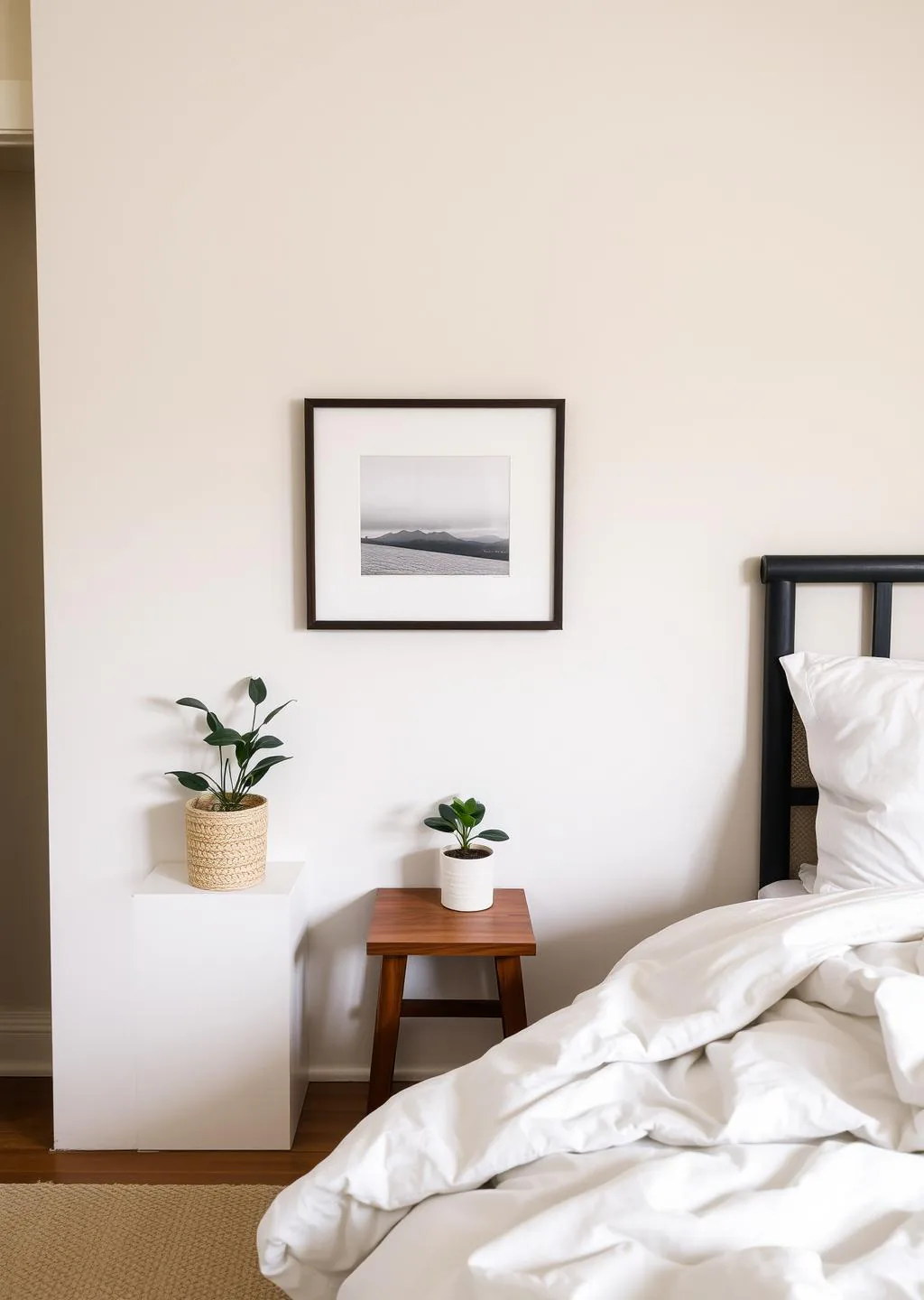
Decor in a japandi style for bedroom spaces is minimal but mighty. A single, perfect object is more powerful than a crowded collection.
- Artwork: Choose one or two large pieces with a neutral, abstract, or natural theme. A large framed textile, a simple ink drawing, or a black and white photograph of a landscape works beautifully.
- Greenery: Bring in life with a single, elegant plant. A small bonsai tree, a graceful orchid, or a simple branch in a vase connects you to nature and embodies the Wabi-Sabi acceptance of growth and change.
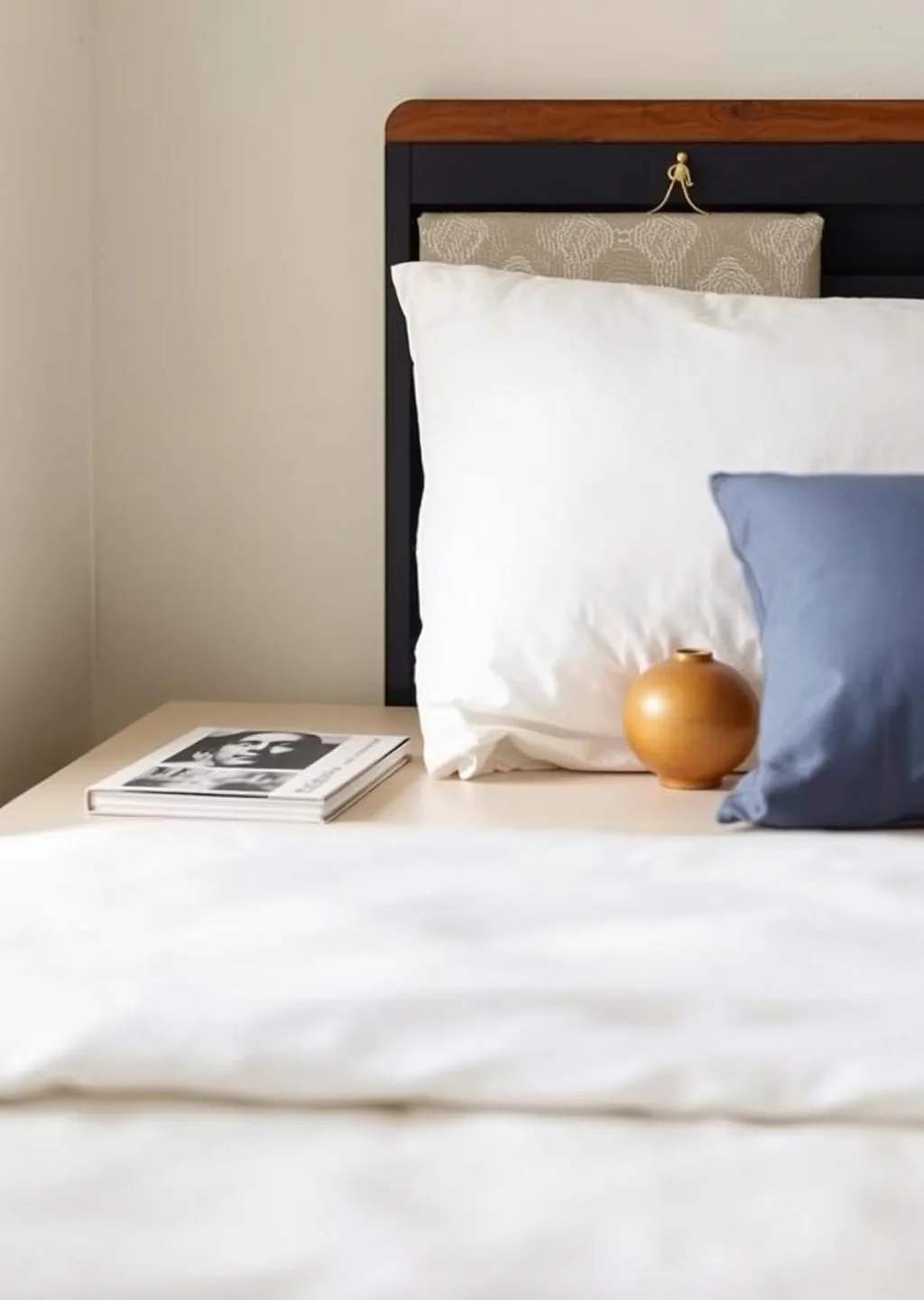
- Objects: A handcrafted ceramic bowl on your dresser holding your favorite jewelry, a smooth stone found on a walk, a beloved book with a beautiful cover displayed on your nightstand. These are the tokens that make the space yours.
Overcoming Common Bedroom Challenges with Japandi
Worried your bedroom is too small, too dark, or too cluttered? Japandi principles are your secret weapon.
For Small Bedrooms
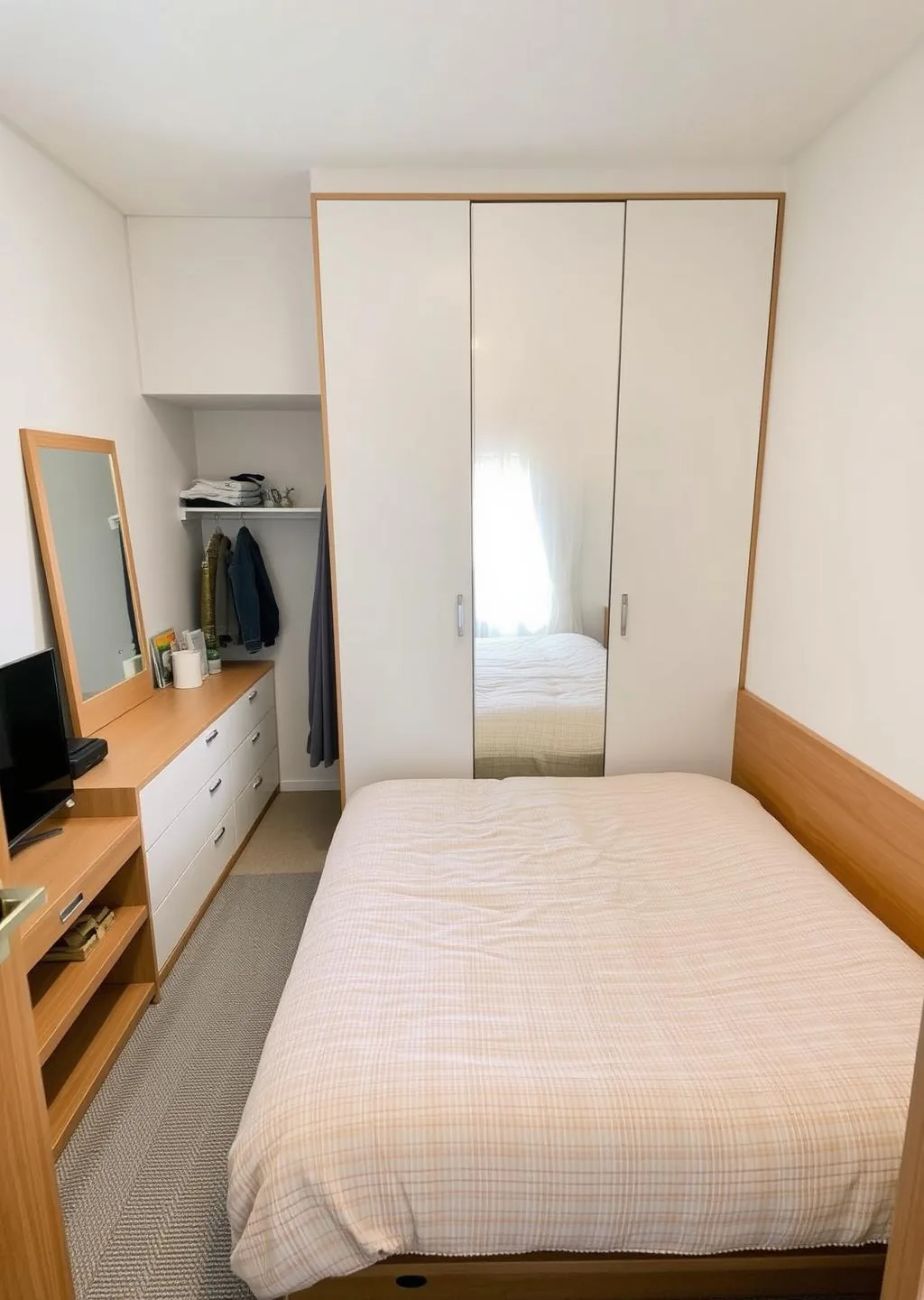
Japandi is perfect for small spaces! The light color palette, low furniture, and lack of clutter automatically make a room feel larger. Use mirrors strategically to reflect light and create a sense of depth. Choose multifunctional furniture, like a storage bed or a nightstand with drawers.
For Dark Bedrooms
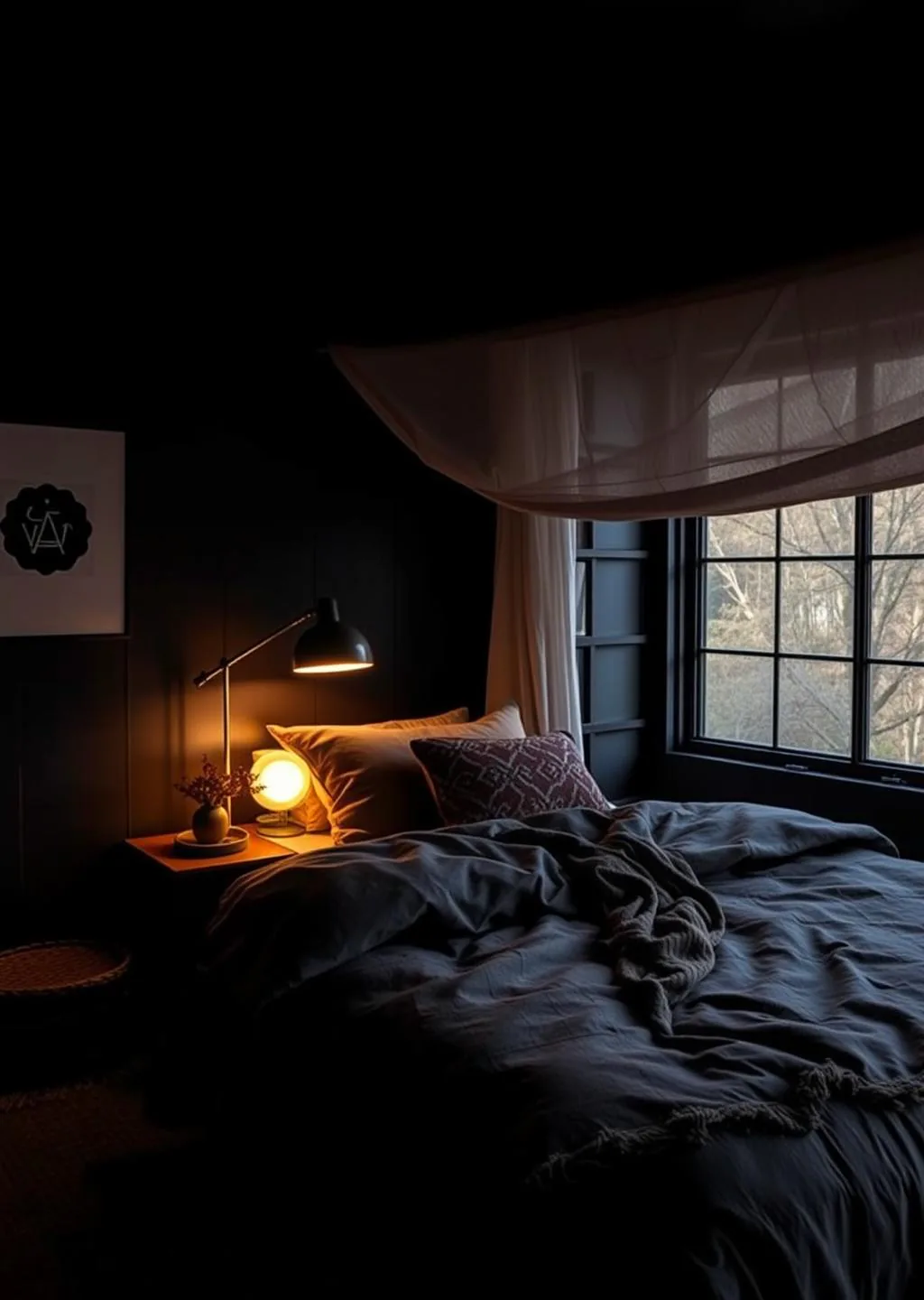
Embrace the coziness! While light colors help, you can also lean into darker, warmer neutrals like a deep taupe or charcoal, but keep your bedding and textiles in lighter shades to balance it. Your layered lighting strategy becomes even more critical. Use multiple light sources to create warmth and interest at different levels in the room.
For the Chronic Clutterbug
Start small. You don’t have to become a minimalist overnight. Begin with your nightstand surface. Clear it off completely. Only put back the items you use every single day and one beautiful object. See how that feels. Then move to your dresser top. This gradual, intentional process is at the very heart of creating a peaceful japandi bedroom design.
Your Japandi Bedroom Awaits
Creating a japandi bedroom design is a journey, not a destination. It’s about slowly curating a space that reflects a calmer, more intentional way of living. It’s about choosing quality over quantity, peace over chaos, and authenticity over trends. Your bedroom should be your sanctuary, a place that truly restores you. By embracing the harmonious blend of Scandinavian warmth and Japanese zen, you can create a room that isn’t just beautiful to look at—it’s beautiful to *feel* in.
We’d love to see your journey! What part of the japandi bedroom style speaks to you the most? Is it the warm minimalism, the tactile textiles, or the serene vibe? Share your thoughts, your own photos, or your biggest design challenge in the comments below. Let’s inspire each other to create the peaceful retreats we all deserve.