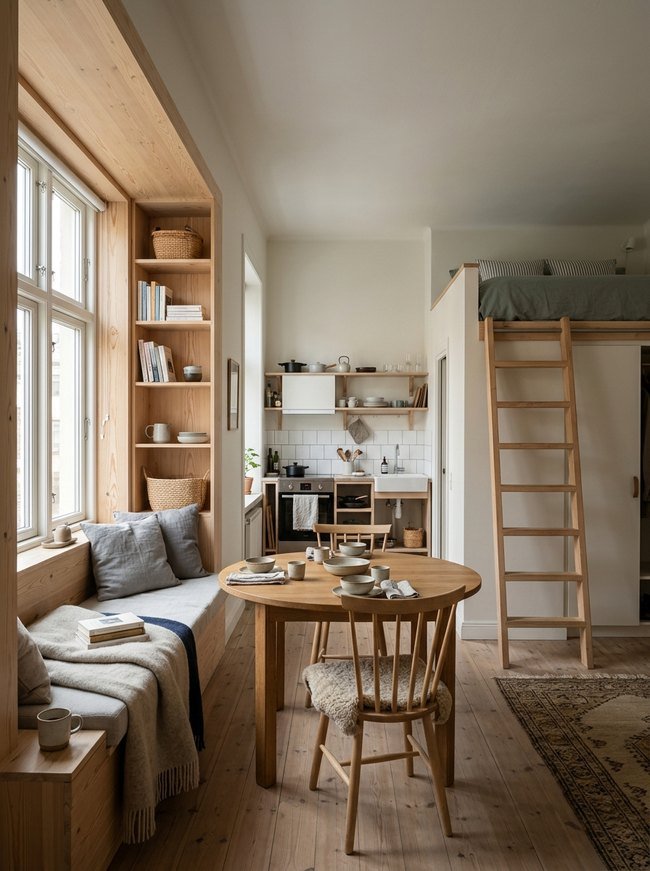
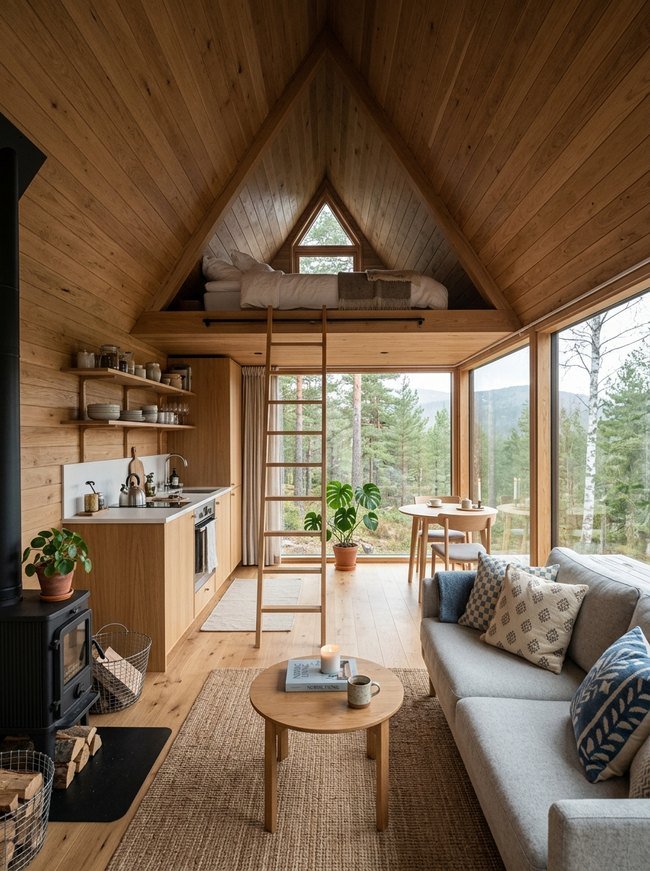
3 Scandinavian Tiny House Interiors with Endless Light
A small space shows its true colors under bright sun. Many articles discuss tiny living, but they skip the part where bad light makes a good design feel like a dark cave. Smart designers know natural light changes everything inside four walls. A small wooden kitchen should glow, not just sit in shadow. Nobody wants a cramped feeling when stepping through the front door. Three Scandinavian tiny house interiors grab every available sunbeam. White painted walls reflect light deep into each room. Polished concrete floors send light bouncing around. Every clever nook or built-in shelf feels open and airy. A bright interior feels better.
1. Nordic A-Frame Loft
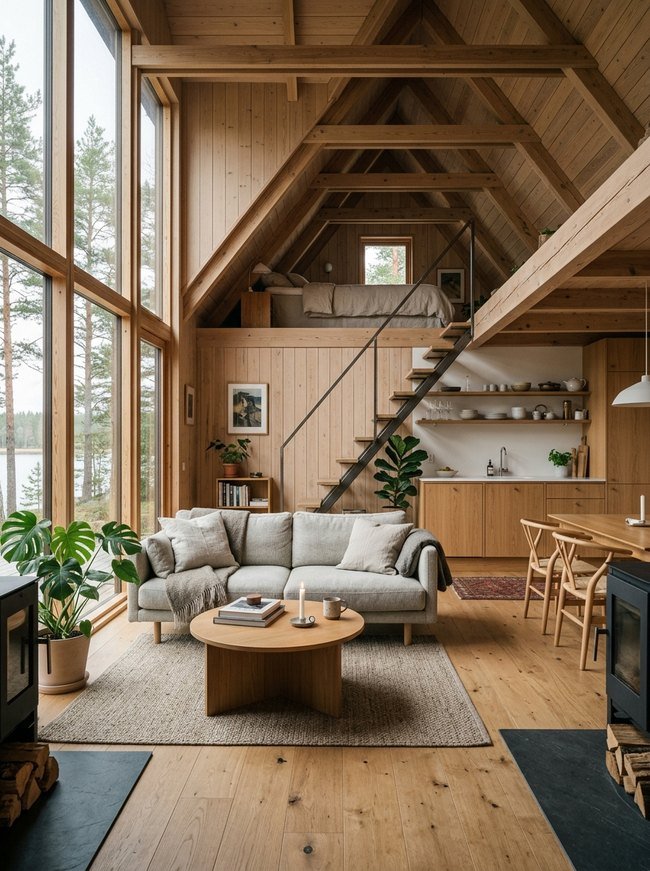
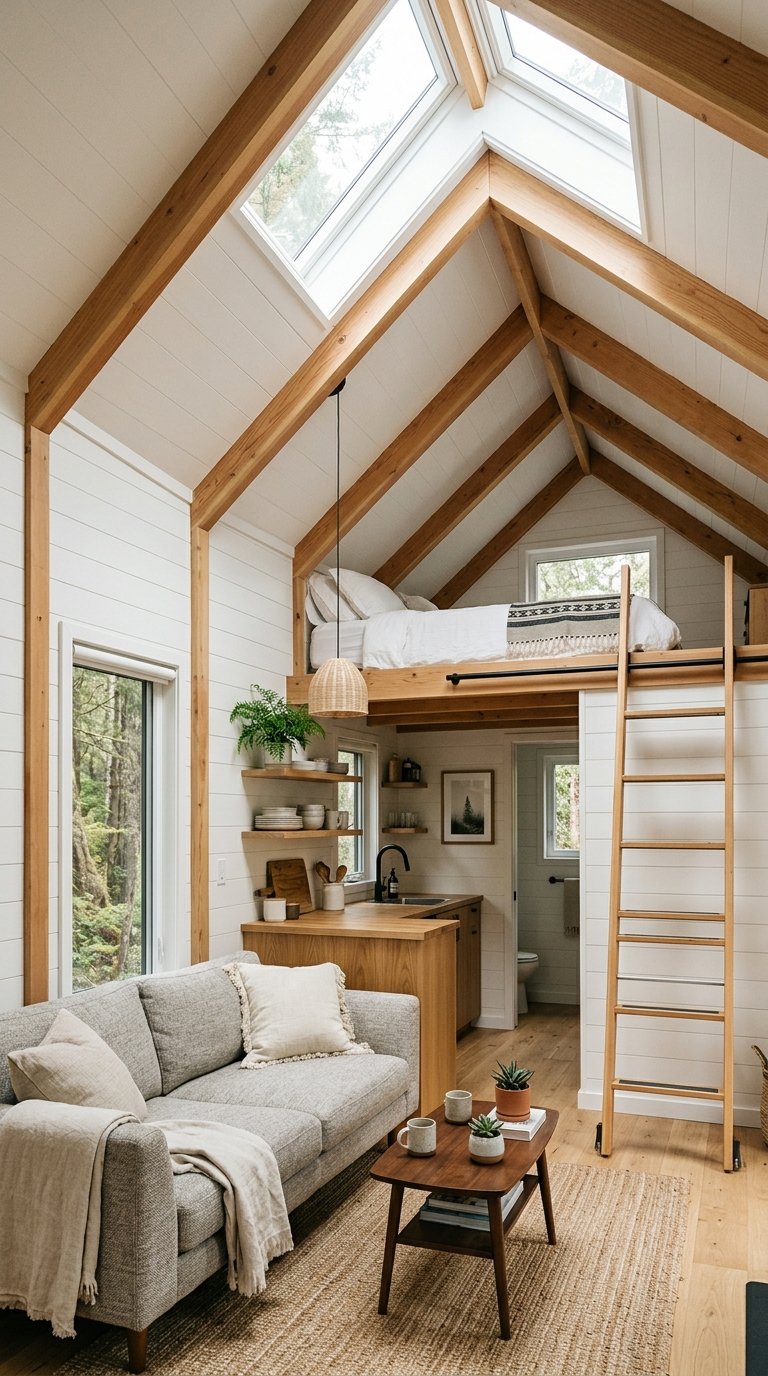
Soaring walls of honey-toned pine planks draw the eye straight up to the vaulted ceiling. An open, airy feeling is achieved by using natural wood from floor to ceiling in a consistent, light tone. Dark stains that make small spaces feel cramped are avoided.
2. Hygge Window Nook
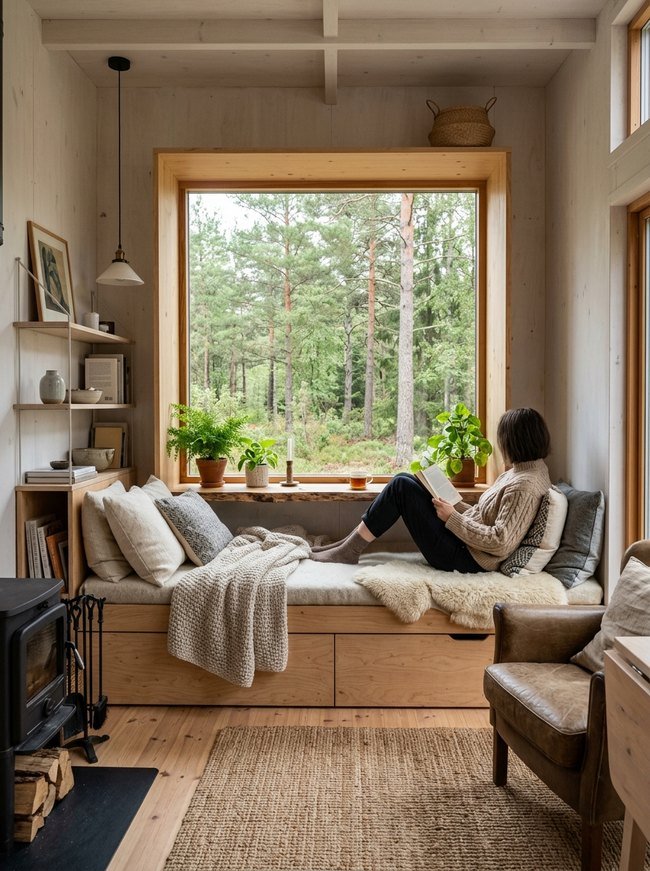
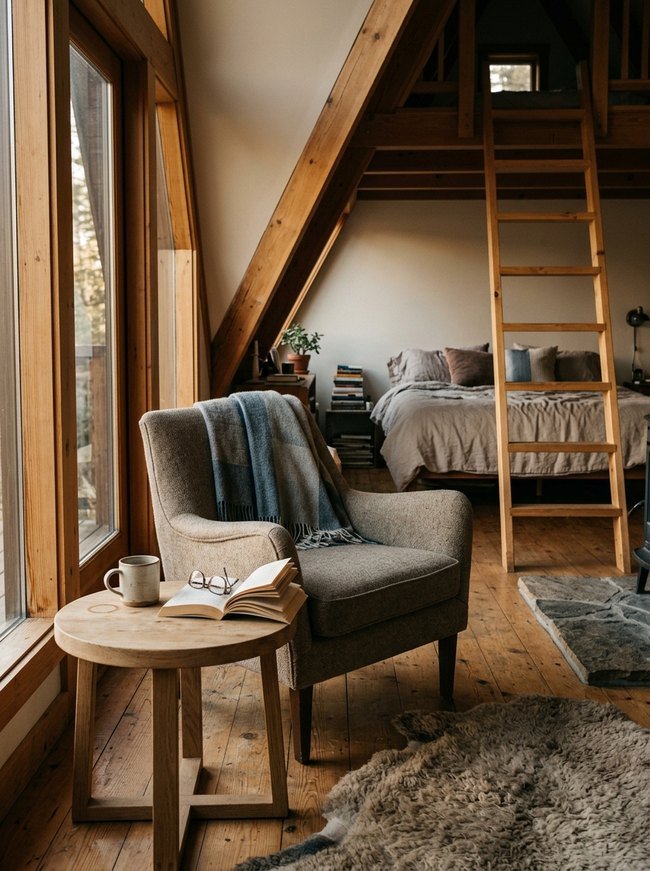
The wide window nook creates a cozy reading space with plush cushions and a sheepskin throw. Homeowners can build a similar light wood bench with deep storage drawers underneath to keep the living area tidy. Consider adding a natural jute rug to define the relaxation zone.
3. Minimalist Cabin Retreat
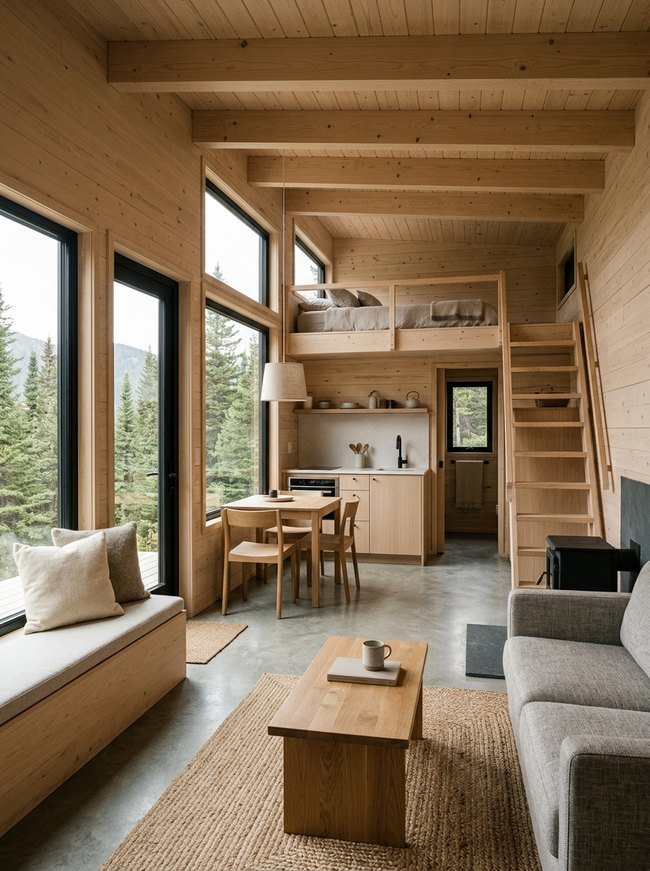
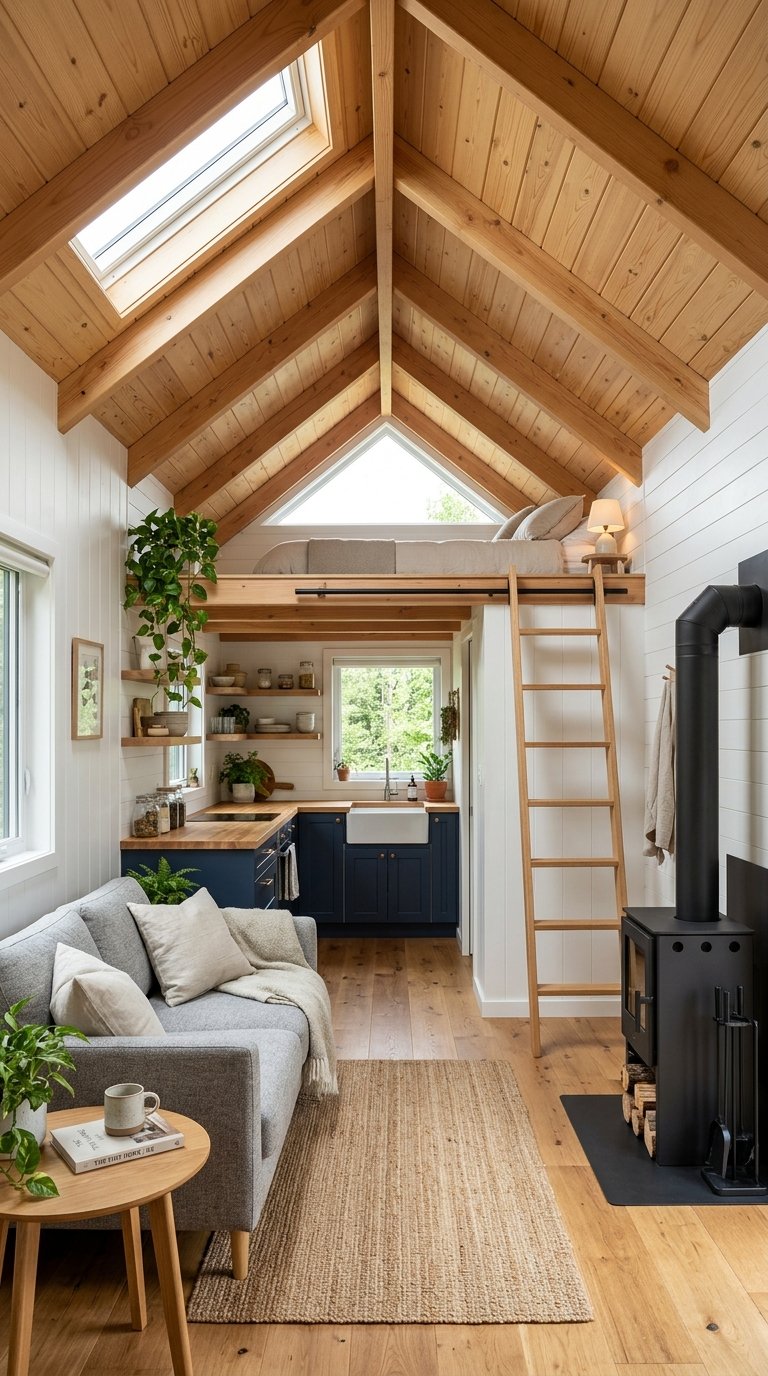
Wide black window frames bring the green forest right into the living space, making the small room feel much larger. Light wood walls and ceilings create a bright, airy feel, allowing the dark window frames to pop. For your own home, choose a single strong accent color to highlight natural wood tones.
Beyond White Walls: Scandinavian Colors That Amplify Light (Without Feeling Cold)
Many people assume bright white paint is the only path to a light-filled Scandinavian tiny house. Actually, a sterile white box often feels empty and cold, not warm and welcoming. Instead, consider soft, muted hues that reflect daylight without overwhelming the small footprint. For instance, a pale sage green on an accent wall brings the outdoors inside, making the room feel larger.
Warm grays with a beige undertone bounce light around your living space more effectively than stark, cool grays. Darker colors like a rich charcoal or a deep navy can surprisingly make a small room seem more expansive when used strategically. Paint the bottom half of a wall in a deep color, leaving the top half and ceiling a lighter shade. This trick draws your eye upward, creating an illusion of height.
Your choice of fabric also plays a big role. A chunky knit throw in dusty rose or a set of linen curtains in light sky blue adds texture and diffuses sunlight beautifully. Think about the raw wood tones present in your furniture; a light oak floor pairs well with almost any soft color palette. Even small decorative pieces, like a honey-toned ceramic vase or a deep forest green wool cushion, contribute to the overall feeling of spaciousness and warmth.
The Invisible Divide: Clever Layouts for Open-Plan Tiny Homes (That Don’t Feel Like a Dorm Room)
Many people think you need actual walls to separate rooms in a tiny house. Most designers tell you to add a half-wall or a bookshelf to create a visual barrier. However, a physical divider chops up precious floor space and blocks natural light. Savvy homeowners instead use the floor itself to define distinct zones.
Consider a raised wooden platform for your sleeping area, elevating the mattress by one foot. This subtle change lifts the bed above the main living space without blocking views of the outside world. Your brain registers a separate room without any actual wall construction. Another effective trick involves area rugs; two different textured wool rugs, one a soft cream and the other a deep charcoal, instantly section off a sitting area from a workstation.
Often, you see people push all furniture against the walls, hoping to make the central space appear larger. This common mistake leaves an empty, undefined void. Instead, float a small, two-seat sofa with a low back in the middle of your living area. Place a round, oak coffee table four inches in front of it. This arrangement creates a cozy conversation nook and suggests a living room without any rigid boundaries.
Clever lighting also helps delineate different functions within a small footprint. Install a single brass pendant lamp over your dining table, hanging down twenty inches. A bright, focused beam of light identifies the eating zone. Recessed LED strips along the bottom of your kitchen cabinets illuminate the countertop workspace, making it feel distinct from the adjacent relaxation spot. These simple, physical markers prevent your open-plan home from feeling like one big, undifferentiated box.
Which Idea Will You Try First?
That’s 3 different takes on scandinavian tiny house. The best ideas above are usually the smallest moves — one material, one layout shift, one piece of furniture in the right place. Pick whichever room feels closest to your space and start there before tackling the rest.
Found an idea worth keeping? Save this post to your Pinterest board so it’s waiting for you when you’re ready to start your own project.