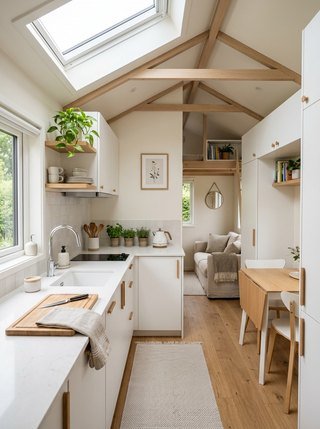
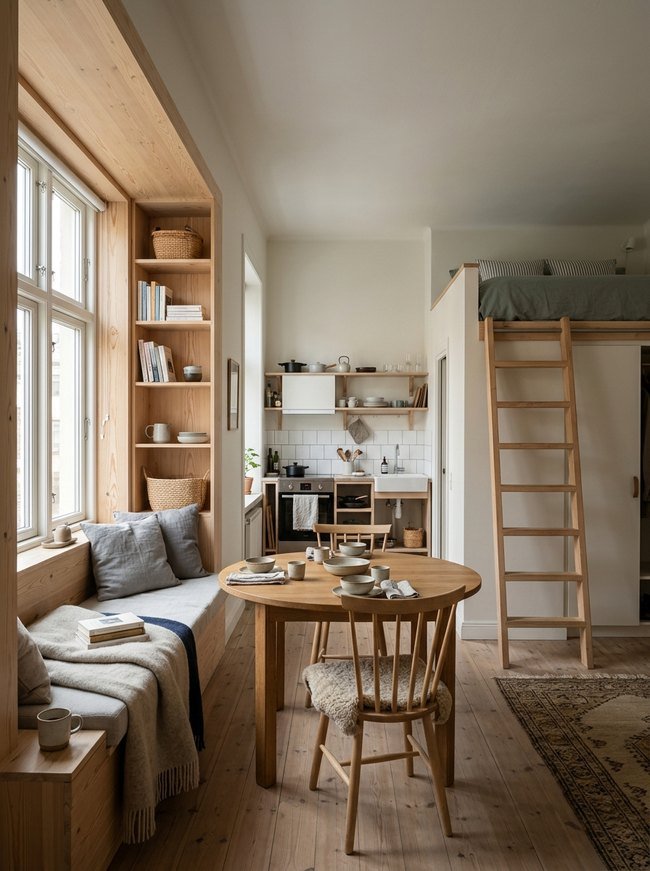
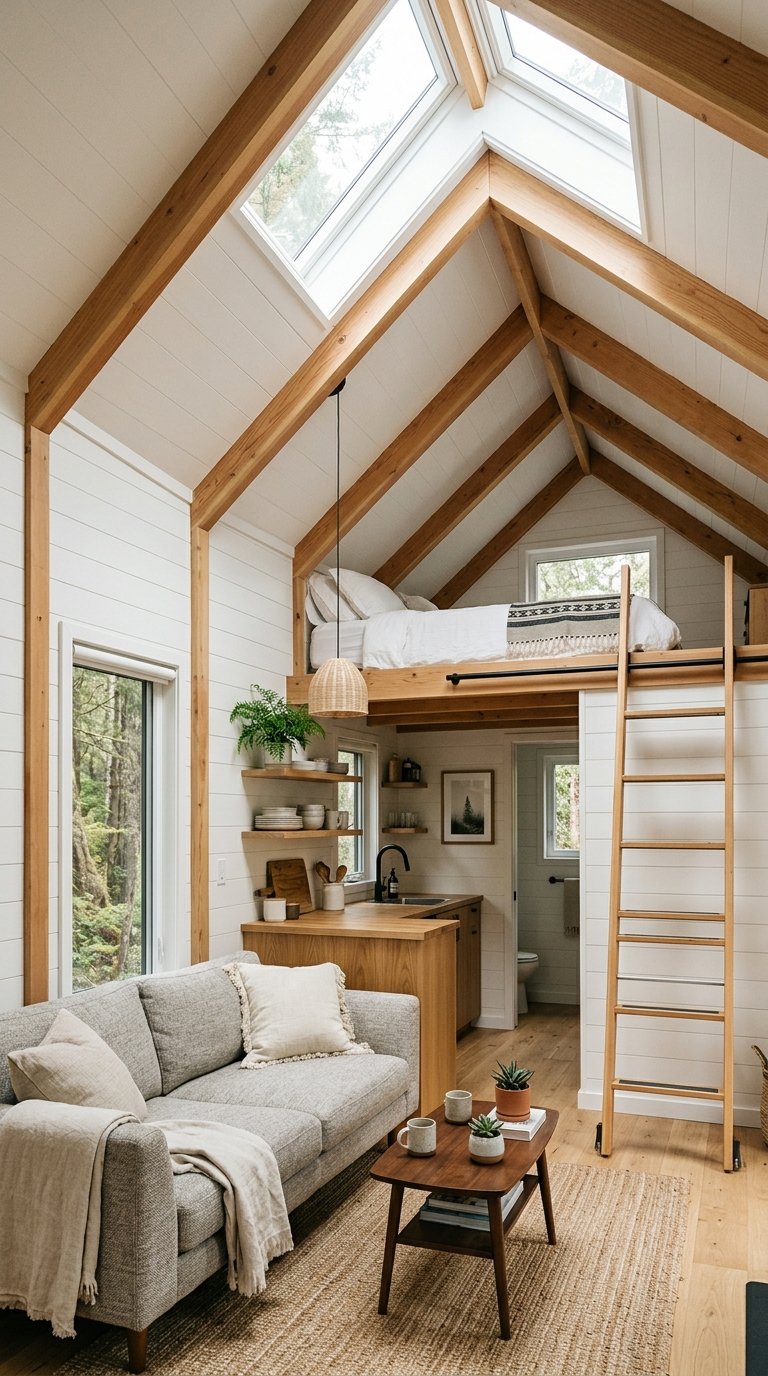
3 Scandinavian Tiny House Interiors with Endless Light
A small footprint home provides efficient living, yet a narrow interior often sacrifices bright, open spaces. A Scandinavian tiny house, however, prioritizes both compact design and abundant natural light. Homeowners want a streamlined living area; homeowners also crave wide, sunlit rooms. Every Scandinavian tiny house below navigates this delicate balance, presenting unique solutions for maximizing daylight within limited square footage. One tiny home features tall, double-pane windows that reach almost to the vaulted ceiling. Another tiny house uses light birch wood and white painted walls to reflect every ray of sunshine. Each option showcases a distinct approach to integrating generous light with a minimal footprint. Pick the right blend for your small dwelling.
1. Nordic A-Frame Loft
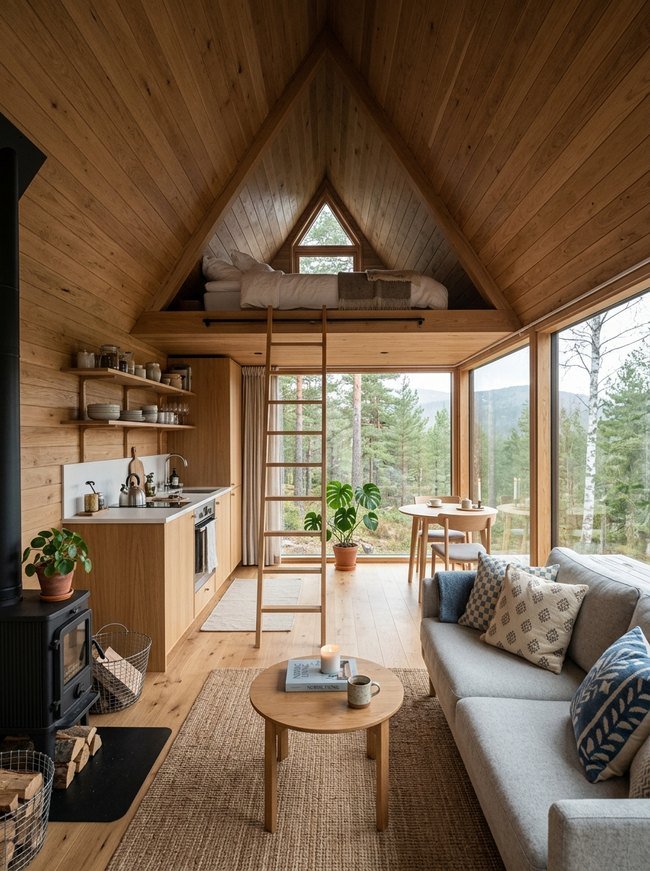
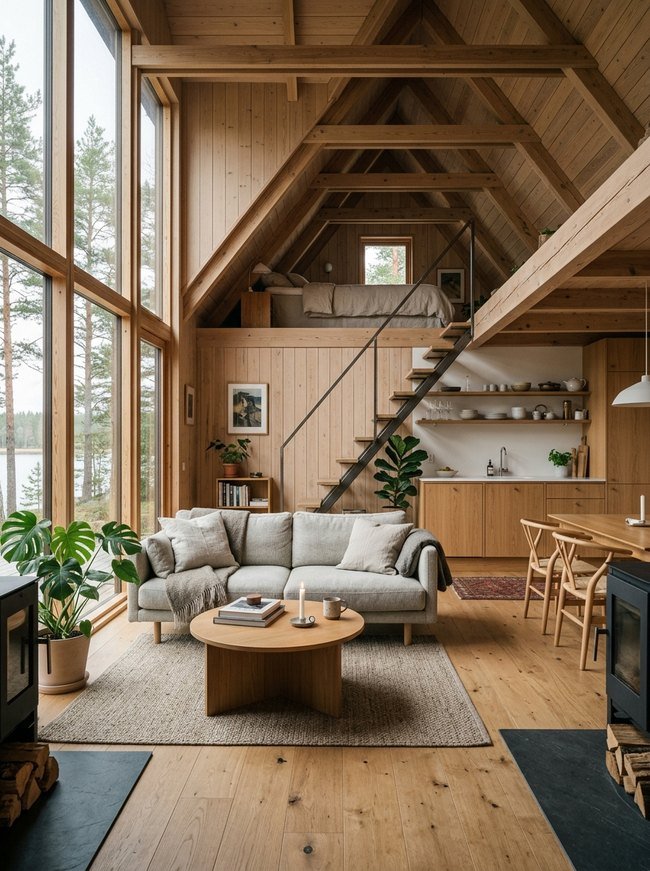
This scandinavian tiny house prioritizes a grounded, natural feel over bright, stark minimalism. Honey-toned oak planks cover every wall and the vaulted ceiling, creating a continuous, warm enclosure. The oak planks trade away visual openness for a deep connection to natural wood, making this an excellent choice for someone seeking a rustic, cozy retreat rather than an expansive modern aesthetic.
2. Bright Hygge Corner
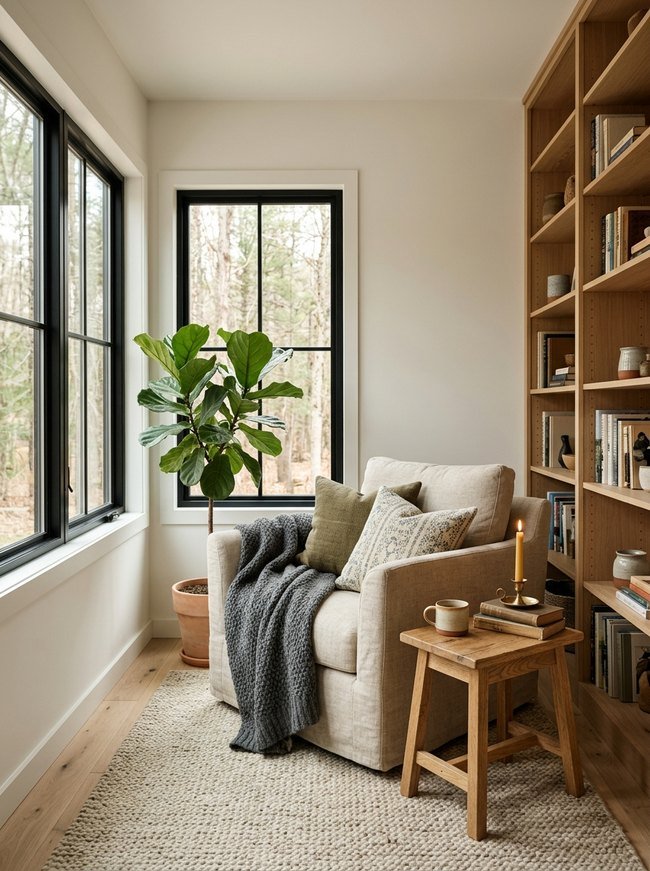
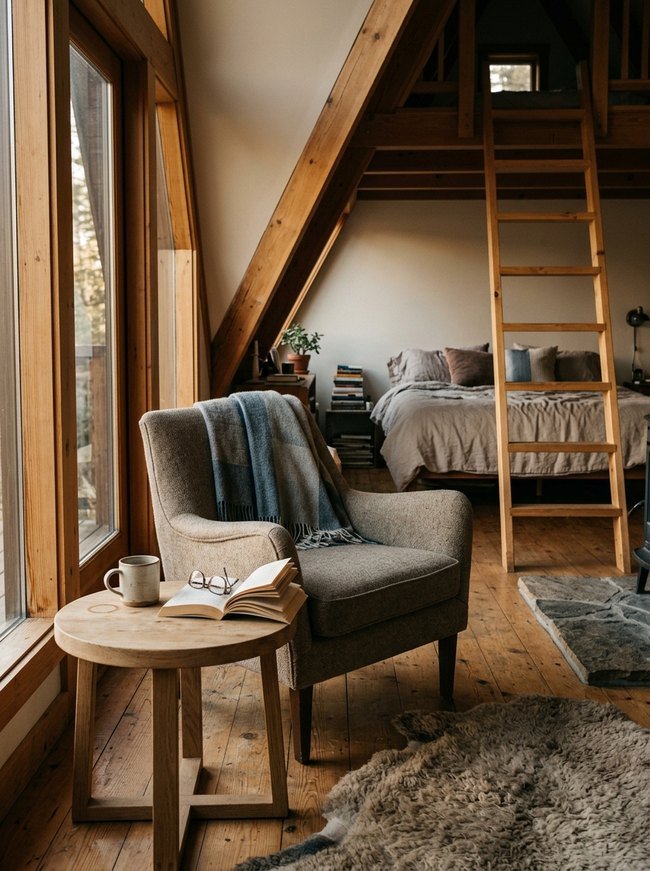
The Scandinavian tiny house room prioritizes rich textures over open space, creating a cozy reading corner. A thick gray knitted throw blanket rests on a cream linen armchair, giving up visual lightness for a sense of deep comfort. The room design serves the reader who seeks a private, enclosed retreat, not someone desiring expansive, airy interiors.
3. Minimalist Cabin Retreat
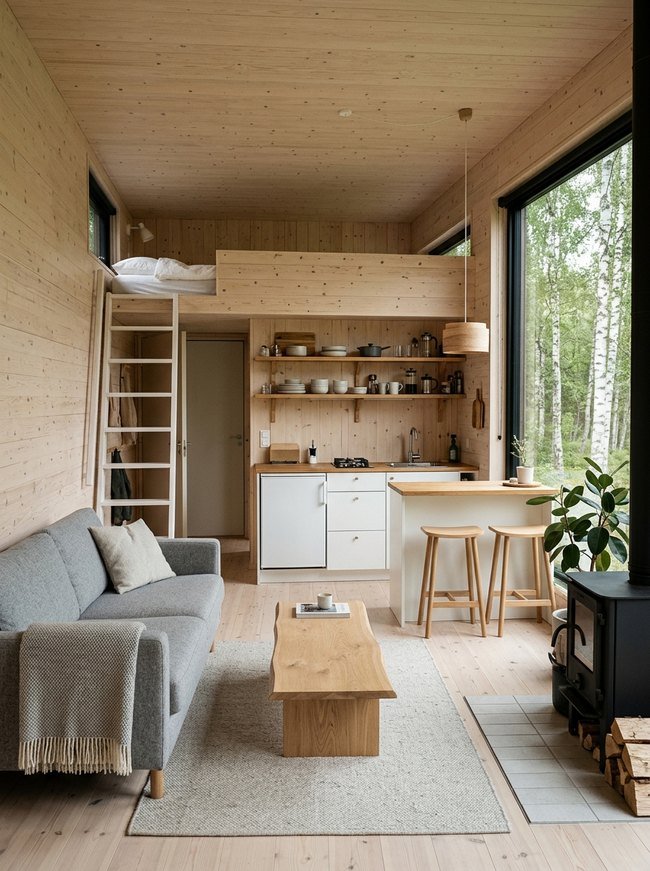
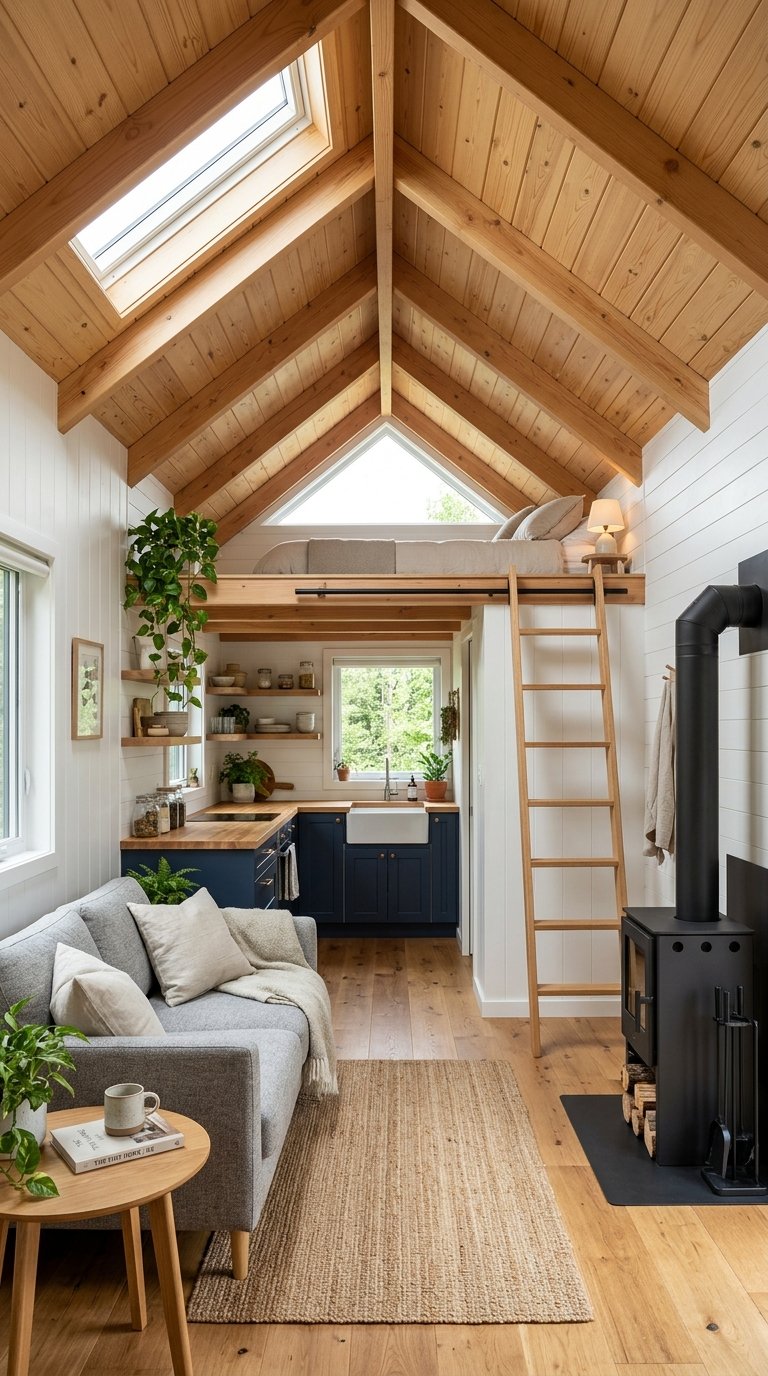
The Scandinavian tiny house opts for rustic warmth rather than sleek modern lines. Pale wooden planks cover every wall, the floor, and the low ceiling, creating a cozy box that trades expansive height for intimate closeness. A cast iron wood-burning stove and a live-edge wooden coffee table confirm a preference for natural textures over polished surfaces, making this a fitting choice for someone seeking a cabin feel, not an urban loft.
Should You Prioritize Full Wall Windows or Strategic Smaller Openings?
Choosing between a massive glass wall or several smaller windows changes your tiny home’s daily feel. Big panes of glass offer sweeping views of a forest or a wide open field. However, those huge window surfaces mean less wall space for kitchen cabinets or tall bookshelves. Privacy becomes a serious concern when your entire living area is visible from outside your tiny house. Consider the extra cost for thick, insulated glass panels, which prevent heat loss during cold months.
Small, rectangular windows give you more layout freedom inside your tiny home. You gain valuable wall sections for hanging framed artwork or mounting a flat-screen television. Smaller openings still let in plenty of natural light without sacrificing your sense of enclosure. Building with multiple smaller windows costs less than fabricating one giant, custom glass unit. Pick smaller windows if your tiny home parks in a busy area or if you value abundant storage. Choose the wall of glass for a truly remote location and a wide, private vista.
Matte White Walls vs. Light Wood Paneling: Which Maximizes Light AND Warmth?
Choosing between matte white walls and light wood paneling for your tiny home presents a distinct design decision. Fresh white paint offers the strongest light reflection, bouncing sunshine across every corner of the room. Your small space appears notably larger with a single coat of bright white pigment on every vertical surface. However, white paint alone risks a sterile, cold sensation, especially during long winter months.
Natural timber paneling, like pale birch or honey-toned pine, introduces inherent warmth. A wide plank of light wood absorbs some direct light, creating softer shadows and a more intimate atmosphere. Wood paneling requires more upkeep; moisture can warp planks, demanding careful sealing and regular cleaning. Darker wood tones absorb too much light, shrinking the perceived volume of your tiny house.
Select matte white walls if maximizing perceived area and raw brightness remains your main goal. This choice suits people who bring color through textiles like indigo throw blankets and mustard yellow cushions. Choose light wood paneling when a deeply ingrained sense of coziness matters most in your small dwelling. Wood accents work well for individuals prioritizing natural textures and a lived-in feel, perhaps adding a braided wool rug to complete the hygge aesthetic.
Which Idea Will You Try First?
That’s 3 different takes on scandinavian tiny house. The best ideas above are usually the smallest moves — one material, one layout shift, one piece of furniture in the right place. Pick whichever room feels closest to your space and start there before tackling the rest.
Found an idea worth keeping? Save this post to your Pinterest board so it’s waiting for you when you’re ready to start your own project.